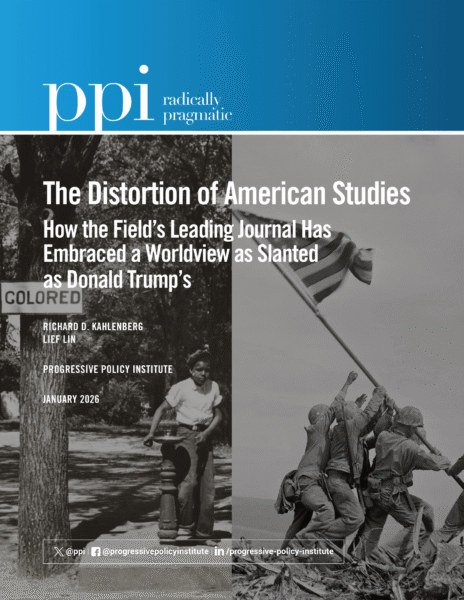
The American story is extraordinary. The United States is the wealthiest and most powerful nation on the planet and the number one destination of immigrants from across the world. Its founders created what is now the globe’s longest-lasting liberal democratic constitution. At the same time, the American experience contains numerous dark chapters: the conquest and decimation of Native American populations; the enslavement of Black people, followed by decades of Jim Crow; and the internment of Japanese Americans. America’s rates of gun violence and incarceration, and its level of economic inequality, are among the highest in the developed world today.
President Donald Trump has notoriously sought to erase the negative components of American history. The Washington Post found, for example, that since Trump’s inauguration, the National Park Service has “softened descriptions of some of the most shameful moments of the nation’s past. Some were edited to remove references to slavery. On other pages, statements on the historic struggle of Black Americans for their rights were cut or softened.” Trump’s one-sided approach should be, and has been, widely denounced. His critics are right to ask: How can he tell only half the story?
While Trump is a politician who often engages in demagoguery, one would expect serious scholars who study America — its history, literature, and culture — would provide a much more balanced and nuanced approach. To assess that hypothesis, we examined almost 100 articles over a three-year period in American Quarterly, the flagship journal of the American Studies Association. Published by Johns Hopkins University, American Quarterly is considered the country’s premier journal of American studies, the publication in which the nation’s top scholars vie to have their work appear. Disappointingly, we find that the scholarship in the journal, as a whole, engages in the same sort of distortion as Trump does, only in reverse. If Trump erases the negative chapters in American history and takes a boastful stand about America today under his leadership, American Quarterly essentially erases virtually anything positive about the American experience. Instead of providing a rich and varied collection of positive, critical, and mixed accounts of America’s history, literature, and culture, American Quarterly paints a one-sided and unrelentingly negative portrait.
In this report, we begin with background on the history and purpose of American studies and outline some ideas about the types of questions and observations a fair-minded account of American studies might entail. In the second section, we outline our methodology for coding articles in American Quarterly as positive, critical, or neutral. In the third section, we present our findings about the mix of stories found in the journal. We also outline the varying prevalence of different types of critiques of America; recount the critical key words that appear most frequently; and discuss the type of prose that is found in American Quarterly’s pages. In the fourth section, we outline areas for future research; and in the fifth section, we conclude with suggestions for internal reforms to fend off the threat of government interference. The paper also includes an appendix of abstracts of the articles we reviewed (where available) and representative quotations from those articles.