
| People | Year |
| Thierry Breton,Anna-Lena von Hollenberg, Josephine Ballon, Clare Melford, Imran Ahmed | December 2025 |
| Wole Soyinka | October 2025 |
| Patricia Lara | 1986 |
| Dario Fo | 1980 |
| John Lennon | 1972 |
| Gabriel Garcia Marquez | 1971 |
| Miriam Makeba | 1968 |
| Carlos Fuentes | 1962 |
| Charles Chaplin | 1950 |
| Pablo Neruda | 1946 |
WHAT THEY MEAN:
Thomas Jefferson’s Second Inaugural calls for confidence in truth, the weakness of error and deceit, and the public’s capacity to reason — given freedom of speech — from facts informed by principles to a correct judgment:
| “Since truth and reason have maintained their ground against false opinions in league with false facts … the public judgment will correct false reasonings and opinions on a full hearing of all parties.” |
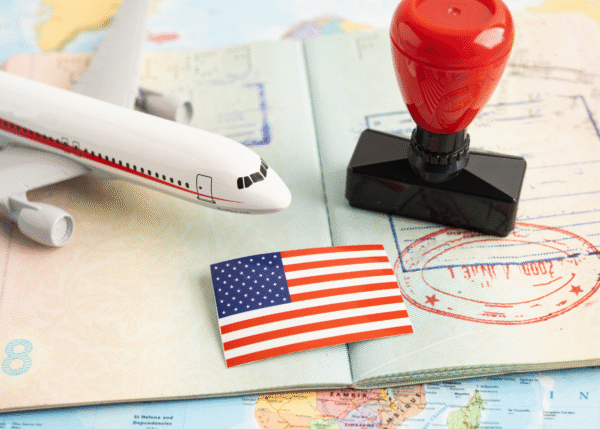
In this age of troll farms, programmed bots, “influencers” subsidized by unfriendly powers, and other disinformation ops, sticking with Jefferson’s idealism takes nerve. The Trump administration hasn’t got it: Over the holidays, its State Department banned five citizens of U.S. allies — a former EU Commissioner and four digital-monitor NGO officers — from entering the United States, based essentially on claims that they talk too much and say unwelcome things. A rundown, then some thoughts:
France: Thierry Breton, the former EU Commissioner for the Internal Market, because in 2024 he “ominously reminded [Twitter owner] Elon Musk of @X’s legal obligations” under the European Union’s Digital Services Act.
United Kingdom: Clare Melford of Global Disinformation Index, apparently for involvement in Canadian controversies over Native American residential schools. Imran Ahmed of the Center for Countering Digital Hate gets a flag too, as a “key collaborator with the Biden administration’s effort [ed. note: non-existent] to weaponize the government against U.S. citizens,” for example, by publishing a list of 12 prominent anti-vaccine sites and their leaders, one of whom now has a Trump admin. job.
Germany: Anna-Lena von Hollenberg and Josephine Ballon of HateAid, a “digital watchdog” NGO based in Berlin, both of whom “cited threat of ‘disinformation’ from ‘right-wing extremists online’” and “support the U.K.’s Online Safety Act and EU’s Digital Services Act.”
In sum: An ex-EU official reminds a company of legal obligations (even if the law in question, in the PPI view, isn’t a very good one); an NGO works in good faith with a U.S. administration to identify and publicize disinformation ops; another lists anti-vaxx groups; a third gets involved in intra-Canadian disputes. The Department says that these (a) amount to an effort to “coerce U.S. platforms to censor, demonetize, and suppress American viewpoints”, and that (b) the five individuals’ “entry, presence, or activities in the United States” therefore “have potentially serious adverse foreign policy consequences [ed. note: none specified] for the United States,” (c) making the visa bans a way to “combat” a “global censorship-industrial complex.”
What to say about this? The Trump administration isn’t in general much of a free-speech defender. At home, the White House, the Federal Communications Commission, the Departments of Justice, Education, Defense, etc., and other agencies all frequently threaten to withdraw U.S. media companies’ broadcast licenses for unfavorable press coverage, accuse Members of Congress of “sedition” for the obviously correct statement that American soldiers must refuse illegal orders, sue overseas journalists, try to micro-manage university curricula, etc. Looking abroad, December’s visa decisions are more in a series of decisions meant to show petulance and hostility toward America’s European allies, but the Europeans aren’t the only targets. A few weeks earlier in October, the administration reanimated a particularly unfortunate Cold War policy — keeping artists and writers with inconvenient or objectionable opinions out of the U.S. — by canceling the visa of 91-year-old Nigerian Nobelist Wole Soyinka, apparently to express resentment for Soyinka’s unflattering comparison of Mr. Trump to the late Ugandan president Idi Amin.
None of this, of course, means that NGO critiques of U.S. platforms are always right, nor that the administration is invariably wrong. But the U.S. and the European democracies are certainly targets of disinformation campaigns. Governments ought to be cooperating to expose and counter them, and it’s good that British and German NGOs are trying – very much in Jefferson’s spirit of trying to provide the public a “full hearing” – to identify and publicize their origins and objectives. They sometimes do miss, and they may at times wrongly blame ‘platforms’ for larger policy problems. But the appropriate response is to provide accurate facts and let the public decide, not try to stop Americans from hearing them. And as to “serious adverse foreign policy consequences,” that looks like just blather. The administration’s real complaint seems to be about the expression of opinions and factual points that it, or some of its friends, dislikes hearing. In any such case, Jefferson remains the right guide.
PPI’s four principles for response to tariffs and economic isolationism:
Sec. Rubio announces visa bans, claims to be battling a “global censorship-industrial complex.”
… and Undersecretary of State Rogers tries to explain the particulars.
From the Monticello Foundation, Jefferson’s view that the truth is strong enough to defend itself.
… and the full Second Inaugural text.
More:
M. Breton’s European Commission bio.
… and a comment from Le Monde.
Homepages for HateAid, the Center for Countering Digital Hate, and the Global Disinformation Index.
“First as tragedy, then as farce”:
Then:
The Cold War-era visa denials, in contrast to the contemporary Soyinka case, usually at least reflected some sort of dispute over state policy or ideology, though in retrospect (and to lots of people at the time) they didn’t reflect well on the U.S. government. Typical examples: John Lennon for anti-war activism, Miriam Makeba for involvement in the U.S. “Black Power” movement, Gabriel García Márquez for sympathy for left-wing revolutionary movements, and Dario Fo for philosophical anarchism.
NPR looks back at the Nixon administration’s unsuccessful attempt to expel Lennon.
American Theater comments on the Dario Fo case.
Now:
The BBC and Nigeria’s National Post on Soyinka’s contemporary visa denial.
… for context, Uganda’s official Idi Amin bio.
… and a topical book rec. — Soyinka’s The Burden of Memory, the Muse of Forgiveness (2000) reflects on African politics, relations with the United States and the diaspora, human rights, and reconciliation.
Ed Gresser is Vice President and Director for Trade and Global Markets at PPI.
Ed returns to PPI after working for the think tank from 2001-2011. He most recently served as the Assistant U.S. Trade Representative for Trade Policy and Economics at the Office of the United States Trade Representative (USTR). In this position, he led USTR’s economic research unit from 2015-2021, and chaired the 21-agency Trade Policy Staff Committee.
Ed began his career on Capitol Hill before serving USTR as Policy Advisor to USTR Charlene Barshefsky from 1998 to 2001. He then led PPI’s Trade and Global Markets Project from 2001 to 2011. After PPI, he co-founded and directed the independent think tank ProgressiveEconomy until rejoining USTR in 2015. In 2013, the Washington International Trade Association presented him with its Lighthouse Award, awarded annually to an individual or group for significant contributions to trade policy.
Ed is the author of Freedom from Want: American Liberalism and the Global Economy (2007). He has published in a variety of journals and newspapers, and his research has been cited by leading academics and international organizations including the WTO, World Bank, and International Monetary Fund. He is a graduate of Stanford University and holds a Master’s Degree in International Affairs from Columbia Universities and a certificate from the Averell Harriman Institute for Advanced Study of the Soviet Union.

