
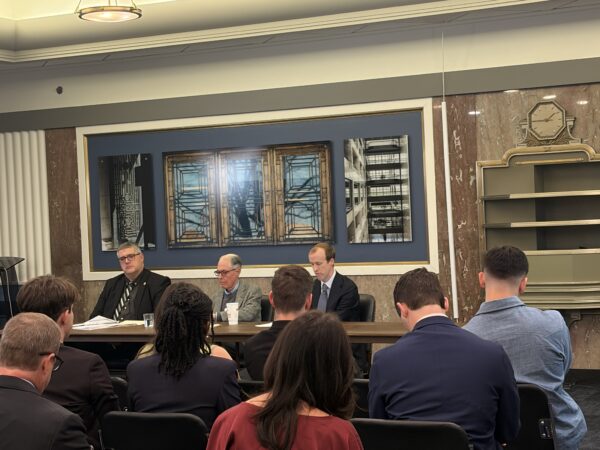
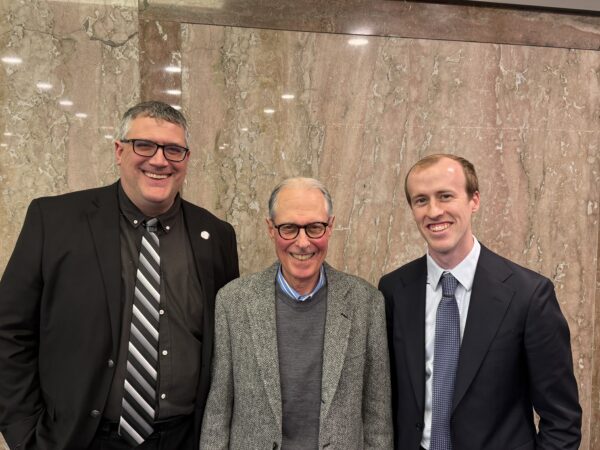
Workforce Pell gives working adults a new way to pay for short-term, career-focused training. The challenge now is making sure students can find programs that fit their lives and lead to better jobs. On November 19, the Progressive Policy Institute convened a Capitol Hill briefing, “Making Workforce Pell Work: Public-Private Partnerships, State Innovation, and Paths to Opportunity,” at the Dirksen Senate Office Building to examine how colleges, employers, states, and Congress can make good on that promise. PPI’s Director of Workforce Development Policy Michael Pearson moderated the discussion with Bruno V. Manno, a PPI senior advisor who leads its What Works Lab, and Greg R. Lawson, a senior research fellow at The Buckeye Institute, a think tank based in Ohio.
Manno and Lawson brought perspectives from different sides of the political spectrum and found common ground on expanding access to career-focused education. That kind of collaboration will be essential to making progress in the period of divided government ahead.
Build more routes to good jobs
Manno’s research makes the case for what he calls “opportunity pluralism,” the idea that students should have several routes to a rewarding career. For a working adult who can’t commit to a traditional degree program, a short course can offer a practical way to gain new skills and earn a credential employers recognize. But colleges need instructors, technology, and time to develop those programs. Partnerships can help fill those gaps by bringing employers’ knowledge of hiring needs and education providers’ program design and delivery expertise into the work. The results should be measured by how many students finish, find jobs, and improve their earnings.
What other states can learn from Ohio?
Ohio’s proposed JOBS Act offers one approach to expanding training capacity. Employers and other private partners could contribute expertise, equipment, and resources while colleges retain academic control. Revenue-sharing arrangements could help colleges launch programs with lower upfront costs. In a related proposal, Lawson recommends tying more of Ohio’s higher education funding to graduates’ employment and earnings. Together, those ideas raise a practical question for other states: How can they encourage colleges to develop programs that meet local hiring needs and give graduates credentials they can use across employers?
Give partnerships stable federal rules
The briefing also examined a step Congress could take: put federal guidance on bundled services into law. That guidance governs arrangements in which an outside provider delivers a package of services to a college, sometimes in exchange for a share of tuition revenue. Clearer, more durable rules could help colleges and their partners plan and invest while preserving academic oversight and accountability for student outcomes. In a period of divided government, that gives lawmakers a concrete opportunity for bipartisan cooperation.
For the working adult deciding whether a training program is worth the time, the measure of Workforce Pell will be straightforward. Can they complete the program, earn a credential employers value, and use it to move into a better job? That’s the standard policymakers should keep in view as they put Workforce Pell into practice.
Further reading
Note: Video content of the event is forthcoming

