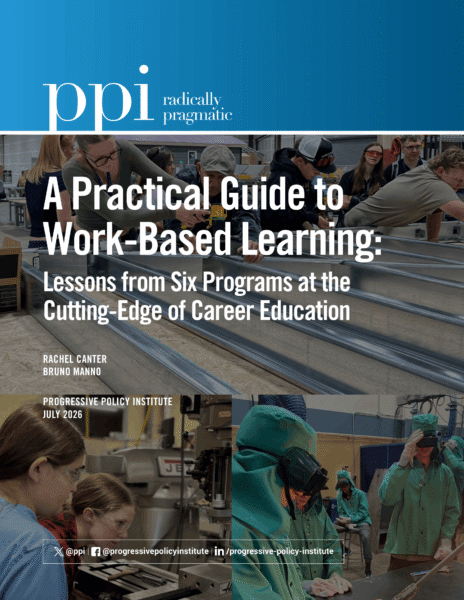
Career education programs that include work-based learning are becoming an important part of American high schools. At their best, these programs connect classroom learning with real work experience, giving students a chance to explore careers, build practical skills, learn workplace habits, and understand how academic knowledge is used beyond school.
Increasingly, the most promising models connect school, work, and postsecondary preparation through career pathways that allow students to gain real experience while still in high school. Students may participate in job shadowing, internships, apprenticeships, simulated workplaces, or service-learning projects. The strongest programs are not simply jobs for students. In high-quality programs, students perform real tasks, receive adult supervision and feedback, work toward clear learning goals, and connect the experience to a broader pathway that may include credentials, college credit, further training, or employment. They are structured learning experiences tied to school goals, employer expectations, and future educational or career opportunities.
These programs reflect a broader movement toward a model we call opportunity pluralism. The idea is that young people should have more than one credible route to a good and dignified life. In K-12 education, opportunity pluralism means moving beyond a single expected path from high school to a four-year college and then to a career. It supports multiple pathways that combine academic knowledge, career-oriented skills, credentials, and professional networks. Unlike old-style vocational tracking, which too often narrowed opportunity, opportunity pluralism aims to expand it such that students leave high school not only with a diploma but also with college credit. That includes college credit, industry-recognized credentials, supervised work experience, employer relationships, and a clearer sense of what comes next.
This report draws on interviews with leaders from six work-based learning programs across the country: CAST Schools in San Antonio, Texas; the Career Academy Network of Public Charter Schools in South Bend, Indiana; the Fremont Multidistrict Initiative in rural Colorado; Launchpad Philly with Building21 in Philadelphia, Pennsylvania; Purdue Polytechnic Charter High Schools in Indiana; and the Rural Alliance Zone, or RAZ32, in Randolph County, Indiana. These programs differ in structure, geography, governance, and industry focus, yet they point to a common lesson: Work-based learning succeeds when schools and communities work together to build the structures and systems that allow young people to move effectively between classrooms and workplaces.
The programs profiled here show that these models require more than willing schools and employers or motivated students. They depend on bigger system conditions that many states cannot yet offer for schools: state graduation and accountability policies that recognize work-based learning; dedicated funding for costs that traditional school budgets often overlook; flexibility in teacher licensure and staffing; strong employer partnerships; full-time personnel to manage relationships; and transportation plans that allow students to reach placements. When these conditions are missing, schools must create workarounds. When they are present, career pathways can become permanent systems rather than isolated opportunities. With this in mind, the report concludes with recommendations directed to policymakers, school leaders, employers, and philanthropy.