
PPI - Radically Pragmatic
  • Donate
Skip to content
  • Home
  • About
    • About Us
    • Locations
    • Careers
  • People
  • Projects
  • Our Work
  • Events
  • Donate

Our Work

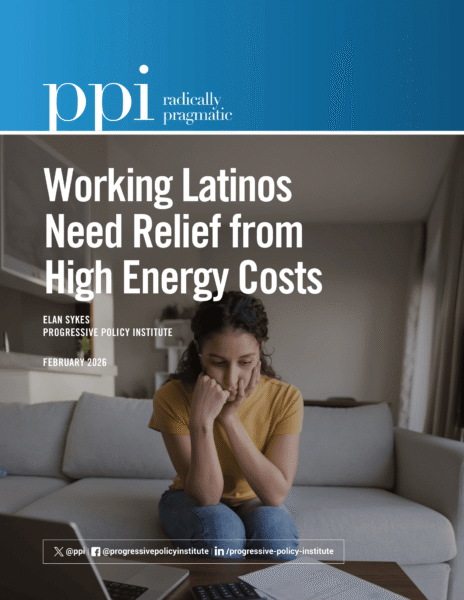
Working Latinos Need Relief from High Energy Costs

  • February 3, 2026
  • Elan Sykes
Download PDF

Click here for State by State data.

EXECUTIVE SUMMARY

The November 2025 off-year elections confirmed that the cost of living is still top of mind for U.S. voters. High energy costs, for example, figured prominently in contests in Virginia, New Jersey, and New York. The issue affects all Americans, of course, but puts especially heavy financial burdens on low-income and working-class communities. Many urban Latino families, for example, pay higher energy costs than more affluent surrounding neighborhoods. This report, the second in a series of PPI studies of energy insecurity in America, examines the reasons for this disparity.

It finds that Latinos are twice as likely as their white counterparts to experience energy insecurity. This connotes difficulty in accessing or paying for energy, the hard choices they face between paying fuel bills and meeting other pressing needs, and consequently, the higher risk of utility cut-offs. As PPI has previously documented, working-class Black neighborhoods also face higher energy burdens than surrounding suburbs. We believe these disparities deserve more attention from U.S. energy policymakers.

Building on our study of high energy burdens in Black neighborhoods in Boston, this report explores the same phenomenon in working-class Latino communities of Massachusetts, including Boston, as well as the city of Los Angeles. We identify the lack of modern energy grid and pipeline infrastructure to supply all neighborhoods with affordable and abundant energy as the main cause of greater energy insecurity for working-class Latinos in Massachusetts and California.

These findings pose a challenge to “environmental justice” activists. While rightly stressing the health and environmental risks of pollution in low-income and minority communities, they have failed to focus on the economic costs and opportunities — job growth, innovation, investment, lower prices — of a balanced clean energy transition. What residents of low-income communities want most of all isn’t reparations for past injustice but equal access to affordable and reliable energy.

Latinos constituted 19.5% of the population and 10% of voters in 2024.1 They vary widely in national origin, socioeconomic status, and geographic distribution. A combination of low but rising average incomes and education levels, historical discrimination in employment and housing markets, and the lack of adequate electricity and energy infrastructure mean that many working-class Latino families have lower incomes, less efficient homes and appliances, and higher energy bills than college-educated Americans living in affluent suburbs. Barriers in language, limited financial resources, and poor infrastructure access mean that climate policies like the Inflation Reduction Act provided much less help to energy-burdened minority communities.

In PPI’s polling of working Americans, Latino voters broadly support action against climate change and a shift to clean energy resources, but make their decisions about energy based on cost. For them, high fuel bills are central to the broader cost-of-living crisis facing working Americans. To assuage this concern, U.S. policymakers should embrace smarter climate and energy policies that don’t threaten them with immediate fossil fuel bans that produce energy scarcity and higher prices.

Our report concludes with the following policy recommendations for shaping a new compact with working Americans on climate and energy, and ensuring that Latino communities don’t get left further behind:
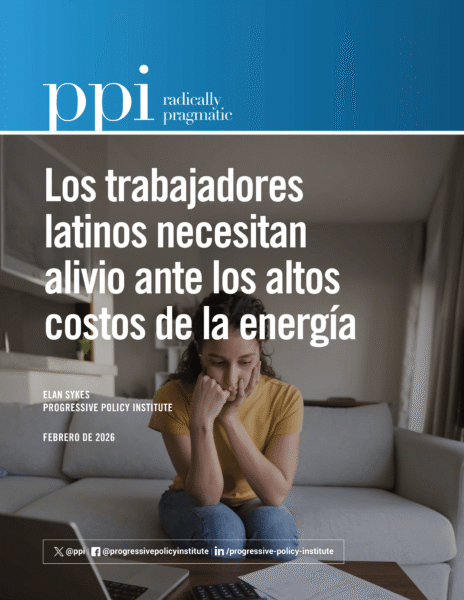
  • A Balanced, Technology-Neutral Approach: Instead of unpopular and premature fossil fuel bans, policymakers should support an energy mix of nuclear, renewables, batteries, carbon capture, utilization, and storage (CCUS), and low-methane natural gas to ensure both emissions reductions and affordable energy.
  • Permitting Reform to Accelerate Clean Energy Deployment: Congress and state governments should streamline approval processes for renewable energy projects, grid expansion, and pipeline infrastructure to lower costs and improve reliability.
  • Targeted Energy Assistance for Low-Income Families: Congress should expand and modernize programs like the Low Income Home Energy Assistance Program (LIHEAP) and Weatherization Assistance Program (WAP) to better serve households struggling with high energy burdens.
  • Community Energy Hubs: Establishing local government centers where citizens can get information on energy efficiency, clean energy options, and financial assistance programs, modeled on Colorado’s resilience hubs and the federal government’s American Jobs Centers.
  • Affordable Housing and Improved Quality of Life: Many Latino households in urban, suburban, and rural communities across the country struggle to find affordable housing and are forced to settle for older, lower-quality housing options in polluted neighborhoods with inadequate power and clean water supplies.
  • Providing neighborhood amenities like trees, solar shading, strengthened electric distribution grids, and space for a variety of transportation modes would improve the quality of life for Hispanic families currently exposed to disproportionate pollution burdens and extreme weather in unaffordable or overcrowded homes.
    • Better Jobs, Indoors and Out: Many non-college Latinos hold outdoor jobs and jobs related to energy technologies, including construction, agriculture, and delivery logistics. As the American West is already feeling the impacts of climate change, giving firefighters the permits and resources they need to conduct proactive fire prevention measures would reduce health and climate impacts on outdoor workers and nearby cities. Offering guidance and technology incentives to protect against extreme heat exposure and other climate adaptation challenges to address problems relevant to workers’ daily lives.

Read the full report in English and Spanish.

Related Work

Blog  |  February 3, 2026

Working Latinos Need Relief from High Energy Costs: Data by State

  • Elan Sykes
Press Release  |  January 21, 2026

New PPI Report Warns Virginia’s Energy Mandates Threaten Grid Stability and Affordability Amid Data Center Boom

  • Neel Brown John Kemp
Publication  |  January 21, 2026

The Virginia Challenge: Meeting Energy Demand Affordably

  • Neel Brown John Kemp
Press Release  |  January 8, 2026

New PPI Report Warns ‘Activist Tax’ is Being Driven by Both Trump and the Climate Left

  • Neel Brown John Kemp
Publication  |  January 8, 2026

New Jersey: Ambitious Goals Meet Reality

  • Neel Brown John Kemp
Op-Ed  |  December 12, 2025

Malec for RealClearEnergy: Embracing Innovation to Fight Plastic Waste

  • Stuart Malec
  • Never miss an update:

  • Subscribe to our newsletter
PPI Logo
  • Twitter
  • LinkedIn
  • Facebook
  • Donate
  • Careers
  • © 2026 Progressive Policy Institute. All Rights Reserved.
  • |
  • Privacy Policy
  • |
  • Privacy Settings