PPI Statement on David Osborne’s Retirement from the Reinventing America’s Schools Project

Famed “Reinventing Government” author led PPI’s school reform work

The Progressive Policy Institute (PPI) today announced the retirement of David Osborne, who has directed PPI’s Reinventing America’s Schools (RAS) project since 2014.

“David Osborne has long been one of America’s preeminent thinkers about how to modernize and strengthen progressive governance,” said PPI President Will Marshall. “Under his visionary leadership, PPI’s Reinventing America’s Schools project has documented the emergence of a new way of organizing public education in the 21st Century.”

As reported in his seminal 2017 book, “Reinventing America’s Schools,” the new model has evolved from the most successful public charter and “innovation” schools that are delivering high-quality learning to children in disadvantaged and minority communities in New Orleans, Washington, D.C., Indianapolis, Denver and other U.S. cities. Its hallmarks are school autonomy, customized rather than standardized learning programs, and strong public accountability for results.

Osborne is the author or co-author of many influential books, notably “Reinventing Government”, the 1992 best-seller that inspired the Clinton-Gore administration’s “rego” initiative to create higher performing public agencies.

“I’ve known David since the early 1990s, when we worked together to craft new themes and ideas that defined the “New Democrat” movement of progressive policy, “ said Marshall. “David has a rare talent for combining analytical rigor with compelling story-telling that enables him to reach a wider audience.”

David Osborne provided the following statement on his retirement from the Reinventing America’s Schools project:

“I’m going to miss my colleagues at the Progressive Policy Institute, but I plan to stay involved even as I retire. I will chair our Advisory Council, I’m sure I will continue to write, if less often, and I will continue to work on a documentary on New Orleans’ remarkable education reforms of the past 15 years, which produced the fastest improvement in the nation for a decade. But as I turn 70, I will not miss the eight-hour days at the computer.

“I want to thank PPI President Will Marshall for all his support over the years. Though I only started working at PPI in 2014, our collaboration goes back more than 30 years, and it has been not only a joy but a source of inspiration. I like to think we have nudged the country in the right direction.

“I also want to thank my Reinventing America’s Schools team, which has done yeoman’s work these past years. I have full confidence that they will continue their great work, and I promise to be there to help when needed. Finally, I am deeply grateful to our two largest funders, the Walton Family Foundation and The City Fund. They have done so much over the years to create real opportunity for low-income children, and without them we would never have been able to get this project off the ground.”

Following David’s June 1 retirement, the Reinventing America’s Schools Project will be co-led by Curtis Valentine and Tressa Pankovits. They will be supported by Veronica Goodman, who is adding a new focus on career pathways and school-to-work transitions, as well as Sloane Hurst. Will Marshall will continue to serve in an advisory role.

If you would like to send David your well wishes for his retirement, please send an email by clicking here. You can also tweet out your message and tag @RAS_Education.

About PPI:

The Progressive Policy Institute (PPI) is a catalyst for policy innovation and political reform based in Washington, D.C. Its mission is to create radically pragmatic ideas for moving America beyond ideological and partisan deadlock. Learn more about PPI by visiting progressivepolicy.org.

Follow the Progressive Policy Institute.

Follow the Reinventing America’s Schools Project.

###

Innovation, Free Apps, and the App Store

Tech platforms should be judged on how well they foster consumer welfare, innovation, investment, productivity and job creation.  Sometimes these values will conflict with each other, but they provide a good framework for thinking about the benefits and costs of platforms that go beyond the usual antitrust issues.

From that perspective, a recent opinion piece in Wired levies a criticism of the current design of Apple’s App Store that is important, if true. The authors, the legal director of Public Knowledge and then executive director of the Coalition for App Fairness, argue that when “Apple demands 30 percent of developers’ revenue, it limits their freedom to offer novel and innovative customer experiences.” They go on to say that the “biggest loss” from the App Store “has nothing to do with developers and users who have to work around Apple’s restrictions—it’s those apps and services that don’t exist at all because app store rules make them impossible.”

However, this criticism—that the pricing structure of the App Store results in too little app innovation and too few apps–is an odd one. As of the end of 2020, the App Store stocked 1.8 million apps. According to marketing research firm Sensor Tower, 85 percent of those apps were “free” to users, in the sense developers did not charge for downloads or  collect in-app charges.

But note that these apps are “free” to developers as well, in the sense that Apple receives no other revenue other than the fee for the developer account ($99 per year for an individual account, with a waiver for nonprofits, accredited educational institutions and government entities that will distribute only free apps ). This pricing structure creates very low barriers to entry for new apps, spurring both innovation and competition.

Free apps are responsible for much of the consumer welfare, innovation, investment and job creation enabled by the App Store. For example, consider the banking apps which are offered by virtually every large and small bank today. Despite the large amounts of financial transactions flowing through these apps, they fall into the “free” category to both consumers and the banks. Banking apps were absolutely essential during the pandemic, enabling customers to do banking transactions including depositing checks, without having to go into branches.  Indeed, banks compete to see what new functions can be added to their apps to make them more useful for their customers.

Another growing category of free apps are designed to control and interact with connected devices–the “internet of things.”  These connected devices can be anything from electric bikes to power tools to automobiles to smart homes to agricultural sensors. The variety is nearly infinite, but one common characteristic is that their associated apps are directed toward innovation and making the connected device more useful.  These apps are often a key selling point for the product, with the customer getting them as part of the purchase rather than paying to download separately.

Free apps also run the gamut of nonprofit organizations, from innovative educational organizations such as Khan Academy to nonprofit health service providers such as Kaiser Permanente to churches and other religious organizations.  Donations can be made through these apps as well.

In an era of rampant ransomware and supply chain attacks, a free or nearly-free distribution channel that is carefully vetted for malware would seem to be a plus for innovative apps. Especially as the internet of things becomes more important, apps associated with connected devices will become the leading edge of innovation.  Despite what the authors of the Wired piece argue, the pricing structure of the App Store fosters rather than impedes innovation and creativity.


Benefits and Flexibility for Workers in the Gig Economy

The gig economy has provided opportunities for workers who aren’t able to find or aren’t interested in full-time regular employment. Traditional jobs require workers to show up at a particular location and work a predetermined schedule set by the company. Ride-hailing and delivery gigs allow workers to set their own schedules and work as much or as little as they like. This flexibility is a key component of why independent workers choose to participate in the gig economy. But that doesn’t mean the current arrangement is perfect.

Gig workers often aren’t able to access the benefits that regular employees tend to receive in addition to their wages. Health insurance, retirement plans, vacation days, and other benefits are highly valuable pieces of total compensation for full-time employees. If gig companies were to provide independent workers with benefits, they would be forced to reclassify them as employees, which brings a host of onerous rules and regulations that are incompatible with the dynamic and flexible nature of the gig economy.

Fortunately, it seems there is another way forward to improve the lives of gig workers by securing them benefits while maintaining the flexibility they desire. As Michael Mandel and I detailed in a paper last year for the Progressive Policy Institute (PPI), Congress should allow gig companies to opt into an alternative model. Under our proposal, workers would be able to accrue benefits in proportion to the hours they work across a wide array of platforms and then select which benefits they want from a cafeteria style plan (the ability to choose is critical because sometimes workers already receive benefits such as health insurance from a spouse or other family member).

Voters seem to like this approach of offering more benefits to gig workers while letting them keep their flexibility. Last year, California voters approved Prop 22, which overturned AB-5, a controversial state bill that reclassified a broad array of independent contractors as employees. The results of this ballot proposition were not particularly close: 59% voted in favor, 41% voted against. According to the Los Angeles Times, Prop 22 found its highest support in low-income and minority communities:

A Times examination of precinct-level data in Los Angeles County shows the companies’ argument held sway in its dense core, finding support in lower income areas including plurality-Black neighborhoods such as Inglewood and Compton, and majority-Latino East Los Angeles. It also won suburbs in the San Fernando Valley, affluent communities such as La Cañada Flintridge, and rare Los Angeles precincts where President Trump was victorious in Beverly Hills and Santa Clarita.

A band of wealthy or increasingly affluent liberal-leaning neighborhoods stretching from Santa Monica and Venice, across to Los Feliz, Highland Park and South Pasadena mounted the strongest opposition, decisively voting down the measure.

So, what did drivers get in exchange for maintaining their classification as independent contractors? According to Quartz, Prop 22 “guarantees gig workers new, limited healthcare subsidies and accident insurance, some reimbursement to account for gas and other vehicle costs, and a ‘minimum earnings guarantee’ equal to 120% of the minimum wage applied to the drivers’ ‘engaged’ time.” Not only do voters approve of this model, but drivers do too. According to one survey of Uber and Lyft drivers, around 70 to 80% of respondents prefer being independent contractors to employees.

A broader survey from the Bureau of Labor Statistics found that “Independent contractors overwhelmingly favored their alternative employment arrangement (79 percent) to a traditional one (9 percent) in May 2017.” In total, these data points show that worker benefits and flexibility are a winning combination for the gig economy.

E&E News: ‘Free-For-All’ Used Car Export Threatens Climate Goals

E&E News -- The essential news for energy & environment professionals

By Arianna Skibell, E&E News reporter

Replacing gasoline cars with electric vehicles is a pillar of President Biden’s strategy for tackling climate change. But even if the administration sets a deadline to sunset sales of gas-powered passenger vehicles, the export of used cars abroad could stall the global reductions needed to stave off catastrophic warming.

Every year, the United States ships hundreds of thousands of its oldest and dirtiest cars overseas to predominantly poor countries in a trade that is largely unregulated. In other words, cars that would fail safety, fuel economy and emissions standards in the United States or Europe are dominating the roads in countries that rely on imported vehicles.

In Kenya and Nigeria, for example, more than 90% of vehicles are foreign imports.

“The pollution and gas guzzling continue on even after the vehicle is removed from America’s roads,” said Dan Becker, head of the safe climate transport campaign at the Center for Biological Diversity. “It’s essentially a Cheshire cat issue.”

Worldwide, there are about 1.4 billion cars on the road. That figure is expected to more than double by 2050, with 90% of growth coming from the sale of used vehicles in lower-income countries. That means emissions from the global transportation fleet — which currently account for a quarter of total carbon dioxide emissions worldwide — also could double.

If left unchecked, the global trade in secondhand cars could have bleak consequences for climate change, air quality and, by extension, public health, according to a pioneering U.N. report released last year.

The study found that between 2015 and 2018, the United States, Japan and the European Union exported 14 million used passenger cars, with 70% winding up in developing countries in Africa, Eastern Europe, Asia, the Middle East and Latin America. Two-thirds of countries surveyed in the study lacked adequate policies to regulate the quality of imported cars. Consequently, the majority of used vehicles imported were inefficient, unsafe and old.

In Uganda, for example, the average age of a used diesel import in 2017 was more than 20 years.

“The majority of the vehicles being exported do not have a valid road worthiness certificate,” said Rob de Jong, head of the U.N. Environment Programme’s Sustainable Mobility Unit and an author of the report. “The trade in used vehicles is not a bad thing per se, but in the total absence of standards, it’s a free-for-all.”

A few countries have started cracking down on dirty, unsafe imports. Some countries, such as Egypt, India and Brazil, have outright banned the import of used vehicles. Others, like Iran and Iraq, have implemented age limits, while still others, such as Singapore and Morocco, have issued vehicle emissions standards.

Mauritius, a small island nation in the Indian Ocean, banned used vehicles over 3 years old and issued a vehicle carbon tax. As a result, the country has seen a major increase in the import of used electric and hybrid cars.

Still, there is no regional or global standard to regulate the flow of used vehicles as a climate mitigation or air pollution control mechanism. De Jong of the U.N. said there needs to be a streamlined approach to curbing the sale of unsafe and inefficient vehicles.

“The risk of not doing this,” he said, “is not meeting the Paris climate agreement,” which aims to keep warming below 2 degrees Celsius.

Roger Gorham, a transport economist and urban development specialist with the World Bank, said there is an emerging consensus that regulating the secondhand vehicle trade should be a joint responsibility between exporting and importing countries.

“Exporters need to be able to distinguish between legitimate exports of vehicles that can actually be used safely, reliably and in line with environmental and climate objectives in their destination countries, as opposed to cars and trucks that do not meet even the most basic safety and environmental standards,” he said in an email. “But importer countries also have an obligation to be clear about the acceptable performance thresholds of cars (and fuels) they will allow to be imported into their country.”

In the United States, the export of used cars and trucks accounts for a small fraction of the domestic used vehicle market. In 2019, more than 40 million used vehicles — and 17 million new ones — were sold, according to Edmunds. Of those 40 million, less than 1 million were exported overseas, according to Commerce Department data.

Still, the United States is the third-largest exporter of used vehicles, behind the European Union and Japan. Additionally, dramatic action is required in the next decade if humanity is to stave off catastrophic warming, according to an International Energy Agency report released this week (Climatewire, May 18).

Electric vehicles currently make up 5% of global automobile sales. That number will need to increase to 60% by 2030, IEA said, and the sale of traditional gasoline- and diesel-powered cars will need to end by 2035.

Ray LaHood, who served as Transportation secretary under former President Obama, said the Biden administration should try to regulate the export of dirty vehicles.

“Part of our responsibility is to clean up the environment in whatever ways we can, not only for our own country but for the world,” he said in an interview. “That has to be a priority.”

Biden administration officials “are going to have to think about whether they take these cars in as trade-ins,” added LaHood, who now serves as co-chair of the Building America’s Future Educational Fund, a bipartisan infrastructure coalition.

Under the Obama administration, LaHood oversaw a federal program called the Consumer Assistance to Recycle and Save (CARS) program — also known as Cash for Clunkers — which provided financial incentives for car owners to trade in their vehicles for new, more fuel-efficient cars and trucks. The program, which was intended to stimulate the post-recession economy and promote the sale of cleaner cars, was enormously popular.

Consumers who traded in their older automobiles and purchased new ones received cash rebates on the spot. Within six weeks of authorizing a $1 billion disbursement, Congress appropriated an additional $2 billion for rebates.

According to a Congressional Research Service report, more than 677,000 rebates were processed, increasing the U.S. gross domestic product by billions of dollars, creating or saving thousands of jobs, reducing fuel consumption by millions of gallons, and significantly slashing carbon emissions.

Traded-in vehicles were supposed to be smashed or otherwise destroyed, but a 2010 Transportation Department Office of Inspector General report found disposal hard to verify. Of the disposal facilities surveyed, the report found that 32% were not in compliance with DOT standards, which required facilities to report the disposal to the National Motor Vehicle Title Information System (NMVTIS).

But at the time of the OIG report’s release in 2010, only 15 states fully participated in the NMVTIS database, which was created to deter vehicle theft and fraud. After Hurricane Katrina, for example, cars that had been declared total losses to be scrapped were resold in other states with forged titles, a process known as title washing. Today, 48 states participate in the program, according to its website. Hawaii, Kansas and the District of Columbia are listed as “in development.”

“[O]ne facility, which received 357 CARS vehicles at the time of our audit, was not aware of NMVTIS and therefore, had not reported any information on the status of those vehicles,” the investigation found. “In addition, one facility we visited did not sign or date the disposal certification forms for the 27 trade-in vehicles it handled.”

Paul Bledsoe, who served as a Department of Energy consultant under Obama and worked on climate change in the Clinton administration, said he worries that many Cash for Clunkers vehicles may have ended up being exported.

“They were shipped overseas to Africa or South America,” Bledsoe, now a strategic adviser for the Progressive Policy Institute, said in an interview last month. “So the Biden team has to make sure [retired vehicles] are permanently retired.”

Read the full article here

How to Protect Incarcerated Women from Covid

Editor’s note: Throughout this piece, “prison” is used to represent places of detention, including county and regional jails, federal and state prisons, and juvenile detention facilities. Data from The New York Times includes immigration detention centers as well.


Women Behind Bars: Violence and Neglect During the Pandemic 

Despite accounting for only four percent of the world’s female population, the United States houses more than 30 percent of the world’s incarcerated women. This rate has increased nearly 800 percent since the 1970’s. These inmates face a harsh and restrictive prison environment designed for violence-prone men, and the emergence of the pandemic has only further opened the doors for inhumane treatment. Prisons are among the primary hotspots for the coronavirus, with infection rates three times that of the general public. As the virus surges through correctional facilities, inmates are not able to social distance, quarantine, or benefit from adequate medical treatment. Depleted resources and insufficient space, combined with a vulnerable population, created the perfect storm for Covid-19 to spread quickly.

Inside the Danbury Federal Correction Institution in Connecticut, dozens of women tested positive with no space to quarantine. To prevent the virus from spreading, they were housed in the inmates’ waiting room with no beds, only rudimentary restrooms, and no place to bathe (although showers were eventually installed.) During months when nighttime temperatures still dipped below freezing, the women were instructed to assemble and to sleep on metal beds, with limited mattress availability. They lacked substantial food and were generally not granted over-the-counter medication except Tylenol. One sick inmate was hospitalized for dehydration, and many were left in the locked visiting room without attention to their severe symptoms. Despite these worsening conditions during the pandemic, the Connecticut Department of Correction claimed that Covid positive inmates were “provided medical care in accordance with CDC guidelines.” Stacy Spagnardi, an inmate at Danbury currently in home confinement, recalls something very different: “We were all thinking we would die in there, and nobody would know until count.”

If there is any silver lining to the misery inflicted by the pandemic, it is that the virus turned a spotlight on the lack of adequate healthcare in our country’s prisons, especially for women.  

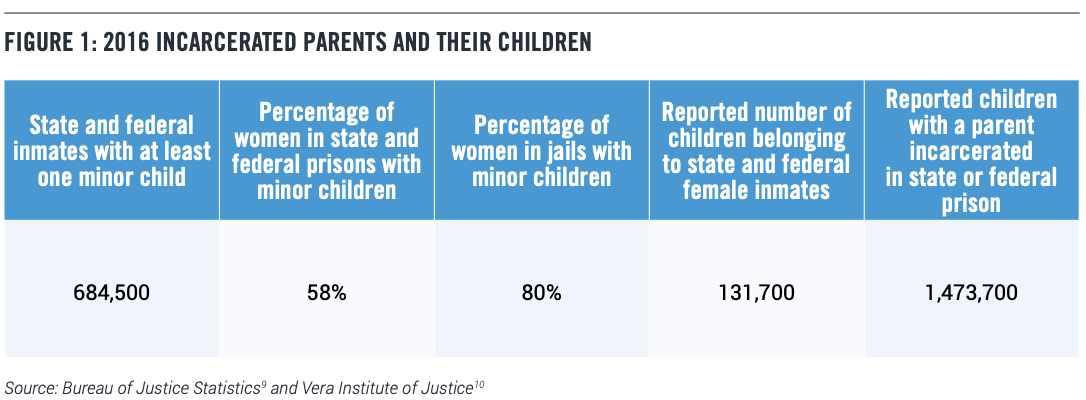
This is particularly true, for example, in the case of prenatal care. Roughly four percent of all newly incarcerated women arrive to serve their sentences while carrying a baby. On average, 2,000 children are born behind prison walls every year. While in prison, only 58 percent of pregnant women report receiving any prenatal care. The Prison Policy Institute found that 31 states lack any nutritional plan or dietary supplements for incarcerated pregnant women, a key component to delivering a healthy child. As a result, many expecting mothers in jail suffer from malnutrition. 

Female inmates, many of whom were physically abused or addicted to drugs before their arrests, need better health care. This is especially true for women experiencing high-risk pregnancies because of their struggles with substance abuse. 

Women in jail often give birth alone in their cells with no medical aid or assistance. Prisons also have been known to shackle or otherwise restrain inmates during labor. This increases risk by limiting the women’s movement, increasing pain, and obstructing the diagnosis of complications during birth. 

After an often-precarious delivery process, most women are separated from their children within 24 hours. Their babies are placed with a relative, adoption family, or into foster care. Maternal separation, of course, can be highly traumatic to both mother and child. For the mother, it’s an additional harsh punishment over and above their sentence. For the newborn, separation can cause emotional and behavioral problems that can last a lifetime. 

Research suggests that children born to imprisoned parents experience psychological and educational problems, such as higher rates of depression and suicide, antisocial behavior, learning disabilities, and behavioral issues that result in suspension or expulsion from school. On average, children with incarcerated parents are six times more likely to become incarcerated themselves. 

Covid-19 has made prison even more perilous for pregnant women. Consider the case of Andrea Circle Bear, who was pregnant and serving a two-year sentence for selling drugs on the Cheyenne River Indian Reservation. Circle Bear contracted Covid-19 in the overcrowded prison in Fort Worth, Texas. She was on a ventilator when the time came to give birth. Three weeks later, she was the first federal female prisoner to die from Covid-19. “Not every prison death is avoidable, but Andrea Circle Bear’s certainly seems to have been — she simply should not have been in a federal prison under these circumstances,” contends Kevin Ring of Families Against Mandatory Minimums. 

For Circle-Bear and other non-violent offenders, early release or home-confinement policies could have prevented unnecessary sickness and death behind bars, but many states made few efforts to reduce their prison populations amidst the pandemic. In states that did try to halt Covid-19’s spread in their prisons, the response was uneven. Some states enacted limited early-release programs. A handful of governors have issued executive orders to grant early release for certain inmates, while the Federal Bureau of Prisons transferred some into home-confinement.

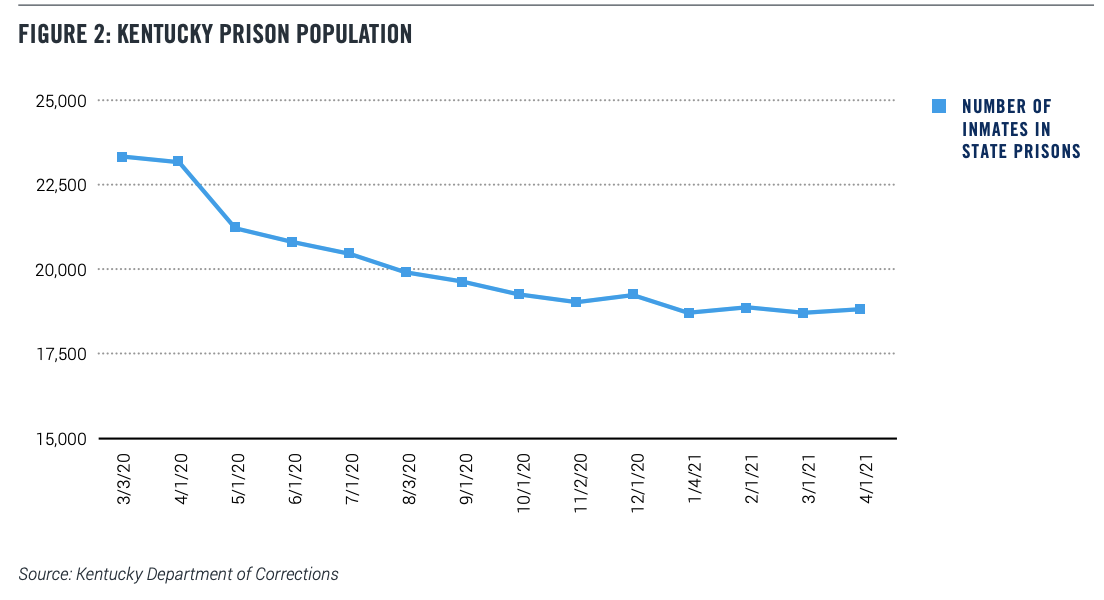
For example, Kentucky’s public defenders, prosecutors, Supreme Court, county jails, and Gov. Andy Beshear worked together to reduce Kentucky’s prison population. Those who were medically vulnerable, low-risk, or near the end of their sentences received priority in early release policies. 

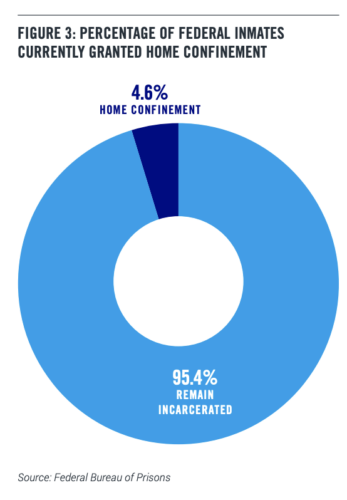
Of the 152,124 prisoners currently under federal jurisdiction, 7,314 have been placed in home confinement. The Attorney General released a memo in March of 2020 instructing the Federal Bureau of Prisons to allow inmates to serve out their sentences at home when appropriate. Since then, 24,668 inmates have been granted home confinement.

In April of 2020, Pennsylvania’s Governor Tom Wolf began the Temporary Program to Reprieve Sentences of Incarceration. Although the plan originally estimated that 1,800 inmates would qualify for reprieve, only 159 individuals were released through this program. 

In an effort to reduce Covid-19 transmission, some states also have restricted the number of security guards on staff. Unfortunately, this has had the unintended consequence of making women more vulnerable to sexual assault and abuse. According to the U.S. Bureau of Justice Statistics, 42 percent of sexual abuse in prisons is perpetrated by staff, while 58 percent is perpetrated by other inmates. However, this data reflects only substantiated sexual assault claims, which amounted to 5,187 of the 67,169 allegations from 2012-2015, or just eight percent of all claims. While it would seem that having less prison guards would reduce the number of potential abusers, a lack of security can empower predatory staff or inmates to commit sexual assault without supervision.

Sexual abuse is a notorious aspect of prison life for men and women. But it’s a special problem for women, a majority of whom previously have been victims of physical and/or sexual assault. The cycle of abuse continues in prison. The Department of Justice found widespread rape and sexual harassment inside the Julia Tutwiler Prison for Women in Alabama and the Edna Mahan Correction Facility for Women in New Jersey. Along with suffering severe mental and physical trauma, several women became pregnant after being raped by guards. The DOJ argued that these conditions violated women’s eighth amendment rights against “cruel and unusual punishment.” But under Covid protocols that limit personnel and surveillance, more women are at risk in understaffed facilities like Edna Mahan and Tutwiler. 

Covid-19 also has created new stresses on female inmates’ social and emotional well-being. In addition to the life-threatening physical conditions during the pandemic, incarcerated women also are subject to the misuse of punitive policies like solitary confinement and terminated phone and visitor access that can impair their mental health. The use of solitary confinement as a blunt instrument for enforcing social distancing during the pandemic has increased 500 percent. Yet solitary confinement is known to increase anxiety and suicidal thoughts, particularly in women who have suffered sexual abuse and feelings of low self-worth. Prisons need to be more careful in calculating the trade-off between protecting inmates from Covid and endangering their mental health.

Covid-related policies preventing communication between incarcerated mothers and their children also have strained family relationships. As the general population has relied on technology to stay in touch with our loved ones, many prisons have restricted access to the phone and eliminated visitation. An overwhelming majority of female inmates are mothers, and these policies can degrade their mental health by cutting off communication with their children.

What Should be Done? 

Even as Covid cases plateau nationwide, Covid-19 infections continue to rise in jails and prisons. Moreover, new variants found in Michigan, Colorado, and other states pose fresh dangers of contagion, since prison staff can carry the virus in and out of prison from these hotspots. 

The task of mitigating the pandemic inside our jails and prisons is complicated by the fact that a multiplicity of federal and state jurisdictions cut across the U.S. criminal justice system. States decide their own policies, whether for early release programs, vaccine rollout, or correctional institution budgeting. As a result, prisoners across the country experience a variety of conditions and Covid-19 protocols. 

“If there was clearly a right strategy, we all would have done it,” said Dr. Owen Murray, a physician in charge of correctional healthcare at dozens of Texas prisons. Nonetheless, America’s correctional facilities have a myriad of ways to create more humane and safe conditions for inmates: 

  • Increase testing and dedicate spaces for quarantine. The first step is better measurement of the challenge. Correctional facilities should test all staff and inmates routinely and release results publicly. To limit transmission of the virus, symptomatic inmates should be placed in a separate space from other prisoners while they wait for their results. These areas should be adequately climate controlled and fully equipped with food, water, sanitary and medical resources, books or other sources of entertainment, and working phones for communication with loved ones during this short isolation period. 
  • Prioritize inmates in vaccine distribution. The CDC and the American Medical Association have recommended that vulnerable populations, including incarcerated individuals, be given priority for receiving vaccines. Overcrowding, lack of medical care, and an at-risk population has made Covid-19 an even deadlier threat inside prisons. The federal prison system has administered at least the first vaccine dose to about 146,972 of its approximately 152,124 federal prisoners. However, vaccine distribution inside state correctional facilities is controlled by the state government and varies widely across the country. In Florida, no inmates in state correctional institutions have received the vaccine. Contrastingly, Kansas has vaccinated about two-thirds of its 8,700 inmates. Kansas Governor Laura Kelly faced intense political resistance to prioritizing inmates in vaccine efforts, but as John Carney, a member of the Kansas Coronavirus Vaccine Advisory Council explains, “All of us kind of came around to this notion that the most vulnerable is the most vulnerable.” Inmates should be considered high priority in state and federal vaccination efforts, especially now that the national vaccine supply has increased and shots are more readily available. 
  • Adopt alternate forms of sentencing. When possible, courts and lawmakers should seek alternatives to incarceration, especially for non-violent offenders, to decrease the number of people in prisons nationwide. Fewer people entering correctional facilities means more room for social distancing, resources for other prisoners, and fewer Covid cases. Drug courts, fines, restitution, community service, probation, house arrest, psychiatric treatment, and work release are other plausible avenues to explore.
  • Increase and improve medical care for inmates. Correctional facilities should be given the resources to hire more medical staff trained to recognize inmates‘ Covid-19 symptoms and treat them appropriately, move prisoners to the hospital if their conditions become serious or require more equipment than on hand, and frequently monitor inmates’ health.
  • End solitary confinement for at-risk prisoners and as a method for social distancing. State and federal jails and prisons should be prohibited from using solitary confinement as a means of quarantining inmates. The practice can particularly harm pregnant women or those with underlying health conditions. New York recently ended long-term solitary confinement and banned the practice entirely for minors and pregnant women; correctional facilities should follow this lead to protect vulnerable inmates from the severe mental health ramifications caused by this isolation.
  • Reopen libraries and educational programs. In keeping with CDC guidelines, prisons should reinstate these crucial educational spaces and programs. Inmates who participate in educational programs have a lower rate of recidivism, higher rate of literacy, increased employment opportunities upon release, and receive fewer disciplinary infractions. The Utah State Prison houses five libraries with an array of books to keep inmates engaged and busy. Camille Randles, an inmate who regularly uses the women’s prison library, explains how books are a “safety net” that allow inmates an escape from reality. The prison also offers programs on substance abuse and sex-offender treatment that can help inmates gain parole upon graduation. The largest meta-analysis on correctional educational studies found that inmates participating in educational programs are 43 percent less likely to return to prison than those who do not. These programs are also cost-effective, reducing incarceration costs by $4-5 for every dollar invested in correctional education programs. If all safety precautions and social distancing measures are enforced, the benefits of these programs towards limiting future incarceration and reducing costs far outweigh the risk of transmission.
  • Allow for greater virtual communication. To connect prisoners with their families and attorneys, prisons should end restrictive communication policies and install video conferencing, increase access to phones, and expand computer usage. These shared tools and spaces should follow CDC guidelines and be thoroughly cleaned between prisoner use. They will allow incarcerated individuals to better communicate with their loved ones, which also has been shown to reduce recidivism by strengthening family support before the re-entry experience.  
  • Institute job training programs. One of the largest obstacles for people re-entering society is securing a well-paying job. Job training programs equip inmates with the skills and confidence they need to be successful in the workforce and increase odds of employment by 28 percent. Some programs, like Trades Related Apprentice Coaching, partner with local businesses or labor unions to place women in jobs once their training is complete. Crystal Lansdale, an inmate at Washington Corrections Center for Women, explains, “The construction trades is something like a way out of the box for me. I need a career that is going to give me retirement, that’s going to give me benefits, that’s going to give me an opportunity to take care of my kids.” Many people like Crystal need legitimate work to support themselves and their families once they are out of prison. Furthermore, certain programs should be tailored specifically to youth workforce development, so that juvenile offenders can form connections with professionals and mentors that can influence them during their developmental years as well assist them in entering the workforce. The DOJ’s National Institute of Corrections highlights how building “employable skills” for incarcerated youth increases safety in the community and advances employment opportunities for juvenile offenders.

Improving Conditions for Women 

In addition to these general reforms, policymakers should adopt specific strategies for creating more safe and humane conditions for incarcerated women vulnerable to ill-health, neglect and abuse:  

  • Report accurate, disaggregated data. Providing disaggregated data will help to gauge the pandemic’s effect on incarcerated women and minorities. Only then can policies be designed to better encompass their needs. Congress should pass the Covid-19 in Corrections Data Transparency Act introduced by Representative Clarke, Garcia, and Pressley alongside Senators Warren, Murray, Booker, and Kelly. The legislation would require the Federal Bureau of Prisons, the U.S. Marshall Service, and state and local governments to report disaggregated Covid data for federal, state, and local correctional facilities. 
  • Prioritize women in early release policies. According to The New York Times, only about 5 percent of prisoners currently serving federal sentences have been granted home confinement. Some governors have implemented early release policies, but not at the rate that various prosecutors, judges, and interest groups have called for. Pregnant women, women in prison for non-violent offenses, and women with pre-existing conditions should be prioritized for early release. A two-year stint for selling drugs should not be a death sentence. Women also have a lower rate of recidivism than males, indicating that early release plans would not encourage future crime.
  • Increase and improve prenatal care. Comprehensive prenatal care should be extended to all pregnant inmates to decrease the risk of serious complications if they contract Covid-19. The House in October 2020 passed the Protecting the Health and Wellbeing of Babies and Pregnant Women in Custody Act, which dictates that the Bureau of Justice reports annual data on the demographics and health needs of pregnant women in custody, prohibits the use of restraints on pregnant inmates, and provides appropriate services, health care, and nutrition for pregnant women. The Senate should act quickly to pass this bipartisan bill.
  • Train, recruit, and oversee more qualified guards and officials. Improving the quality of prison staff is a key step toward increasing safety for female prisoners. Monitoring guards on duty, hiring more female officers, and educating personnel around the specific challenges incarcerated women face can decrease sexual assault and violence in prisons. 
  • Provide enhanced nutritional options for female prisoners, especially pregnant women. According to national guidelines, women generally need more nutrients than men, especially for a healthy pregnancy. A balanced diet including folic acid, iron, calcium, zinc, and Vitamin D will help strengthen prisoners’ immune systems to fend off the virus and deliver healthier babies. 
  • Supply adequate cleaning supplies and feminine hygiene products. Many states are not required to provide incarcerated women with menstrual products. In Alabama’s Tutwiler Prison for Women, the Department of Justice found that male guards withheld menstrual items unless prisoners would have sex with them. Correctional facilities should provide feminine hygiene products to all incarcerated women to ensure their basic needs are met. In addition, correctional facilities should be equipped with various cleaning supplies to limit transmission of the virus. 

Conclusion

Prisons are dangerous places for everyone, especially women. The pandemic introduced a new threat to incarcerated women’s existing conditions of violence, sexual assault, and neglect. To make prisons safer for women, legislation must address the structural issues plaguing the criminal justice system. As the country works to rebuild itself, women in prison continue to struggle against mass incarceration, gender discrimination, and punitive methods. The pandemic magnified many of these issues and crafting a gendered response to the virus is the first step toward treating incarcerated individuals with respect and human dignity. 

Download the full report: 

VIDEO: PPI Senior Fellow Joel Berg Interviewed on C-SPAN on Hunger in America

PPI Senior Fellow Joel Berg Interviewed on C-SPAN on Hunger in America

PPI Senior Fellow Joel Berg, CEO of Hunger Free America, was recently interviewed on C-SPAN to discuss the COVID-19 pandemic’s impact on food insecurity and the success of the Biden administration’s response to curbing hunger in America. Berg underscored that the federal government plays a critical role in providing food assistance to families and that the hunger crisis is still not over and requires a concerted, national effort.

“It’s vital to understand that we were facing a hunger and food insecurity epidemic before the pandemic. In 2019, when the economy was theoretically in great shape, tens of millions of Americans couldn’t afford enough food primarily because they did not earn enough to meet their basic expenses. Even in 2019, more than 10 million American children lived in homes that couldn’t afford enough food.
By December 2020, we had a new methodology from the federal government that measured how much food people had on the weekly level and that spiked to 30 million Americans in one week that didn’t have enough food…that was reduced substantially over the last few months because of policies that put people back to work and policies that put cash in their pocket and food in their grocery carts. But still in April, about 17 million American still can’t afford enough food and they are still missing meals so we are still in the midst of a very serious hunger crisis,” said PPI Senior Fellow Joel Berg in the interview.
The full interview is available here.

PODCAST: UK Unrest – A Frank Conversation About the State of Politics in the United Kingdom and Around the World

On this week’s Radically Pragmatic Podcast, Will Marshall, President of the Progressive Policy Institute sat down with Matt Goodwin, Professor of Politics and International Relations at the University of Kent, a researcher and a published author. They discussed the dynamic political atmosphere across Europe and how it relates to the US political stage, among a host of other topics and issues.

Matthew Goodwin is an academic, bestseller writer and speaker known for his work on political volatility, risk, populism, British politics, Europe, elections and Brexit. He is Professor of Politics at Rutherford College, University of Kent, Senior Visiting Fellow at the Royal Institute of International Affairs, Chatham House and previously Senior Fellow with the UK In a Changing Europe.

Listen on Anchor.

Listen on Spotify.

Listen on Apple Podcasts.


And don’t miss PPI President Will Marshall’s new opinion piece in the New York Daily News: What the UK can teach the U.S. (again)

Marshall for New York Daily News: What the UK can teach the U.S. (again)

Political trends in the United States and Great Britain often seem to move in parallel, and last week’s local elections across the United Kingdom yield some pertinent lessons for U.S. political parties.

For Republicans, the main takeaway is that competent governance matters. One big reason Britain’s Conservatives scored major gains on “Super Thursday” is that voters credit Prime Minister Boris Johnson with having done a good job of rolling out COVID vaccines.

In contrast, Donald Trump bungled the pandemic from start to finish in a clownish performance that his own pollster has cited as the number one reason U.S. voters denied him reelection in 2020.

For Democrats, the sad state of Britain’s Labour Party is a cautionary tale against what can happen to progressives when they abandon electoral pragmatism and indulge left-wing purists. The party seems unable to exorcise the ghost of ex-leader Jeremy Corbyn, the doctrinaire socialist who led the party two years ago to its worst drubbing since the 1930s.


Read the full piece in the New York Daily News

LA Times: How many high school students will come back in the fall? Dismal return rate raises alarms

By Howard Blume, LA Times Staff Writer

Only 7% of high school students and 12% of middle school students have returned to reopened campuses in the Los Angeles school district, sounding alarms about what these figures portend for next fall and highlighting the need for intense intervention when more traditional in-person schooling resumes.

As the school year winds down with the vast majority of students at home online, an uncertain summer and fall back-to-school future is emerging: How soon will families be ready to return children to campus? Will many demand an online option? Will students attend summer school to stem learning loss?

For state Assemblyman Patrick O’Donnell (D-Long Beach), the return data denote a crisis.

“It’s tragic for the future of those students and tragic for the future of California,” said O’Donnell, who chairs the Assembly Education Committee. “It means students are not receiving in-classroom instruction — where they learn best. What does this mean for the fall?”

Although officials insist they will act aggressively to help students, the low return rate could intensify pressure on the school district.

Even after L.A. Unified instituted some of the most extensive safety measures in the nation, it was not enough for many families still fearful of the pandemic. Others, especially high school students, rejected the strict limitations on movement, instruction, enrichment activities and socializing and opted to stay with distance learning. For many, the gradual reopenings from mid- to late April were too little, too late — and families chose not to disrupt schedules and obligations so late in the school year, which ends June 11.

The L.A. Unified reopening plan offers both middle and high school students a half-time, on-campus academic schedule that includes no in-person instruction. Instead, students must remain in one classroom, from which they log into their classes. The teacher in the room is instructing other students online in various places. Twice a day for 30 minutes, that teacher will engage directly with the students in the room for an activity to support their social and emotional needs.

The district adopted this approach to limit the mixing of students as they move from class to class, something that many other districts have allowed.

This format was a miscalculation, said Tressa Pankovits, associate director for Reinventing America’s Schools at Progressive Policy Institute, a Washington, D.C., think tank.

“If a kid is miserable doing Zoom lessons, why force them to do it in an unfamiliar classroom with a teacher whose attention is on students in another class? It’s a ridiculous proposition, really,” Pankovits said. “It’s inarguable that LAUSD tried too hard to balance the demands from the adults, clearly at the expense of its students.”

Read the rest here.

UK Unrest – A Frank Conversation About the State of Politics in the United Kingdom and Around the World

On this week’s Radically Pragmatic Podcast, Will Marshall, President of the Progressive Policy Institute sat down with Matt Goodwin, Professor of Politics and International Relations at the University of Kent, a researcher and a published author. They discussed the dynamic political atmosphere across Europe and how it relates to the US political stage, among a host of other topics and issues.

Matthew Goodwin is an academic, bestseller writer and speaker known for his work on political volatility, risk, populism, British politics, Europe, elections and Brexit. He is Professor of Politics at Rutherford College, University of Kent, Senior Visiting Fellow at the Royal Institute of International Affairs, Chatham House and previously Senior Fellow with the UK In a Changing Europe.

Ensuring That Degrees Lead to Labor Market Success

Last week, the White House unveiled President Biden’s American Families Plan, which includes $109 billion for two years of free community college with the aim that more Americans have access to a degree or certification. Americans generally support making public colleges and universities tuition free, with the bulk of support coming from women, young people, and Black and Hispanic adults. Already, there are reports from states like Michigan, which launched a free community college program last year, and was inundated with applications and interest. However, policymakers need to ensure that we do not just increase the quantity of degrees, but their quality and how schools help match students with high-value, in-demand credentials linked to the labor market.

The package recognizes that access alone will not improve low completion rates, and alongside the community college expansion, it calls for a $62 billion investment in “evidence-based strategies to strengthen completion and retention rates at community colleges and institutions that serve students” who have historically been unlikely to complete a postsecondary degree. Many community college students do not complete their degrees or end up with credentials with “low labor market value” that can leave students with significant debt and set up to default on their loans.

For decades, community colleges have educated a significant portion of low- and middle-income Americans, yet have historically been underfunded and overlooked compared to public and private four-year colleges. For millions, community colleges have served as their pathway to the middle class and this proposal by the Administration is fulfilling President Biden’s campaign promise to expand economic opportunity for Americans across the distribution. Experts have suggested that with extra funding, community colleges could spur economic mobility if investments go toward career counselors, mental health resources, and academic coaching which would increase enrollment and completion of degrees.

Yet, completion rates alone should not be the measure of success. A key goal of community colleges, and postsecondary education generally, should be the labor market outcomes of their graduating classes. If there is to be an education expansion in community colleges, it should be paired with accountability systems that track outcomes and link funding to programs that are seeing results. Additionally, there needs to be more communication across the network of community colleges as to what practices are working so that evidence can be shared and disseminated widely.

Community colleges in particular are well-poised to build robust partnerships with local employers to place students in high-demand industries with good wages, such as healthcare and information technology. Programs that have apprenticeships, job training, or work-based learning as part of the curriculum have been shown to better set up students for economic success. The American Jobs Plan also proposes a $100 billion investment in workforce development to help connect workers to jobs in the ongoing post-pandemic recovery. These efforts should be coordinated to ensure that U.S. job training and placement programs work much more effectively and reach dislocated workers and those who stand to benefit the most, such as women and Black and Hispanic workers.

Lastly, schools and policymakers should also be thinking outside of the box for how to meet students where they are and community colleges are not always the answer for every student. Many students face challenges at home or at work that make it difficult for them to complete their degrees. New initiatives, such as Degrees of Freedom in Vermont, are experimenting with innovative models to reach low-income and first-generation college students with hybrid late high school, early college experiences. These capitalize on lessons learned from the pandemic, such as virtual learning experiences, to pioneer new approaches.

A college degree will also not be the path to a successful career for every American. In fact, among recent high school graduates ages 16 to 24, 30 percent do not enroll in any postsecondary education, and only 60 percent of students in two- or four-year programs graduate within six years. To that end, President Biden has repeatedly stated that 90 percent of the opportunities created by the American Jobs Plan, a major public investment in expanding apprenticeships and job training programs, do not require a college degree. These are proven non-college career pathways that give more students a path to the middle class. Policymakers will need to consider these in tandem with free community college if we are to offer options to a vast majority of America’s workers.

The Biden administration is right to call for major national investment in educating and training young workers, many of whom have lost a year of their lives to the pandemic. But now it’s time for the administration and Congress to think harder about how to maximize the impact of whatever lawmakers eventually pass. The kind of transformative change that the President is prioritizing requires that we think beyond the old systems of workforce development and education to a more diverse set of career pathways. The focus should be on effective, evidence-based approaches paired with innovation and accountability for results.

New Report from PPI’s Innovation Frontier Project Outlines the Challenges of the Digital Economy and the Need for Policies That Advance the Diffusion of Frontier Technologies

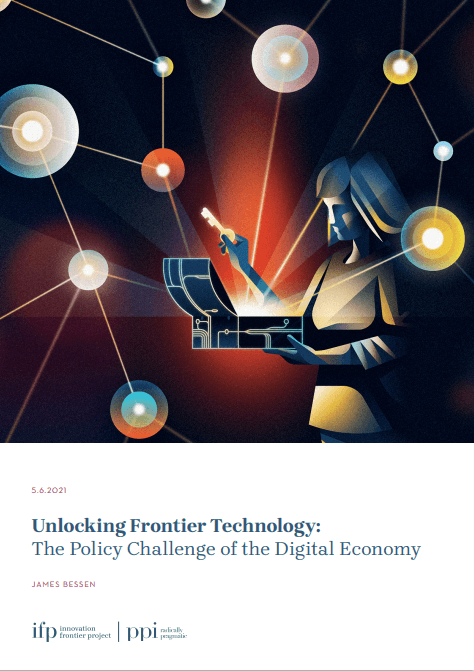
Today, the Innovation Frontier Project (IFP), a project of the Progressive Policy Institute, released a new report from James Bessen, an economist and Executive Director of the Technology & Policy Research Initiative at Boston University School of Law.

In the report, Bessen argues that new information technology has delivered more and unprecedented convenience for consumers, and good-paying jobs that contribute to overall economic growth. However, limited access to the technology is also contributing to the major economic and social issues of the day: the growing dominance of large firms and the struggle to increase the flow of knowledge, slow productivity growth, rising economic inequality, and the failure of regulation. The challenge for policymakers is to mitigate these negative effects while preserving as many of the benefits as possible to consumers, to workers, and to the economy.

“James Bessen provides a policy framework for thinking about the diffusion of these important digital technologies. The productivity gains that have resulted from proprietary IT investments are vitally important, but now we need to make sure the whole economy can benefit from these advancements.” said Caleb Watney and Alec Stapp, co-leads of the Innovation Frontier Project.

The report draws from his forthcoming book, “Superstar Capitalism”, to be published by Yale University Press.

Read the report here.

Based in Washington, D.C. and housed in the Progressive Policy Institute, the Innovation Frontier Project explores the role of public policy in science, technology and innovation. The project is co-led by Caleb Watney and Alec Stapp.

The Progressive Policy Institute (PPI) is a catalyst for policy innovation and political reform based in Washington, D.C. Its mission is to create radically pragmatic ideas for moving America beyond ideological and partisan deadlock. Learn more about PPI by visiting progressivepolicy.org.

###

Sen. Manchin Joins PPI’s Center for Funding America’s Future for Event on Infrastructure Financing

Today, PPI’s Center for Funding America’s Future hosted a webinar on reinvesting in our infrastructure and potential options to pay for the Biden Administration’s American Jobs Plan, with opening remarks provided by Senator Joe Manchin (D-WV).

“President Biden has offered an ambitious vision for reinvesting in America’s infrastructure. As lawmakers begin debate on how to best turn that vision into reality, we thank Senator Manchin for opening this important discussion today and for pursuing practical policies to finance critical public investments without adding to our national debt,” said Ben Ritz, Director of PPI’s Center for Funding America’s Future.

The panel discussion included Ben Ritz of PPI, William G. Gale, Co-Director of the Urban-Brookings Tax Policy Center, and Samantha Jacoby, Senior Tax Legal Analyst for the Center on Budget and Policy Priorities.

Earlier this spring, Ben Ritz and PPI President Will Marshall wrote to House Speaker Nancy Pelosi and Senate Majority Leader Chuck Schumer urging Congress to consider a wider array of tax changes to offset the costs of the America Jobs Plan, the Biden Administration’s landmark infrastructure overhaul proposal. The tax reforms proposed in the letter include:

  • Raising the tax on inherited fortunes
  • Reducing tax preferences for capital gains
  • Instituting a Value-Added Tax (VAT)
  • Putting a price on carbon pollution
  • Transitioning to mileage-based fees
  • Raising the corporate income tax rate
  • Capping itemized deductions, and
  • Increasing resources for IRS enforcement


Watch the webinar here.

The Progressive Policy Institute (PPI) is a catalyst for policy innovation and political reform based in Washington, D.C. Its mission is to create radically pragmatic ideas for moving America beyond ideological and partisan deadlock. Learn more about PPI by visiting progressivepolicy.org.

Follow the Progressive Policy Institute.

###

Media Contact: Aaron White – awhite@ppionline.org

Unlocking Frontier Technology: The Policy Challenge of the Digital Economy

INTRODUCTION

For many people, information technology has significantly helped sustain their quality of life during the pandemic. We are able to visit friends and relatives over video chat, to shop online, and to stream movies. Many people are able to work from home thanks to new technology. This should come as no surprise. Information technology has been creating new benefits for consumers, new well-paying jobs, and improved productivity growth for some time now. Large firms across the economy have been making huge investments in new information technologies that have delivered major social benefits.

These investments in software and hardware have accelerated in recent years, especially outside the tech sector. To just give a couple of examples, from 2015 to 2019, software and tech hardware investment in the waste management industry rose by 75 percent and 57 percent, respectively, as leading waste management companies built out digital platforms to deal with the increasingly complex flows of electronic and other types of waste. Over the same period, hotel chains and other accommodation companies boosted software and tech hardware investment by 71 percent and 37 percent, respectively, to manage costs and revenues. Pharmaceutical benefit managers invested in sophisticated information technology systems to handle the complex prescription and pricing policies that are at the heart of today’s drug distribution systems. And electric grid companies need complex monitoring and pricing systems to handle the new mix of renewable and non-renewable energy sources, and the flexible pricing models that come along with them.

The expectation is that these investments will eventually lead to broad gains in productivity in these industries, translating into a more prosperous society. Nevertheless, some large firm investments in technology have serious social consequences. Everyone is aware, for example, how social media platforms have helped misinformation to spread widely, misleading people about public health measures, vaccines, and political processes.

Yet, while misinformation is an important policy issue, it is not purely about digital technology — traditional media have also played an important role. Furthermore, only a few companies provide social media and there are deeper and broader problems raised by new generations of information technology.

More generally, recent economic research shows that increasing use of information technology has helped increase the dominance of large firms across the economy. This competitive advantage, in turn, has made it harder for new entrants and smaller firms, undercut innovation, exacerbated income inequality, and undermined government regulators.

These changes pose substantial challenges for policymakers. While we want to encourage firms to invest in new technology and to innovate — especially firms in those parts of the economy where productivity and use of technology has lagged — policy also needs to ensure that the knowledge of new technology and the benefits spread throughout society by opening up competition and increasing the flow of knowledge.

The problem is not “bigness” per se. Only large, complex systems can deliver these benefits, so we need large firms to innovate and invest in them. But policy can play a role in prompting or encouraging large firms to provide greater access to their technology and that can go a long way toward ameliorating the problems created by these new systems.

Read the report:

ABOUT THE INNOVATION FRONTIER PROJECT

Based in Washington, DC and housed in The Progressive Policy Institute, The Innovation Frontier Project explores the role of public policy in science, technology, and innovation.

The future can be a better, more vibrant place, but we will need significant technological breakthroughs to get there. To solve climate change, cure diseases, prevent future pandemics, and improve living standards across the globe we need continued scientific advancement and technological improvements. The United States is particularly well- positioned to drive these advancements because we are on the frontier of knowledge ourselves. Even small changes to the way we govern and incentivize science and technology can have long-run consequences for the US and for the world.

To achieve the progressive goals we have for the future we need to fundamentally evaluate how policy impacts the rate of progress. The Innovation Frontier Project commissions research from talented academics and regulatory experts around the world to bring new ideas and ambitious policy proposals to these debates.

Alec Stapp and Caleb Watney are the directors of the Innovation Frontier Project.


PODCAST: Rep. Kilmer Celebrates Star Wars Day and Talks Reinvesting in R&D

In a Star Wars Day-themed Radically Pragmatic podcast episode, Caleb Watney, Director of Innovation Policy at the Progressive Policy Institute, sits down with Rep. Derek Kilmer (WA-06) – Congress’s top Star Wars super-fan – for Star Wars trivia, and an exciting conversation on the future of technology innovation in America.

Caleb and Rep. Kilmer dig deep into their shared love of Sci-Fi, and talk about how fiction helps inspire technology improvements and innovations that can become a reality. Representative Kilmer also calls for more Science, Technology, Engineering and Math (STEM) education and apprenticeship opportunities and a reinvestment in research and development funding.

Listen here.

Congressman Derek Kilmer Joins PPI’s Radically Pragmatic Podcast on May the Fourth for a Star Wars Episode That’s Out of This Galaxy

In a Star Wars Day-themed Radically Pragmatic podcast episode, Caleb Watney, Director of Innovation Policy at the Progressive Policy Institute, sits down with Rep. Derek Kilmer (WA-06) – Congress’s top Star Wars super-fan – for Star Wars trivia, and an exciting conversation on the future of technology innovation in America.

Caleb and Rep. Kilmer dig deep into their shared love of Sci-Fi, and talk about how fiction helps inspire technology improvements and innovations that can become a reality. Representative Kilmer also calls for more Science, Technology, Engineering and Math (STEM) education and apprenticeship opportunities and a reinvestment in research and development funding.

“We need to dedicate more funding to research and development. Period. My background is working in economic development. When I worked for the Economic Development Board of Takoma, we had a sign up in our office that said ‘We are competing with everyone, everywhere, every day, forever.’ Which I confess, kind of freaked me out a little bit. But I think it’s a pretty good ethic – not just for folks who work in local economic development, but it’s a pretty good ethic for our country, too.

“The reality is, we’re competing in a global marketplace and we’re not keeping up. We used to dedicate far more of our federal budget to R&D spending. We’ve seen a gradual decrease and now it’s at the lowest it’s been in 60 years. And I think that’s a problem. And we’ve been in this position before. We’ve seen this play out before in a different era. Congress rose to the challenge in a bipartisan fashion. Back in 1957, you had a satellite the size of a beach ball launched by the Solviet Union and Congress responded by doubling research and development spending, by tripling support for basic research, and put science education efforts on steroids. And that’s how we got to the moon first.

“We’re still seeing the benefits of those investments today – every time we use a touchscreen on a smartphone or a tablet, we’re using technology that was pioneered by NASA research. The question before us now is will we continue to allow those Sputnik moments to happen everyday without our nation stepping up?” said Rep. Derek Kilmer on the podcast. 

Representative Kilmer serves on the House Appropriations Committee where he is as a member of the Subcommittees on Defense, Energy & Water, and Interior & Environment. He is also Chair of the Select Committee on the Modernization of Congress. In addition, Rep. Kilmer serves as chair emeritus of the New Democrat Coalition.

Listen here, and subscribe:


The Progressive Policy Institute (PPI) is a catalyst for policy innovation and political reform based in Washington, D.C. Its mission is to create radically pragmatic ideas for moving America beyond ideological and partisan deadlock. Learn more about PPI by visiting progressivepolicy.org.

Follow the Progressive Policy Institute.

###