
By Danielle Steitz
Lately, it seems like every day begins with a torrent of headlines from an increasingly complex and rapidly changing global landscape. Wars in Europe and the Middle East prompt fears of escalation and geopolitical confrontation, while proliferating technologies like artificial intelligence threaten to reshape the security landscape. Political, security, economic, and technological concerns are increasingly intertwined, making the global landscape fraught with tensions and trade-offs. And in the United States, the erratic and unprincipled leadership of the Trump administration is confounding America’s allies while emboldening her adversaries, creating a more unpredictable and dangerous world.
PPI seeks to offer a path for navigating this increasingly chaotic global environment through understanding the domains in which we operate, which is why we are proud to announce the launch of Domain Awareness. While there are countless stories each day that demand attention, PPI’s new weekly digest offers a curated list of the top stories that policymakers and practitioners need to read, paired with commentary from PPI’s policy experts. We hope you will join us each week as we seek to understand current events and trends, and as we offer pragmatic policy solutions towards a more stable and secure future.
By Danielle Steitz and Tamar Jacoby
Leaders throughout Europe have spent the past several days publicly stating that Russia has stepped up its hybrid activity targeted at their nations, and may continue to escalate in order to probe Europe’s response. French President Emmanuel Macron and Polish Prime Minister Donald Tusk both addressed the increase in Russian malign activity, describing it as designed to degrade support for Ukraine and to drive a wedge between NATO allies. These warnings come amidst events like last month’s drone attack at Leipzig Airport, suspicious fires and sabotage operations targeting European defense facilities, and a drone attack on a train that narrowly missed former U.K. Prime Minister Boris Johnson and former U.S. CIA director David Petraeus.
PPI Expert Assessment:
Danielle Steitz, Director of National Security Policy: European leaders are reading recent Russian actions as forecasting the desire to continue probing Europe’s resolve, and are reacting to warn their publics and the world accordingly. Russia appears to perceive a divide between the U.S. and European NATO allies, and will take every opportunity it can to create distance and doubt in the alliance.
Tamar Jacoby, Kyiv-based director of the New Ukraine Project: Most of the world is still using the phrase “hybrid war” to describe Russia’s escalating aggression in Europe: sabotage, arson, assassination attempts, cable-cuttings, airspace violations, cyberattacks, and campaigns to undermine electoral integrity. But after four years and hundreds of incidents, some Europeans say it’s time to drop the word hybrid. “The reality is that Russia considers itself at war with Europe,” Ukrainian Foreign Minister Andrii Sybiha explained this month, “even if Europe does not consider itself at war with Russia.”
One of Moscow’s goals is clearly to suppress Western support for Ukraine, persuading European voters that it’s in their interest to pursue peace at any price on Russia’s terms. But it’s hard to believe the motive ends there. The Kremlin has long framed its aggression in Europe as part of a conflict with “the collective West,” and Vladimir Putin makes no secret of his desire to reclaim the Cold War Soviet sphere of influence – a huge swath of what’s now free, democratic Europe, including one-third of Berlin. Europeans are increasingly alarmed but only beginning to grapple with the implications – what would it mean to be at war with Russia, for national governments and for NATO?
For additional PPI insight on this topic, please see “Europe Struggles to Respond to Russian Attacks” by Tamar Jacoby.
By Tamar Jacoby and Danielle Steitz
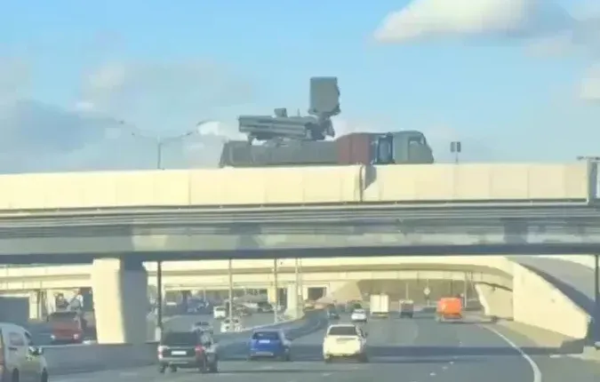
As Ukraine prepares for its fifth winter under Russian attack, the evolving conflict appears to have undergone yet another shift. This past weekend, Ukraine launched its largest strike yet into the Moscow region, reportedly using over 1,100 drones as well as Ukrainian-manufactured Flamingo and Pelican missiles to target infrastructure in the region that includes one of Russia’s largest oil refineries. At the same time, Russia has stepped up its use of jet-powered Geran drones to attack targets across Ukraine, increasing the reach of the conflict and eliminating any sense of distance between civilians and the frontlines.
PPI Expert Assessment:
Tamar Jacoby, Kyiv-based director of the New Ukraine Project: Everyone knew this would be a difficult fall in Ukraine. Ukrainian long-range drones and missiles have been pummeling Russia for months, striking at the heart of its economy by incapacitating 45 percent of its oil refining capacity – and everyone knew a wounded Putin would be an even more dangerous Putin.
Now, Moscow is striking back, and it has some nasty new weapons to do it with, including North Korean ballistic missiles and drones equipped with Chinese jet engines. Ukraine will soon have an answer for the jet drones. Several prototypes have been tested and will now go into mass production.
But only the West can help Kyiv down ballistic missiles. Congress should press Trump to allow Ukraine to produce its own Patriot interceptors. Trump should press America’s allies — including Spain and Greece — to give Kyiv the interceptors lying unused in their storerooms. Elon Musk should give Ukraine permission to use Starlink to strike ballistic-missile launch sites deep inside Russia. Then, the US should follow through on the sanctions and tariffs authorized by the Lindsey Graham bill. Ukraine is heading into a tough winter – probably the toughest of the war. All its friends and allies need to step up and help.
Danielle Steitz, Director of National Security Policy: The Russia-Ukraine war has seen rapid technological iteration and tactical adaptation, and this current moment is no exception. Ukraine’s Operation Vivaldi, where heavy drones were used to deploy kamikaze ground drones behind Russian lines, demonstrates Ukrainian ingenuity and has reportedly disrupted Russian ground advances in Donetsk. However, with very few options to shoot down Geran drones currently available, Ukraine faces increasing difficulties in replicating that operational success in the air domain — particularly when it comes to air defense.
For additional PPI insight on this topic, please see “The New Normal in Kyiv, Ukraine” by Tamar Jacoby.
By Danielle Steitz
The Pentagon’s cost estimates for the ongoing conflict against Iran continue to increase, with the latest total at $45.1 billion as of September 3rd, per reporting from CNN. This number includes operations costs and the increased cost of fuel, but does not include potential reconstruction costs for damaged U.S. military bases in the region. A recent CBO report assessed that costs for the war could increase at the rate of $2-3 billion per month, depending on the intensity of the conflict and operational demand.
PPI Expert Assessment: Despite the Trump administration’s assertions to the contrary, the war with Iran persists. The war, which looks far more like a regional conflict given the recent success of the Iranian-aligned Houthis in capturing control of the Bab al-Mandeb Strait, continues to cost the U.S. billions of dollars in operational and maintenance costs alone. Although Trump seeks to project confidence in promising that the war will end “immediately after” the midterm elections in November, Iran’s leaders seem to believe they can increase direct and indirect war costs enough to undermine America’s will and drive Trump to the bargaining table.
By Danielle Steitz
As the national debate around AI safety and responsible pacing of frontier models grows louder, a recent CNN report demonstrates that no matter how advanced the model, human review and verification of outputs remain incredibly necessary. A U.S. military intelligence analyst utilized a Department of Defense-approved AI chatbot to draft an intelligence assessment on a Chinese ship, only for the U.S. military to reportedly realize at the last minute that the AI had misidentified the ship’s cargo as nuclear components – a “hallucination” that nearly sparked a war.
PPI Expert Assessment: As Secretary of Defense, Pete Hegseth has pushed for the rapid and full-throated embrace of AI systems throughout all DoD processes and use cases, advocating for speed over everything else. As stated in his January 2026 Artificial Intelligence Acceleration Strategy, “We must accept that the risks of not moving fast enough outweigh the risks of imperfect alignment.” If Secretary Hegseth truly views the potential of the American military hallucinating itself into a conflict with China as an acceptable risk of “imperfect alignment,” that irresponsible and cavalier attitude is exactly the wrong one to be leading the Department of Defense at this high-stakes global moment.

