
By Danielle Steitz
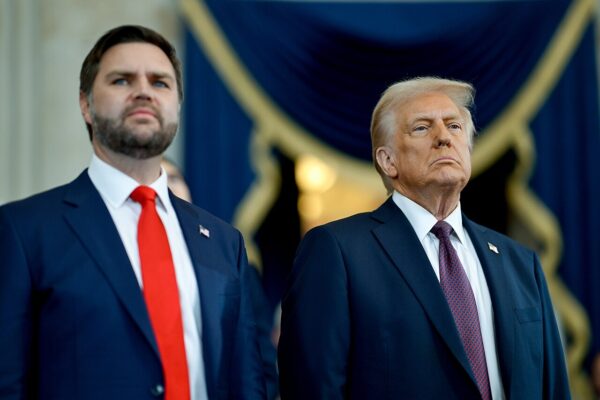
In a Truth Social post on Thursday afternoon, President Donald Trump announced that he was redirecting Vice President J.D. Vance’s efforts away from negotiations with Iran’s leadership and towards combating “crime and corruption at home.” Trump asserted in his post that “we don’t need a deal with Iran,” alleging that America has gotten “hundreds of billions” of dollars from Iran and that “we’ve got their Strait!” Vance had reportedly reached out to Iran’s leaders in the past several days with the hopes of negotiating a settlement to the Iran War, whose unpopularity Vance had identified as the “real reason” for Republicans being routed in the 2026 midterm elections.
PPI Expert Analysis:
Danielle Steitz, Director of National Security Policy: Trump’s statements about not needing a deal with Iran are in direct contrast to his assertions that a deal with Iran could be reached in the near future, further illustrating the lack of a clear strategy from the Trump administration on how to end the war. At this point, there are few good options on how to bring the war to an end. The status quo is not sustainable; the sizable U.S. military force presence in the region continues to draw assets away from other regions of interest, and every U.S. Navy ship deployed to support commercial traffic through the Strait of Hormuz incurs a maintenance debt that will impact its future availability. Nor is there sufficient political will or public backing to support the kind of military escalation that defeating Iran on the battlefield would likely require. Treasury Secretary Scott Bessent appears confident that the economic warfare of his Operation Economic Outcast will “economically asphyxiate” the Iranian regime and force the conclusion of the war on America’s terms; however, what was promised to be an “economic D-Day” in August of 2026 so far appears not to have changed the strategic calculus of Iranian leaders. While the Trump administration has undermined Iran’s faith in American diplomacy several times over — striking Iran while negotiators were at the table in February 2026 and walking away from a signed Memorandum of Understanding this summer — a diplomatic resolution likely remains the only course out of this strategic quagmire.

By Danielle Steitz
On Tuesday, the House of Representatives voted to refer Rep. Thomas Massie’s articles of impeachment against Secretary of Defense Pete Hegseth to committee, effectively tabling any consideration of the measure on the House floor for the rest of the current Congress. Massie, who lost his primary and will not be returning to Congress next year, drafted 8 articles of impeachment and sought to hold Hegseth accountable for violations of the War Powers Act with respect to the Iran War, extrajudicial boat strikes in the Caribbean, the capture of Venezuelan leader Nicolas Maduro, and retaliation against Democratic Senator Mark Kelly. Hegseth has largely been the face of the very unpopular Iran War, and he struck a defiant tone in a rare Pentagon press conference on Tuesday morning, arguing that going after him would be putting a target on the backs of American servicemembers.
PPI Expert Analysis:
Danielle Steitz, Director of National Security Policy: The Massie articles of impeachment always faced an uphill battle — their passage would have required full Democratic voting support and significant Republican defections, neither of which occurred – but it seems very unlikely that this means the end of Hegseth’s battles with Congress. Democratic leader and presumed future Speaker Hakeem Jeffries deferred to incoming HASC chairman Adam Smith on any future impeachment efforts, with Smith striking a measured tone but leaving the door open to possible removal in the 120th Congress. With the return of HASC’s Oversight and Investigations subcommittee in the next Congress, I anticipate a number of investigations aimed at substantiating potentially impeachable actions, such as: the short-circuiting of officer promotion processes for his own preferred criteria; his sharing of classified military operational information via a Signal group chat; and the activities of the Office of Strategic Capital, whose direct equity stake-taking and involvement in the transfer of Venezuelan oil to U.S. control appear legally dubious.
By Danielle Steitz
With the 119th Congress firmly entering the “lame-duck” part of its tenure, one must-pass piece of legislation remains at the top of the House and Senate Armed Services Committees’ to-do list: the annual National Defense Authorization Act, or NDAA. The NDAA has passed for 65 consecutive years and is considered a “must-pass” bill in every Congress; its reputation and the shared House and Senate goal of passing it each year often make it a very popular vehicle for a host of Republican and Democratic legislative priorities. The “big 4” committee leaders from both HASC and SASC reportedly plan to meet multiple times next week to find a path forward on major sticking points in the defense authorization bill, to include the topline appropriations for the Department of Defense and funding for the Iran War.
PPI Expert Analysis:
Danielle Steitz, Director of National Security Policy: The to-do list for the “big 4” appears to only be growing as Congress looks to the NDAA to advance key legislative priorities. In addition to hammering out a compromise topline below the DoD’s $1.5 trillion total ask and the future of Iran War funding, negotiators must also sort out what to do with language governing the DoD Office of Strategic Capital’s ability to take direct equity stakes, so-called “right to repair” provisions that industry argues could improperly siphon up their intellectual property, and a provision that aims to deepen U.S.-Israeli cooperation on defense innovation. On top of all of that, both Democratic and Republican House leaders have seized on the revelation of Nvidia CEO Jenson Huang’s inappropriate relationship with a suspected Chinese intelligence operative to call for the incorporation of several chip and semiconductor export-control measures into the NDAA. With such a long list of priorities, HASC and SASC leadership and their staff won’t have much opportunity to relax during the lame-duck session.
How the World Ran Out of Everything: Inside the Global Supply Chain by Peter S. Goodman
Goodman’s 2024 work, written in the shadow of the COVID-19 pandemic’s very tangible supply chain breakdowns, provides an excellent entry point into understanding the current state of play of global supply chains for readers without an economics or business background. In How the World Ran Out of Everything, Goodman illustrates the vast and fragile networks that underpin contemporary manufacturing, long optimized for “just in time” delivery and minimal manufacturing overhead. The lessons of COVID-19, of disrupted delivery and supply chain chokepoints, are just as likely to apply to any potential conflict with China — we should heed their lessons now and reconsider optimizing for resilience and durability in our supply chains instead.

