Bledsoe for Politico: How Trump can help save coal-with China’s help

Last week, President Donald Trump declared that he would bring back coal jobs, directing the EPA to roll back the Clean Power Plan and other regulations on coal producers. It’s an audacious promise given the recent trajectory of the industry, and most energy experts dismissed it as impossible.

But there is one way for Trump to slow the loss of coal-related jobs and it has nothing to do with undermining climate regulations: Rather, it runs through China.

As Trump meets with Chinese President Xi Jinping today, he has a rare chance to build relations with a global rival and help keep one of his domestic promises. The reason is clean coal technology.

Read more at Politico. 

Mandel for Forbes: How E-Commerce Is Raising Pay And Creating Jobs Around The Country

Think back to the first half of the 20th century, when superstar companies of the likes of Ford, General Motors, General Electric, DuPont and Bethlehem Steel literally grew from nothing to employ hundreds of thousands of workers. These innovative market leaders, notably feted by business historians such as Alfred Chandler, pioneered new products and production techniques, achieving and sustaining ever-higher levels of manufacturing productivity. They offered higher wages to workers, lower prices to customers, and a sense of vitality and dynamism to the whole economy. In a very real sense, these superstar companies helped create a new middle class of factory workers.

Skeptics deny that that this virtuous circle is operating today. They fear that today’s tech superstars are not generating enough jobs to make up for the slow growth of jobs in the rest of the economy.

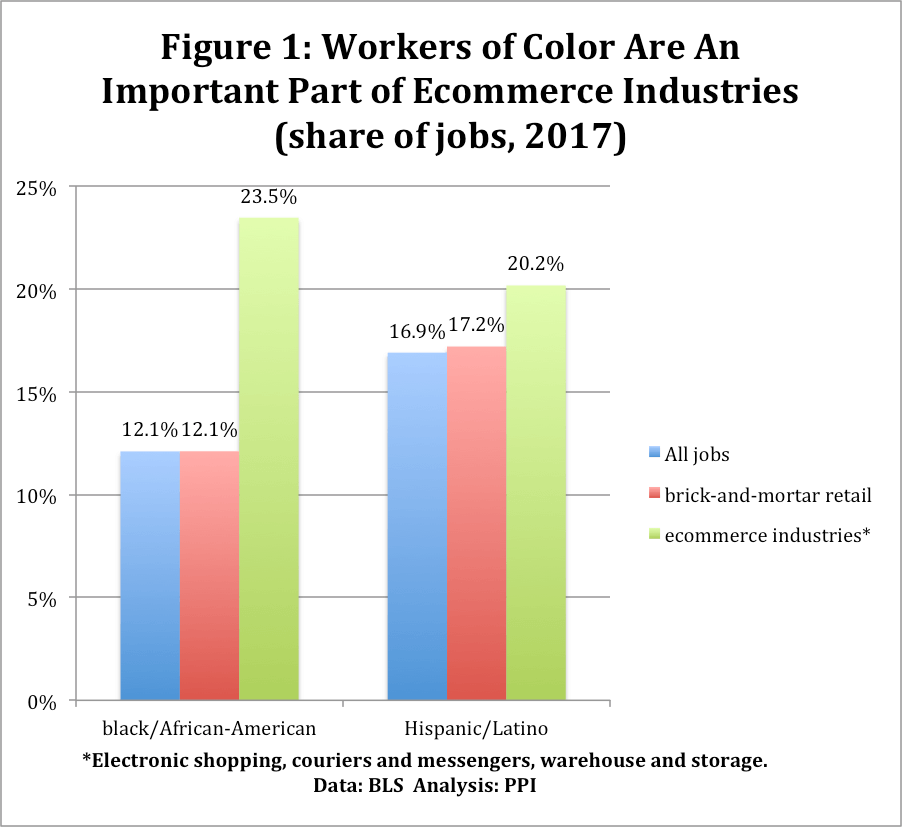
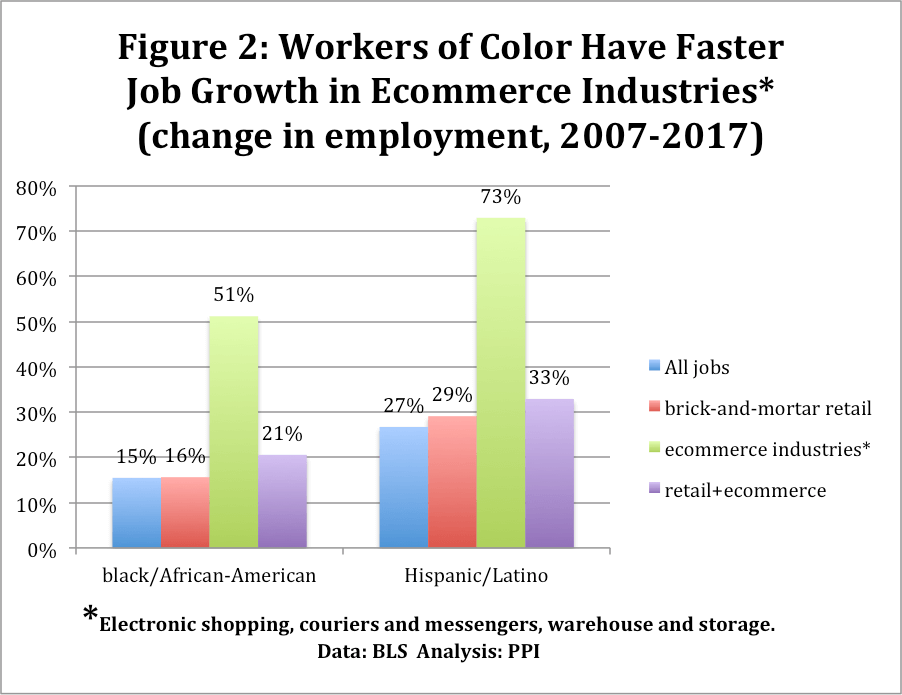
However, these fears of a digital job drought are misplaced. According to analysis of data from the Bureau of Labor Statistics, high-productivity digital companies are expanding—not just on the coasts, but across much of the country. And the gains are going not just to well-educated software developers, but to mid-skilled sales people and office staff.

Continue reading in Forbes.

Gifford for The Hill: Why Trump’s Climate Order Might Backfire

Here’s some friendly advice to U.S. business leaders who may be quietly cheering plans by President Trump and his new administrator of the Environmental Protection Agency (EPA), Scott Pruitt, to “drain the swamp” by gutting environmental regulations: Be careful what you wish for.

Not only will many Americans view such a rollback as radical, but it’s also likely to provoke a torrent of lawsuits, tempting federal and state courts to step into the policy vacuum created by a weakened regulatory regime.

Martha Coakley, the former Democratic attorney general of Massachusetts, predicts that even Republican state attorneys general will consider pairing with private plaintiffs’ attorneys to file tort actions to protect the environment in the absence of viable federal regulation. A new spate of public nuisance litigation — the tort du jour for environmental activists seeking “regulation through litigation” -— would likely result in a far more draconian and unstable set of environmental rules that what’s currently on the books.

Continue reading at The Hill. 

Gerwin for CNBC: How the US economy could suffer-bigly-under Trump’s trade agenda

The Trump administration recently released a trade pronouncement that goes beyond the president’s preferred 140-character format. The 2017 Trade Policy Agenda is a report, required by Congress, that highlights Administration priorities on trade.

An earlier, leaked version criticized aspects of the global trading system as “untethered from economic realities.” That wonderful phrase is missing from the final report—perhaps because it’s an apt description of many aspects of the Administration’s trade agenda itself.

The Administration’s report mentions several broadly supported objectives, including enforcing trade laws and opening markets. But, at its core, the new agenda is a fundamental departure from America’s decades-long support for rules-based trade that benefits Americans and the world.

Continue reading at CNBC.

Flashback Friday: PPI in Hindsight

Just over a year ago, PPI unveiled a big ideas blueprint with a prescient subtitle: Unleashing Innovation and Growth: A Progressive Alternative to Populism. We knew that progressives in the United States and Europe needed better answers to the economic and cultural grievances that have fueled the rise of a retrograde populism and nationalism around the world. We did not foresee that Democrats would fail to offer a forward-looking plan for jobs and shared growth, opening the door to Donald Trump’s improbable victory.

Which makes the themes and ideas in PPI’s sweeping policy blueprint more important than ever. Populism today thrives in the political vacuum left by center-left parties that offer no clear vision for reviving economic dynamism and hope. “Winning the economic argument will be essential to victory in the 2016 elections and it starts by getting the diagnosis right,” the blueprint noted. Instead, Democrats ran a campaign that leaned heavily on identity politics, wealth redistribution and centralized, small-bore solutions.

Unleashing argued that America (and Europe) are stuck in a slow-growth trap that holds down wages and living standards. And it offered bold prescriptions for building on America’s competitive advantage in technology and entrepreneurship to spread innovation – now concentrated in a vibrant digital sector — to the nation’s physical economy, which continues to suffer from low productivity. In addition, the document proposed creative ways to modernize the nation’s economic infrastructure, improve the regulatory environment for innovation, build middle class wealth and empower poor Americans to work, save and chart their own course to social mobility and inclusion.

Crucially, the blueprint also urged progressives to reject anger and victimhood and offer voters a confident account for how America can build a new, inclusive prosperity:

What America needs is a forward-looking plan to unleash innovation, stimulate productive investment, groom the world’s most talented workers, and put our economy back on a high-growth path, It’s time to banish fear and pessimism and trust instead in the liberal and individualist values and enterprising culture that have always made America great.

That was the road not taken in 2016. Now it’s the road to political relevance and success for progressives here and elsewhere.


How the Startup Economy is Spreading Across the Country – and How It Can Be Accelerated

All across the country, entrepreneurs are founding and building new companies that use technology in innovative ways. The American startup ecosystem — the envy of the world — has spread outside of the coasts and high-profile tech hubs, such as San Francisco, Boston, and New York City, to other parts of the country. Startup activity is happening everywhere in cities and towns across America.

More than that, the startup culture of entrepreneurship, fueled by scalable technology, is spreading as well. Around the country, an increasing number of companies are describing themselves as “startups” when they advertise for workers.

In new research, the Progressive Policy Institute (PPI) and TechNet explore the importance of the startup economy to job growth, not just in traditional technology hubs, but also in metro areas around the nation.  Read the paper here.

Marshall for The New York Times: Can Democrats Work With Trump?

WASHINGTON — President Trump has discovered that trying to work with Republicans, like trying to work on health care policy, is complicated. So with all his big campaign pledges in limbo following last week’s Obamacare fiasco, he reportedly is contemplating overtures to a party that actually wants to govern: the Democrats.

This new tack comes, mind you, after Mr. Trump blamed Democrats for refusing to help him and House Speaker Paul Ryan eviscerate Obamacare. With zero support from Democrats, the pair had no margin for error as Republicans started to defect and were forced to pull their bill.

Perhaps it’s beginning to dawn on the president that today’s Republican Party is designed for maximal obstruction and minimal constructive policy making. The rigidly doctrinaire Freedom Caucus essentially has veto power over White House initiatives, while moderates will jump ship if Mr. Trump concedes too much to right-wing purists.

Continue reading at The New York Times.

Rotherham for U.S. News & World Report: Schooled by Politics

The defeat of the Republican plan to overhaul President Barack Obama’s Affordable Care Act last week offered a stark reminder about how much coalitions, persuasion and raw self-interest matter in politics. President Donald Trump failed to persuade almost anyone to join his side, there was no coalition for reform and the health care law’s benefits for millions of Americans made it in their self-interest to oppose a plan that would have reduced access to health care.

I’m glad that bill failed, but it’s hard to miss how education reformers are making the same strategic mistakes in their approach to politics.

In the 2016 election a few characteristics were key drivers of voting behavior. Two that stand out are educational attainment and where someone lives. Hillary Clinton won college educated voters by four points, according to exit polls, and improved on Obama’s 2012 performance with this demographic by eight points. Among those with postgraduate education, she won 58-37, also an eight-point improvement on Obama’s performance against Mitt Romney. For his part, Trump won rural voters in a 62–34 landslide, and every political analyst now has a nifty shorthand on how a voter’s physical distance from a Starbucks, Uber or Whole Foods predicted their vote.

Continue reading at U.S. News & World Report. 

USA TODAY: Emerging Tech Hubs Are Far From Coasts

PPI Chief Economic Strategist Michael Mandel was quoted in USA TODAY regarding his recent report, “How the Startup Economy is Spreading Across the Country” on start-ups and entrepreneurial growth across the country:

“I was surprised by cities in the Midwest that made the list,” says Michael Mandel of PPI, who conducted the study. E-commerce contributed to job creation in Ohio, Tennessee, and Kentucky among companies large and small, he said.

Read the piece in its entirety at USA TODAY. 

Axios: The Next Start-Up Hubs

A growing number of startups are being created across the country — and they’re cropping up outside of the top innovation hub cities. That’s according to new data released today by TechNet and the Progressive Policy Institute.

Why it matters: Political and economic dynamics are forcing companies and investors to pay more attention to business activity in middle America, where many workers feel left out of the booming economies of the coastal cities (think San Francisco, San Jose, Seattle, New York and Boston.) Following the recession, start-up formation stalled outside of the big tech hubs like Silicon Valley. But activity has picked up over the past two years, with midwestern cities gaining momentum.

Continue reading at Axios.

Yarrow for SF Chronicle: Young Men Say they Feel Stuck in a ‘Man Box’

Despite the decades-long drumbeat for gender equity, young American men still feel strong social pressure to adhere to traditional male roles to be tough, sexually aggressive and controlling, even though most personally don’t believe in the tenets of old-style masculinity. This disconnect between how they feel they should act and how they say they want to act leaves many young males at sea.

“Most young men believe that women are their equals,” Gary Barker, president and CEO of Promundo, an international organization working with boys and men that today released a report, “Man Box: A Study on Being a Man in the U.S., the U.K. and Mexico.” “It’s other parts of manhood — the toughness, the emotional straitjacket, the need to be a rugged individualist — that continue to thrive because we still hold those values up as what males should live up to.”

Continue reading at San Francisco Chronicle.

Aldy Testimony for the U.S. House Committee on Energy and Commerce

Statement of Joseph E. Aldy
Associate Professor of Public Policy, Harvard Kennedy School
Visiting Fellow, Resources for the Future
Faculty Research Fellow, National Bureau of Economic Research
Senior Adviser, Center for Strategic and International Studies

United States House Committee on Energy and Commerce, Subcommittee on Energy, hearing on “Federal Energy Related Tax Policy and Its Effects on Markets, Prices, and Consumers”

[gview file="https://www.progressivepolicy.org/wp-content/uploads/2017/03/HHRG-115-IF03-Wstate-AldyJ-20170329.pdf" title="the-great-swap"]

How the Startup Economy is Spreading Across the Country- And How It Can Be Accelerated

It is March 2017. Square, the small business payments startup founded in 2009, is hiring for its customer support operation in St. Louis. Fintech startup Greensky, founded in 2006, is expanding in Atlanta. Seattle-based Zulily, the ecommerce startup founded in 2009 and bought by QVC in 2015, is hiring for its fulfillment center in Bethlehem, Pennsylvania, on the site of Bethlehem Steel’s former main plant. Venture-funded Thread International, based in Pittsburgh, is staffing up its
headquarters to help turn recycled plastics into fiber and yarn. Total Quality Logistics, a freight brokerage founded in Cincinnati in 1997, has 26 positions open in Ohio, 11 in Florida, and more elsewhere.

All across the country, entrepreneurs are founding and building new companies that use technology in innovative ways. The American startup ecosystem — the envy of the world — has spread outside of the coasts and high-profile tech hubs, such as San Francisco, Boston, and New York City, to other parts of the country. Startup activity is happening everywhere in cities and towns across America.
More than that, the startup culture of entrepreneurship, fueled by scalable technology, is spreading as well. Around the country, an increasing number of companies are describing themselves as “startups” when they advertise for workers.

In this paper, the Progressive Policy Institute (PPI) and TechNet explore the importance of the startup economy to job growth, not just in traditional technology hubs, but also in metro areas around the nation.


Trump’s climate rollback could undermine our promises to the rest of the world

Trump’s executive order eviscerating Obama’s climate plan could leave the U.S. isolated as other countries push forward to curb emissions, observers of international climate negotiations said.

Major climate allies are increasingly concerned that Trump’s efforts to overturn the [Clean Power Plan] and other climate rollbacks will blow a huge hole in the U.S. ability to meet its 2025 climate commitment, let alone reach much deeper emissions cuts needed to stabilize the climate long-term,” said Paul Bledsoe, a senior fellow on energy at the Progressive Policy Institute.

Those concerns about U.S. climate commitments under a Trump presidency could come up in May when diplomats gather for a working group meeting on the Paris climate agreement.

Read more at The Washington Post. 

The Coming Productivity Boom- Transforming the Physical Economy with Information

It is amazing how many of our nation’s biggest challenges can be addressed by a simple formula: faster growth more broadly shared. From infrastructure to healthcare, education to national security, crime to creativity, a bigger pie and a wider winner’s circle go far towards solving them.

A simple comparison of potential growth rates tells the story. At the current expected growth rate of 2% annually, the country will struggle to meet its obligations and invest in the future. But if growth accelerates to 2.7% annually, as this paper’s analysts project, it will add a cumulative $8.6 trillion in wages and salaries over the next 15 years (measured in 2016 dollars).

And while Americans will have more to spend on meeting their needs, the government will have more funding to help out. Federal revenues will go up by an added $3.9 trillion without any increase in federal taxes as a share of GDP. Some of that will go to cutting the debt, while still leaving additional revenue for other needs, such as infrastructure and security. (These figures are based on projections and analysis developed in this paper.)