Romney’s stance on housing: ‘Let it run its course’

PPI’s Jason Gold was quoted in foxnews.com about the way Romney wants to fix the ailing housing market:

“Romney’s running as Mr. Fix-it on the economy, but he has nothing to say  about one of the biggest pieces of the puzzle,” said Jason Gold, a senior fellow  at the Progressive Policy Institute, a Washington D.C. think tank  affiliated with the Democratic Party.

Gold, who specializes in housing policy, questioned whether Romney’s  selection of Ryan as a running mate indicates he supports privatizing Fannie Mae and Freddie Mac, as Ryan called for in a budget blueprint last year. Romney  hasn’t said.

Many conservatives argue such a move would finally untangle government — and  taxpayers — from the mortgage business. Gold calls it an impractical step that would almost  certainly end the days of 30-year fixed mortgages. “It would take a sledgehammer to the housing market and throw us right back into recession.”

Read the entire article here. 


What Paul Ryan learned from Jack Kemp

The Washington Post’s Suzy Khimm quotes Will Marshall on Jack Kemp and Empower America:

“What the Empower America folks wanted to do is move beyond the green eyeshade, balance-the-budget message of traditional conservatism. They didn’t want to have simply a negative narrative about government,” said Will Marshall, who headed a similar policy shop for Clinton’s New Democrats.

Marshall also pointed out that Kemp went out of his way to advocate for new ways of helping low-income Americans. He proposed creating specially targeted business and income-tax breaks in designated “enterprise zones” of high poverty as an alternative to direct government handouts.

Read the entire article.

Young America: Squeezed into Summer Vacation

Last week’s employment status report of America’s youth from the BLS shows the number of people aged 16-24 not in the labor force or enrolled in school in July continues to rise, despite the overall recovery in the labor market.

The number of youth “at loose ends” during the summer of 2012 totaled over 7.5 million – a 2% increase over the same month in 2011, and a 10% increase over 2007. These are young people aged 16-24 that were not working for pay, not actively looking for work, and not enrolled in school in July. I analyzed data from the Current Population Survey to get these numbers.

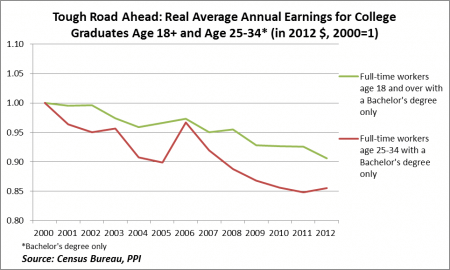
What’s likely happening is that potential young workers are being squeezed out of the labor force. I’ve written about the “Great Squeeze” before. As middle-tier jobs fall away, we see a shift down in the workforce. College grads squeeze out non-degree holders by taking jobs that don’t require a degree (and pay less). Those with less education squeeze out those with even less education. Eventually there are no jobs left for the youngest, least educated workers.

So, what are these 7.5 million young Americans doing on their summer vacation? Beach getaways and late nights out? Auditioning for American Idol? One Fed economist found an answer that may surprise most parents: “watching TV, playing video games and sleeping.” Of course we can also take comfort knowing at least some of these people are getting experience in unpaid internships, as they don’t count as being employed (statistically speaking).

How young Americans spend their summer vacation matters – for the 7.5 million young people in this category that aren’t unpaid interns, they are not getting the “real-world” experience that will enable future success. And we need them to be prepared for the economy they will inherent. Or at least able to pay for our retirement. That means doing what we can to fix the real problem: Getting young people the education and training that they need to prosper.


The Untouchable Economy: Why Americans Are Turning Against ‘Stuff’

Writing for The Atlantic, PPI’s Michael Mandel argues that young people are viewing themselves as microbusinesses operating in a highly uncertain economic environment.

Millennials are shifting from tangibles (cars and homes) to intangibles (education and access to data), but they are not alone. In today’s data-driven economy, the business sector is moving along the same tangible-to-intangible path as the Millennials, perhaps at an even faster pace. Business spending on nonresidential structures, other than mining-related, is roughly 30% below the 2007 pre-recession highs, while investment in software is up almost 20% over the same period.

In fact, Millennials are responding to the same trends as businesses, and for much the same reasons. Members of the younger generation are being forced — or encouraged — to think entrepreneurially, to view themselves as microbusinesses operating in a highly uncertain economic environment. Why buy a home or car if there are lower-risk, lower-cost options? Why invest in physical capital if spending on human capital and data can have bigger payoffs?

This shift changes corporate strategy and marketing aimed towards Millennials. If Millennials are operating like microbusinesses, then companies must reframe their appeal in terms of business values such as security, collaboration and competitiveness. So they will be open to companies that create products and services to help them protect themselves, find allies, or prosper economically.

Read the entire article.

Why Congress Shouldn’t Let Up on Housing

New data from the S&P Case Shiller Home Price Index reinforce the conventional wisdom: home prices have found a bottom and are rising. That is certainly welcome news for beleaguered homeowners, as well as a skittish housing industry desperate for a psychological boost. It should not mean, however, that Washington policy makers can simply sit back and let market forces take their course. Now, as the economic headwinds are finally easing, policy makers should double down and strengthen public initiatives that have helped us get to this point.

While the vast majority of housing price indices are certainly showing improvement, it’s important to remember that those are national averages of the largest metro areas. Big cities where housing markets are doing well, like Washington, DC and other heavily populated coastal metros carry greater weight in the stats than places like the Rustbelt where prices are recovering more slowly.

Continue reading “Why Congress Shouldn’t Let Up on Housing”

Is real GDP real?

The Star Tribune’s Adam Belz quotes Michael Mandel on the flaws of the GDP data and the state of the Minnesota economy:

“(The numbers) don’t mean what they look like they mean,” Mandel said. “Minnesota manufacturing is not nearly so robust as the numbers make it appear.”

Growth in manufacturing in Minnesota and the rest of the U.S. is a mirage, Mandel said. He goes into great detail for his reasons here, but basically he doesn’t think the output figures are accurate.

Read the entire article.

The Recession and Unemployment

PPI’s Michael Mandel was quoted in The Washington Post about the long-term effects of the recession on unemployment.

Many workers are nervous about their livelihoods despite the economic recovery — and for good reason, it turns out.

Among those workers who lost a good job because of the struggling economy over the past three years, roughly one in four found a job that pays as well, according to data released Friday by the Labor Department.

The others remained unemployed, stopped looking for work or accepted jobs at lower wages.

“This data is telling a story of unemployment inflicting long-term damage for a lot of people,” said Michael Mandel, an economist at the Progressive Policy Institute, a centrist think tank. “This won’t turn around until wages overall start rising — and so far, we haven’t seen any strong signs of that.”

Read the entire article HERE.

Election Watch: Akin’s Flap May Doom GOP Senate Takeover Chances

It’s a rare event when a Senate contest affects a presidential campaign—or indeed, an entire election cycle. But for the moment, that’s what seems to have happened in Missouri, thanks to freshly minted GOP nominee Todd Akin’s witless talk about abortion and rape, and his determination (so far) to stay in the race despite threats and importuning from practically the entire Republican Party and conservative movement (with the exception of a few Christian Right colleagues). Most immediately, Akin’s big mistake has demolished what Republicans thought to be their most promising Senate takeover opportunity this year. Shortly after his primary win over two other major conservative opponents earlier this month, Akin, long considered the weakest of the available candidates, had already opened up a big lead over Sen. Claire McCaskill, and was beginning to consolidate conservative support very rapidly. Now a new Rasmussen poll (of all things!) shows McCaskill up by ten points, with Akin’s favorable/unfavorable ratio at a disastrous 35/53 level.

No one but Akin himself can get the wounded candidate off the ballot at this point, and with the deadline for an easy withdrawal and replacement by the state party having already passed, it would be complicated to make the switch, aside from the depleted resources, hurt feelings and late start a new nominee would inherit. So we are now in the midst of a game of “chicken” in which Akin may still believe the state and national GOP will relent and support his candidacy once the current furor has ended, and Republicans will undoubtedly keep the pressure on to convince him he’s throwing away a Senate seat and the good will of the party forever and ever. My money’s on an eventual withdrawal, but the hard-core public support he’s gotten to hang tough from Mike Huckabee, a pretty formidable figure in the GOP and a potential 2016 presidential candidate, is an important counterweight to that temptation. Another factor will be whether grassroots Christian Right forces around the country embrace Akin as a martyr to their ban-abortion-with-no-exceptions cause, and provide him with the money to run a credible campaign without the party, 501(c)(4) and super PAC funds he’s been denied. Continue reading “Election Watch: Akin’s Flap May Doom GOP Senate Takeover Chances”

FCC: A Broadband Assessment without Mobile is Incomplete

This week the FCC concluded that “broadband is not being deployed to all Americans in a reasonable and timely fashion” in its eighth annual “Broadband Progress Report.”  It found 19 million Americans are still without fixed broadband access.

But note the word ‘fixed’ – this conclusion doesn’t include mobile access. The FCC didn’t forget wireless broadband; they explicitly chose not to include it. In fact, the FCC is operating under the mandate that all Americans should have access to fixed and mobile broadband. They use this as a justification for excluding mobile in their determination – that it should be assessed separately, even though no such assessment has been made. So someone who has a smartphone but no access to a wireline connection still counts as not having access.

That’s just silly – by excluding mobile access, the FCC is missing the fastest growing segment of the broadband market. And at this point it may take longer for all Americans to have access to fixed broadband than to mobile. The Telecommunications Industry Association estimates investment on mobile broadband infrastructure could total $100 billion through 2015. The FCC’s own data suggests that if access to either fixed or mobile were counted, the number of Americans without broadband access could be as low as 5.5 million.

Such an obvious exclusion makes the report’s findings hard to use in a meaningful way. It’s like judging a book by its cover – you’re missing a vital part of the story. Yet important regulatory decisions are being derived from this report. The only conclusion I derived from this report is that the FCC needs to adapt its mandates in a way that keeps pace with the fast-changing broadband landscape.

DeMarco Half Right on Short Sales

Edward DeMarco, the beleaguered chief of the Federal Housing Finance Agency, announced this week that Fannie Mae and Freddie Mac will take steps to accelerate “short sales” to reduce home foreclosures. Short sales allow the owner of a mortgage, in this case Fannie Mae and Freddie Mac, to accept a loan payoff for less than a full balance. This way, Fannie and Freddie take a much smaller financial hit than if they had to foreclose on a home altogether. And this saves taxpayers money.

So far, so good. But I’m puzzled as to why DeMarco only goes half way. PPI has a better idea: enable short sales back to the homeowner. That would have the dual benefit of saving taxpayers money and keeping people in their homes. But this would mean reducing the amount of principal on an underwater loan, and DeMarco is adamantly opposed to principal reduction. Continue reading “DeMarco Half Right on Short Sales”

Should the FTC Make Innovation a Bigger Priority?

The FTC’s recent settlements with Google and Facebook raise an interesting question about how such regulatory run-ins can affect future innovation.

The FTC fined Google $22.5 million for misrepresenting privacy assurances to users of Apple’s internet browser. And the FTC is requiring that Facebook obtain consumers’ express consent before sharing their information, maintain a comprehensive privacy program, and get independent biennial privacy audits after Facebook allegedly shared consumer information when they claimed it was being kept private.

My purpose is not to say whether these settlements were justified or not. The problem I’m referring to is not just one or two regulatory actions, but the fear that the government is going to keep regulating until these companies are scared into becoming more cautious. The analogy is yelling at a child every time he or she colors outside the line. Eventually the child will stop coloring.

In effect the FTC is drawing the lines within which these companies must operate and expand. The Googles and Facebooks of the world will have to watch their every move, and anticipate in advance how potential innovations may be scrutinized. Continue reading “Should the FTC Make Innovation a Bigger Priority?”

Election Watch: Democrats and Republicans Elated By Romney/Ryan Ticket

Without question, the big election-related event of the last week was the surprising announcement—both its content and its timing, before the Summer Olympics had ended—of Paul Ryan as Mitt Romney’s running-mate. I cannot recall any such event that (a) had so pervasive an immediate impact on the party in question’s general election strategy, and (b) was welcomed with such joy by activists in both parties.

The two dimensions of the choice are closely related. Whatever else you think of Romney/Ryan, this ticket represents a large strategic concession to the Obama campaign, which has been struggling all year to convert the election from a referendum on the economy to a choice of two future agendas for the country. Indeed, Romney’s promise that he would sign the Ryan Budget if passed by Congress was exhibit A in that effort. With Ryan on the ticket itself, and drawing enormous media attention for his views, the Obama campaign can declare “mission accomplished” in its most fundamental strategic mission (which is not to say, of course, that the “referendum” phenomenon has gone away entirely or that a downward lurch in the economy between now and November 6 might not be disastrous).

But the excitement of conservative activists about Ryan reflects their own unhappiness with the “referendum” strategy, not to mention their fears that Romney (a) might not be reliable if he wins, and (b) might not have a mandate to carry out the policies they desire. I’ve argued before that one of Romney’s problems is that he’s never quite ended the GOP primaries. The choice of Ryan achieves that objective decisively, and could give the GOP campaign slightly more tactical flexibility that it would otherwise enjoy. Continue reading “Election Watch: Democrats and Republicans Elated By Romney/Ryan Ticket”

Why Romney’s Medicare Taxes Are So Low

As the presidential candidates debate the fate of Medicare, it’s worth noting a very simple fact: Mitt Romney paid only 0.07% of his income in Medicare taxes in 2010. By comparison, the typical American worker paid 1.45% of his or her income in Medicare taxes plus an equal amount paid by the employer. In other words, Romney’s Medicare tax rate was about one-fortieth of the norm.

How did he manage this trick? The key is that investment income, which made up 97% of Romney’s total income in 2010, is not subject to payroll taxes that pay for Medicare or Social Security. That means he only paid Medicare taxes on his speaking and directing fees. If Romney had paid the full Medicare tax rate on all of his income, he would have paid about $628,000. Instead he paid $15,908.

Oddly enough, despite his relatively meager contribution, Mitt is also likely eligible for free Medicare coverage. Current Medicare rules stipulate that as long as he paid into the system for 10 years, he can still receive full coverage.

Because Romney is self-employed, he is paying both the employer and employee shares of the Medicare tax. We therefore compared his tax rate to the combined employer-employee rate for wage and salary workers (2.9% for Medicare taxes). And because he is self-employed Romney got to deduct a portion of his Medicare taxes to calculate his adjusted total income for tax purposes.

A new 3.8% Medicare tax on investment income for high income Americans, scheduled to go into effect in 2013 as part of healthcare reform, would dramatically boost the Medicare taxes paid by people with Romney-like returns. However, there are efforts underway in Congress to get it repealed.

Will Mitt Follow Ryan on Housing?

Even as Mitt Romney basks in praise for his “bold” choice of Rep. Paul Ryan, he’s begun to distance himself from his running mate’s controversial proposals for revamping Medicare and Medicaid. Progressives should also ask Romney what he thinks of another of Ryan’s “bold” ideas: privatizing Fannie Mae and Freddie Mac.

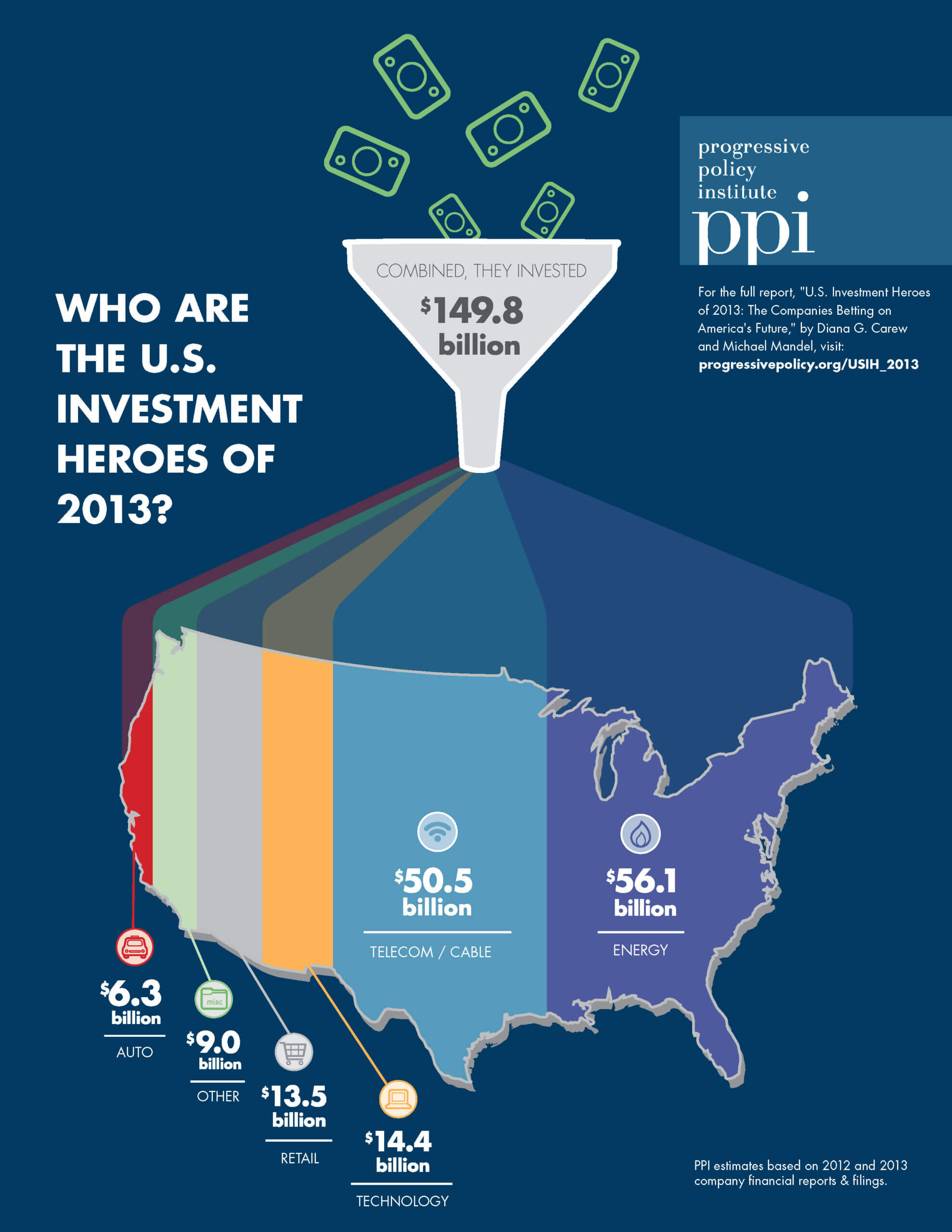
Ever since Washington bailed them out four years ago – costing taxpayers $140 billion – the two mortgage giants have been in federal conservatorship. In Path to Prosperity, his budget blueprint, Ryan calls for their “eventual elimination.”

Where does Romney stand on Fannie and Freddie? It’s hard to tell, because since locking up the GOP nomination, Romney has been extremely reticent on the subject of housing. During the Nevada primary – in a state considered ground zero in the housing crisis – he did not exactly ooze sympathy for people at risk of losing their houses. Instead, he advised that government “not try and stop the foreclosure process. Let it run its course and hit the bottom.” In Florida, another hard-hit state, Romney focused not on solutions but on assailing Newt Gingrich for being a highly paid consultant to Freddie Mac as the housing bubble blew up. Continue reading “Will Mitt Follow Ryan on Housing?”

Why Ryan Wants to Dump Fannie and Freddie

PPI’s Jason Gold was quoted in the Fiscal Times about the willigness of Paul Ryan to severe the government’s relationship with the troubled mortage giants Fannie Mae and Freddie Mac:

“As the election season wears on, it’s just too big of a thing to ignore,” said Jason Gold, a senior fellow at the Progressive Policy Institute. “You’ll see the administration putting housing out there, because there’s such a void in Romney’s policies.”

Read the entire article here.