
| 2025 | $40 million |
| 2024 | $8 million |
Assessing the proposed “Lindsey Graham Sanctioning Russia and Ukraine Act” this week, PPI’s experts — Kyiv-based New Ukraine Project Director Tamar Jacoby, Vice President Ed Gresser, National Security Director Danielle Steitz — encourage its effort to strengthen financial sanctions on Russia and limit the ability of its creaky “shadow” fleet of tankers to ferry oil around the world. By contrast, the three pan its tariff measures. As passed by the Senate early this month, these offer the Trump administration a wholly new power to impose tariffs of up to 100% on goods from an uncertain array of countries involved in buying Russian oil or gas, or in some mostly undefined way helping Russian energy get around existing sanctions. (Some explanation below.) PPI comment:
“The bill’s tariff section is unnecessary — the administration already has sanctions power under the International Emergency Economic Powers Act — and dangerous. Unchecked authority to impose new tariffs on vague grounds, after the administration’s extensive and continuing misuse of laws such as Section 301 and Section 232, poses a high risk that Mr. Trump would use it not to pressure Russia but to further harass America’s neighbors and allies, and impose more costs on the American economy.”
The past week’s experience illustrates the point vividly. For quite unclear reasons, the Trump admin. chose last Thursday to detonate a northern-border crisis with Canada, using a never-tested, 97-year-old Hoover administration law (“Section 338”) to impose 50% tariffs on about $20 billion worth of Canadian goods. Having failed to extract concessions, these are now in effect; Canada’s retaliation, targeting an identical amount of American steel, aluminum, seafood, dairy, appliances, and so on, comes after Labor Day.
Setting aside the unquantifiable but likely high strategic/security/etc. cost of alienating a neighbor, and the moral cost of pointlessly picking a fight with a friend, the purely economic shrapnel will hit home. Higher U.S. tariffs mean Americans will pay higher prices for tariffed goods. Higher Canadian tariffs on American goods, since Canada is usually the top buyer of made-in-America manufactured goods and ranks second for farm products, means Canadians will pay more for American goods, likely buy less of them, and U.S. export industries will struggle. Case in point: Canadians buy half of Maine’s lobster catch each year, about 20,000 tons a year, and Tuesday’s Canadian retaliation means they now have to pay a 25% tariff on each crustacean.
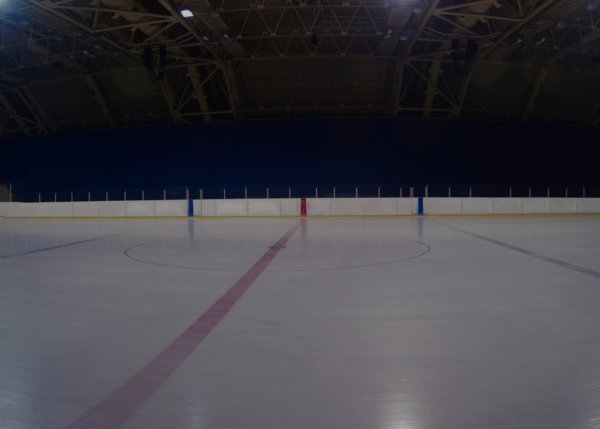
Here’s a less obvious example: hockey parents and high school athletic departments in Michigan, Minnesota, Wisconsin, Maine, Vermont, Massachusetts, and other northern tier states should expect some price hikes in hockey gear, and prepare themselves for possible spikes in rink fees. A Hockey News discussion last week is a point of departure:
“New tariffs imposed by American President Donald Trump include hockey sticks and equipment. The result will be members of USA Hockey paying more to play the game, which could slow the sport’s record growth in the USA following double Olympic gold and the PWHL’s [Professional Women’s Hockey League] rise. The new 50% tariffs, which will take effect August 19, just before many hockey teams and leagues begin to hit the ice, will make ice hockey significantly more expensive for youth and families looking to get into the sport in the United States.”
How so? Fitting a teen out for the rink is pricey. Think $200 for skates, $70 for a college-quality carbon-fiber stick, $200 for pads, $100 for gloves, $30 for a bucket of pucks, more for goalies. Rink managers, meanwhile, need expensive machinery to smooth their ice (a Zamboni machine runs from $125,000 to $180,000), keep air circulating at the right temperature, and sharpen players’ skates before games. This means teams have to defray ice-time costs through fees. Maine’s middle-school program charges $345 per player plus $55 for association membership; in Alpena, Michigan, on Thunder Bay — where median family income is $47,500 — youth hockey fees run from $500 for “mites” to $1,000 for teens.
Under the Congressionally authorized “Harmonized Tariff System”, hockey gear is usually free. Last year’s tariffs on Asian consumer goods (where North American hockey equipment firms like CCM and Bauer do most of their assembly) helped hike equipment prices by about 10%. Canadian gear, still exempted then under the “USMCA” duty-free rules, made up about a fifth of U.S. hockey imports last year. That was $25 million worth of pads, helmets, pucks, and sticks. So at face value, Thursday’s 50% tariff will cost American hockey parents and athletic departments about $12 million. If the crisis escalates to the high-priced products rinks need to run — Zambonis get ambiguous treatment under Mr. Trump’s new tariff order — rink operation costs will spike, ice-time prices will follow them up, and team membership fees will rise with them.
Now back to the Russia sanctions and tariff bill.
As Jacoby, Gresser, and Steitz argue, the proposed sanctions will help, and ought to go ahead. (See Jacoby’s deep-dive piece on sanctions this week in the Washington Monthly.) The bill’s tariff clauses, by contrast, are risky rather than useful. They authorize new tariffs of up to 100% on goods from (a) the top-five buyers of Russian oil, (b) the top-five buyers of Russian gas, and (c) a murkily defined top-five “facilitators of energy sanctions evasion.” Complex accounting for energy purchases, and even less precise definitions of “facilitation,” make this authority easy to redirect onto friends and allies. And as this authority would come as part of a newly passed law, rather than one of the 50-to-100-year-old statutes the administration has exhumed for its tariff decrees to date, any resulting tariffs would likely be legally stronger than those the administration has tried so far.
So: On the tariff matters, the main need is (as Sen. Ron Wyden, D-Ore., and Rep. Linda Sanchez, D-Calif., have proposed) to impose discipline and restore constitutionally appropriate policymaking, by requiring administrations hoping to impose tariffs to get Congressional votes of approval before they can act. For this particular bill, Congress should at minimum require the same for any use of tariff authority — that is, no tariff would go into effect until Congress had voted to approve it — or scrap the tariff piece altogether.
Russia sanctions/tariff bill (1):
PPI’s Tamar Jacoby, Ed Gresser, and Danielle Steitz approve of new sanctions, pan new tariff authority, and call for speeding up military aid to Ukraine.
And from Kyiv, Jacoby’s in-depth assessment in the Washington Monthly this Monday.
A warning:
Trump admin.’s August tariff decree with 50% tariffs on $20 billion worth of Canadian-made autos and parts, liquor and beer, hockey equipment, machinery, auto parts, etc. For context, U.S. imports of Canadian goods last year totaled $382 billion. The resource side of the trade relationship — fertilizer and energy — is still mostly exempt, except for wood.
Stunned Hockey News staff and readers assess the impact.
Toronto-based BladeTech Hockey explains why high-performance sticks are so expensive. (TL/DR: “materials, manufacturing complexity, R&D amortization, and 2026 tariff impacts.”)
Canada’s retaliation targets American lobsters, air conditioners, cheese, hand tools, steel and cars.
In Lansing, Gov. Whitmer tallies damage-to-date on Michigan inflation and exports.
Last January’s Canadian Broadcasting Corp. report from a worried U.S.-Canada lobster conference.
And alarmed reactions from the Maine political world.
Sanctions/tariff bill (2):
The bill’s sanctions add Russian officials and enterprises to the lists of individuals and industrial sectors covered by financial sanctions; ban U.S. imports of uranium (but not fertilizer, where U.S. imports are running at $200 million a month this year); and ban investment in Russian energy. It isn’t automatic, though, as the bill also allows administrations to waive any of these sanctions.
The tariff piece ‘authorizes’ tariffs of up to 100% on the five countries topping the lists of buyers of Russian gas and Russian oil, and the five countries contributing most (in some vague and undefined way) to energy sanctions evasion. The top three energy buyers are China, India, and Turkey – a running tally from the Finland-based Center for Research on Energy and Clean Air estimates that these three together account for 70% of Russia’s roughly $250 billion in annual energy sales – but the fourth- and fifth-largest buyers aren’t as easy to identify, especially with separate lists for oil and gas. ‘Sanctions evasion’ is not clearly defined, and could be used to target all sorts of countries.
And recommended reading:
Poland’s Institute for International Affairs has some creative thinking on the “shadow fleet” and energy-sanctions policy.
Ed Gresser is Vice President and Director for Trade and Global Markets at PPI.
Ed returns to PPI after working for the think tank from 2001-2011. He most recently served as the Assistant U.S. Trade Representative for Trade Policy and Economics at the Office of the United States Trade Representative (USTR). In this position, he led USTR’s economic research unit from 2015-2021, and chaired the 21-agency Trade Policy Staff Committee.
Ed began his career on Capitol Hill before serving USTR as Policy Advisor to USTR Charlene Barshefsky from 1998 to 2001. He then led PPI’s Trade and Global Markets Project from 2001 to 2011. After PPI, he co-founded and directed the independent think tank ProgressiveEconomy until rejoining USTR in 2015. In 2013, the Washington International Trade Association presented him with its Lighthouse Award, awarded annually to an individual or group for significant contributions to trade policy.
Ed is the author of Freedom from Want: American Liberalism and the Global Economy (2007). He has published in a variety of journals and newspapers, and his research has been cited by leading academics and international organizations including the WTO, World Bank, and International Monetary Fund. He is a graduate of Stanford University and holds a Master’s Degree in International Affairs from Columbia Universities and a certificate from the Averell Harriman Institute for Advanced Study of the Soviet Union.

