Kim for Governing, “How ‘Opportunity Zones’ Could Transform Communities”

The new federal program could lure fresh investment to distressed areas. But the clock is ticking.

Twenty years ago, the rural hamlet of South Boston, Va., was a thriving blue-collar, middle-class community. Most of its residents were employed in manufacturing, such as at the nearby Burlington Industries textile plant and Russell Stover candy factory, or out in the tobacco fields.

Today, the once vast tobacco industry is largely derelict (China is now the world’s leading producer), and the Burlington plant and Russell Stover factory are closed. “We lost about $100 million in payroll out of this community over four years,” says South Boston Town Manager Tom Raab.

This is a familiar story for the nation’s rural areas, but Raab is optimistic about a turnaround. He is pinning his hopes, in part, on the new “opportunity zones” program passed in last December’s federal tax overhaul. It could generate billions in economic development for distressed communities like South Boston — provided they get the help they need.

Opportunity zones represent a breakthrough approach to community development. The program relies on an ingenious mechanism for spurring investment: Instead of tax credits or other traditional subsidies, investors are offered a temporary tax deferral for capital gains reinvested in designated opportunity zones. For investments held longer than 10 years, that deferral becomes forgiveness — a huge boon.

Continue reading at Governing.

PPI Announces New Office Opening in Berlin, Germany

WASHINGTON —The Progressive Policy Institute (PPI) today announced the opening of a new office in Berlin, Germany to further its longstanding commitment to transatlantic engagement and cooperation. 

“With an uncertain geopolitical landscape in Europe post-Brexit—and ever changing political dynamics in the United States—it is as critical as ever for Americans and Europeans to reaffirm their support for a healthy and productive transatlantic alliance rooted in our shared democratic ideals,” said Lindsay Mark Lewis, Executive Director at PPI. 

“With this in mind, PPI believes it is important for U.S. politicians and policy professionals to experience and learn about the European view on essential economic, cultural, and security issues impacting us both and for leaders in Germany and across Europe to engage in a dialogue with the next generation of U.S. leaders. We are excited to announce today the opening of a new office in Berlin to further this mission and to continue our commitment to a better understanding and appreciation of a shared future of prosperity on both sides of the Atlantic.”

The office in Berlin is the second European office that PPI has invested in, following the 2016 Brussels office opening. Over the past several years, PPI has engaged in public policy dialogues in Brussels, Berlin, Paris, Rome, London, Dublin, Geneva, Prague, Liverpool, Stockholm, Riga, and Warsaw.

PPI will be partnering with Berlin-based think-tank Das Progressive Zentrum (DPZ) on several upcoming projects that will be announced soon.

PPI is a non-profit organization with the mission of providing educational programming on current policy issues. The think-tank was a leader in the founding and push for the progressive modernization movement in the 1990s. PPI has continued this work since by maintaining relationships in Europe and producing informative and though-provoking transatlantic missions and reports. To date, PPI has hosted bipartisan representatives from more than 70 U.S. congressional, gubernatorial, and mayoral offices. 

###

Langhorne for Forbes, “The ‘Dating App’ That Helps Teachers Find A Best-Fit School”

After two years of teaching pre-kindergarten, Cristina Guadalupe was ready to transition to the elementary level. Dedicated to working with low-income students, she began applying to schools in underserved communities across Camden, New Jersey. She sent out application after application but heard nothing back.

“Each application took me hours to complete, and I couldn’t even be sure someone read it. It was getting hard to stay hopeful,” she says.

Then, she found Selected.

Launched in 2016, Selected is a hiring tool for schools, but Waine Tam, the app’s developer and company’s CEO, describes it as a “dating app for teachers and schools.”

Teachers fill out a profile where they relay their qualifications and experience. Then, they answer questions about desired school culture and pedagogical preferences.


Continue reading at Forbes.

Marshall for The New York Daily News, “Is Trump killing the Republican Party? It still looks like his divide-and-conquer politics is doing exactly that”

Led by a divisive and dissembling president, America appears to have arrived at peak polarization. At first glance, that would seem to favor Republicans, who dominate Washington and most state governments. But as next month’s midterm elections are likely to show, President Trump’s divide-and-conquer tactics are driving the GOP into a political box canyon.

His strategy is brutally simple: convince culturally insecure white Americans that they are losing “their” country to minorities, immigrants and politically correct liberals. Trump’s scare tactics enabled him to secure a victory in the Electoral College in 2016, despite losing the popular vote by nearly three million votes. Since then, however, he’s done nothing to expand his party’s appeal.

By doubling down on his fractious formula of nativism, white identity politics and America First nationalism, Trump has tightened his grip on blue-collar whites and evangelical Christians — and on Republican politicians terrified of getting crosswise with pro-Trump zealots. But Trump’s White House reality show appears to be hurting GOP candidates in some places, especially white-collar suburbs.

Polls show that Democrats are poised to claim many of the 25 GOP-held House Districts Hillary Clinton carried in 2016. In 21 of these mostly suburban districts, reports The Atlantic’s Ron Brownstein, Trump’s approval rating is an abysmal 38%. “Not only did a staggering 70% of college-educated white women in these districts disapprove of Trump’s performance, but so did 58% of college-educated white men, usually a reliable Republican constituency,” notes Brownstein.

Continue reading at The New York Daily News.

Goldberg for RealClearPolicy, “The Supreme Court’s Next Climate Change Case?”

The U.S. Supreme Court is about to get a look at the latest attempt by environmentalists and their political allies to bypass legislatures and use the courts to enact their climate-change agenda. So far, they have sued America’s energy producers in hopes of having judges, not regulators, set carbon emission limits and making energy producers pay for local infrastructure projects to deal with the impacts of climate change. As the Progressive Policy Institute has explained, selling fossil fuels is not illegal, and sensible people on both sides of the aisle have long agreed that these actions have no foundation in the law.

Indeed, this litigation has already percolated up to the U.S. Supreme Court once. In a unanimous ruling authored by Justice Ruth Bader Ginsburg, the Court made it clear that Congress and the EPA, not the courts, are the appropriate branches of government to regulate greenhouse gas emissions. Justice Ginsburg understood, as have other progressive legal scholars, that suing energy producers over climate change is not the proper way to set American energy policy, which must balance many factors including environmental concerns, energy independence, and affordability.

Continue reading at RealClearPolicy. 

Litan for the Hill, “Talk of breaking up ‘Big Tech’ is misguided, premature”

How fast the tables have turned. Only a few years ago, the major technology platform companies — Alphabet (Google), Amazon, Apple and Facebook — were widely admired.

Now, they are in the dock, accused of limiting competition; chilling startups and the innovation they bring; widening income and wealth inequality; threatening our privacy; enabling foreign actors to poison our elections; and engaging in political bias.

Some urge the government to break up the tech platforms. Others want to regulate them as public utilities. In my new e-book, “Scalpel, Not an Axe,” recently published by the Progressive Policy Institute (PPI), I effectively say, “Hold on.”

The antitrust laws, as long interpreted by the courts, do not punish companies for successes achieved through innovation and luck, or from benefiting from economies of scale and networks that become more valuable with more users.

There is no credible evidence that any of the tech platforms has engaged in unlawful monopolization that warrants their breakup, such as AT&T’s refusal to interconnect long-distance rivals with its local phone companies (which led to its breakup in the 1980s) or Microsoft’s restrictive practices that entrenched the dominance of its Window’s operating system (which was not punished by breakup).

U.S. proponents of breaking up Google are closely watching the European Commission’s anti-Google actions and are urging U.S. regulators to take a similarly aggressive line. Despite its regulatory zeal, however, the EU is not calling for breaking up Google.

Instead, Google changed its algorithm to ensure it wasn’t favoring its price comparison engine over others. And even if American courts were to rule against Google’s tying of it apps to its Android mobile operating system, they could simply order the company to stop.

Do these big companies freeze out startups, creating what The Economist has called a “kill zone” around their markets?

Continue reading at The Hill.

Gerwin for The Wall Street Journal, “Trump’s Tariffs Give Democrats a Chance to Lead on Trade”

‘We lost $817 billion a year, over the last number of years, in trade,” President Trump said at a summer rally. “In other words, if we didn’t trade, we’d save a hell of a lot of money.”

Mr. Trump’s bombast has flipped the Republican pro-trade script. For Democrats, this change offers a significant political opening and a pivotal choice: Should Democrats echo Mr. Trump’s 1930s-era protectionism, or reclaim the tradition of global engagement sustained by FDR, JFK, and Bill Clinton?

Continue reading at The Wall Street Journal.

Ben Ritz Discusses New PPI Report on Two Radio Interviews

Director of PPI’s Center for Funding America’s Future, Ben Ritz, participated in two radio interviews this week to discuss his new report, Defunding America’s Future: The Squeeze on Public Investment in the United States. The report explains how short-sighted fiscal policy is undermining critical investments in education, infrastructure and scientific research that are integral to the long-term health of our economy. Read the full report here.

The first interview was on Facing the Future with host Chase Hagaman, which airs on New Hampshire’s WKXL radio station. Listen to the WKXL interview here.

The second interview was on Reality Check with host Charles Ellison, which airs on Philadelphia’s WURD radio station. Listen to the WURD interview here.

How Will the Post-Brexit Data Wall Affect the European Union?

As of March 2019, the United Kingdom will have the status of a “third country” from the perspective of the European Union and the General Data Protection Regulation (GDPR). Will the EU accept that UK data protection standards are high enough to grant them the status of “adequacy,” which will allow data to flow more easily between the UK and the EU? Or will a “data wall” appear overnight between the UK and the EU? The answers to these questions obviously matter to the UK. These data-related issues arise at a crucial moment in the development of the EU economy, which will be badly hurt by a post-Brexit data wall. The UK finance and tech sectors are at special risk, since they require a firehose of cross-border data transfers.


Weinstein for RealClearPolicy, “Time to Get DC’s Finances Under Control”

Once upon a time in Washington, D.C., a compulsive liar was in charge of the local government, the city’s legislature was beyond dysfunctional, and the District had debt as far as the eye could see. Today, a similar situation has returned to Washington, but this time it is the federal government, not the D.C. government, that has lost control over its ability to manage its finances.

In 1995, a Republican-led Congress worked with President Bill Clinton to get the District back on track. They created the District of Columbia Financial Responsibility and Management Assistance Authority — better known as the “Control Board.” The Board arguably saved D.C. from an economic collapse. Could a control board for the federal government do the same for America?

The D.C. Control Board was based on a model that had been successfully used elsewhere to help a number of jurisdictions facing fiscal and economic crisis. In 1978, after Cleveland became the first major city since the Great Depression to default on short-term notes, the Ohio legislature lent to the city to avert bankruptcy and created a state-run system for monitoring local government finances. In 1991, Pennsylvania helped Philadelphia overcome its budget crisis through the Pennsylvania Intergovernmental Cooperation Authority, which exists to this day and has the power to review and approve the city’s five-year financial plans.

Continue reading at RealClearPolicy.

Kim for USA Today, “Socialists won’t be on many ballots this fall. Moderate Democrats are surging.”

Democratic primary voters didn’t buy the ultra-left’s ‘free-for-all’ agenda. What’s happening is not so much a liberal surge, but a moderate one.

Candidates affiliated with the Democratic Socialists and the progressive left have pushed hard this cycle for a campaign agenda heavy on government giveaways, such as free health care (“Medicare for All”), free college, guaranteed jobs and perhaps even free money (“universal basic income”).

Few of these candidates, however, will be on the ballot this fall. Rather, the insurgent left has been broadly rejected in one primary after another — and by Democrats theoretically predisposed to this pitch.

In Michigan, for instance, “establishment” candidate Gretchen Witmer beat Medicare-for-All advocate Abdul El-Sayed for the Democratic gubernatorial nomination by 22 points, while in Kansas, a former professional mixed martial artist defeated a congressional hopeful endorsed by Democratic Socialists Sen. Bernie Sanders and rising superstar Alexandria Ocasio-Cortez. Longtime Delaware Sen. Tom Carper easily beat back a progressive challenger, while in New York, Gov. Mario Cuomo defied his own dismal approval ratings to crush opponent Cynthia Nixon by 30 points.

These progressive losses have moreover occurred despite higher than typical turnout, which is another sign of the ultra-left agenda’s lack of appeal: What’s happening is not so much a liberal surge, but a moderate one.

Continue reading at USA Today.

New Report: Washington Is Crippling America’s Economic Future

Public investment spending could fall to lowest level in modern history by 2026 

WASHINGTON — Young Americans are having their future mortgaged by Washington lawmakers who are slashing critical public investments in future generations while simultaneously burying these generations under a mountain of debt, according to a new report published today by the Center for Funding America’s Future (CFAF) at the Progressive Policy Institute.

The comprehensive report documents these trends and explores how the reckless policies of the current administration and its predecessors will drain America’s economic strength and seriously harm young Americans for decades to come if no action is taken to change course.

“America’s current fiscal trajectory is on a dangerous path,” said Ben Ritz, director of the CFAF and author of the report. “By 2029, the national debt as a percent of gross domestic product is projected to surpass the all-time high it reached at the end of World War II, if current policies remain in place. Meanwhile, annual interest payments would explode from $316 billion today to nearly $1 trillion in 2028. That’s $1 trillion every year we could be using to build bridges and railroads, find a cure for cancer, train a next-generation workforce, strengthen our armed forces, or cut taxes for middle-class workers. Instead, it will be spent servicing past debts.”

Instead of tackling these problems, President Trump and the Republican-controlled Congress are making them worse, Ritz argues. While virtually every other developed country is paying down their debts post-recession, they enacted $2 trillion in tax cuts and abandoned spending caps that Republicans demanded be imposed at a time when most economists believed it was far more perilous to cut spending than it is today.

As America racks up debt thanks to irresponsible fiscal policies, public investments are being starved. According to the report, federal spending on public investments in education, infrastructure, and scientific research was just over $300 billion in 2017 – less than 1.5 percent of GDP. Between 1965 and 1980, total federal spending on public investments regularly equaled about 2.5 percent of GDP (roughly $470 billion in 2017). If current policies continue, public investment spending is projected to fall to its lowest level in modern history as a share of the economy by 2026.

The unaffordable tax cuts enacted over the past year can and should be reversed, writes Ritz, but even if federal taxes were immediately raised to their highest level since WWII and remained there indefinitely, deficits and debt would still be growing significantly faster than the economy. It is critical that policymakers also control the costs of Medicare, Medicaid, and Social Security, which are growing on autopilot faster than the economy due to America’s aging population.

By abandoning any pretense of fiscal responsibility, today’s policymakers are placing fiscal handcuffs on the elected officials of future taxpayers. By 2048, the report estimates Congress will have the authority to appropriate just 18 cents out of every dollar spent by the federal government, compared to 66 cents in 1968. This erosion of fiscal freedom robs future elected officials of their ability to respond to the changing policy priorities of their constituents and address unforeseen national emergencies, such as natural disasters and economic recessions.

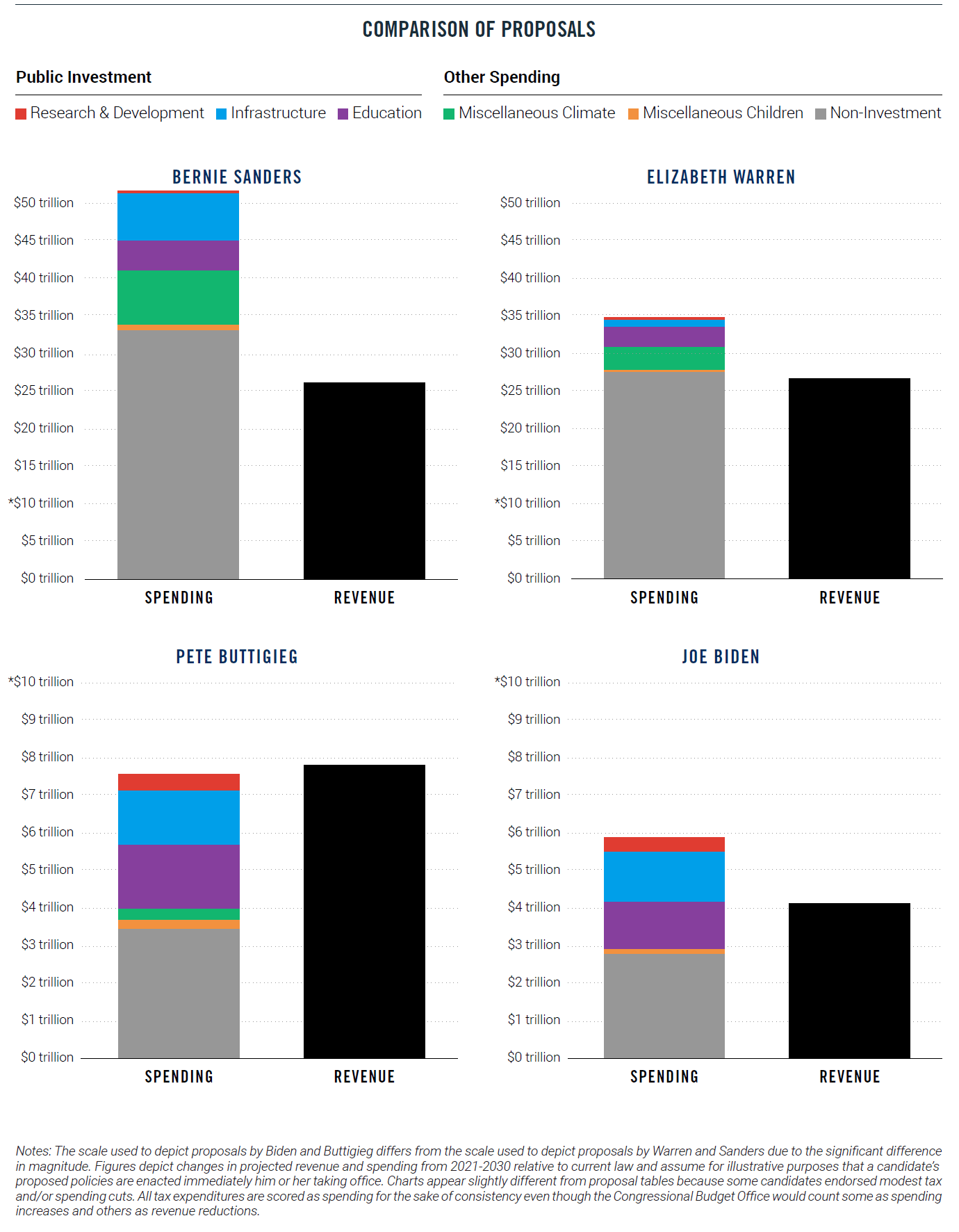
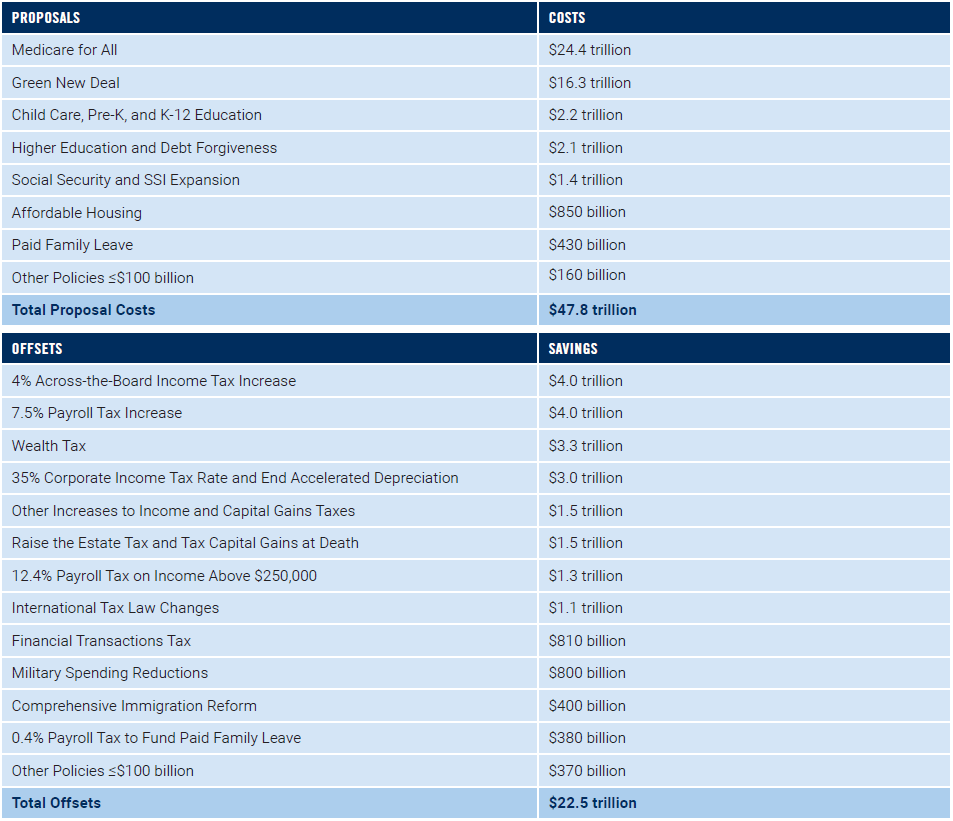
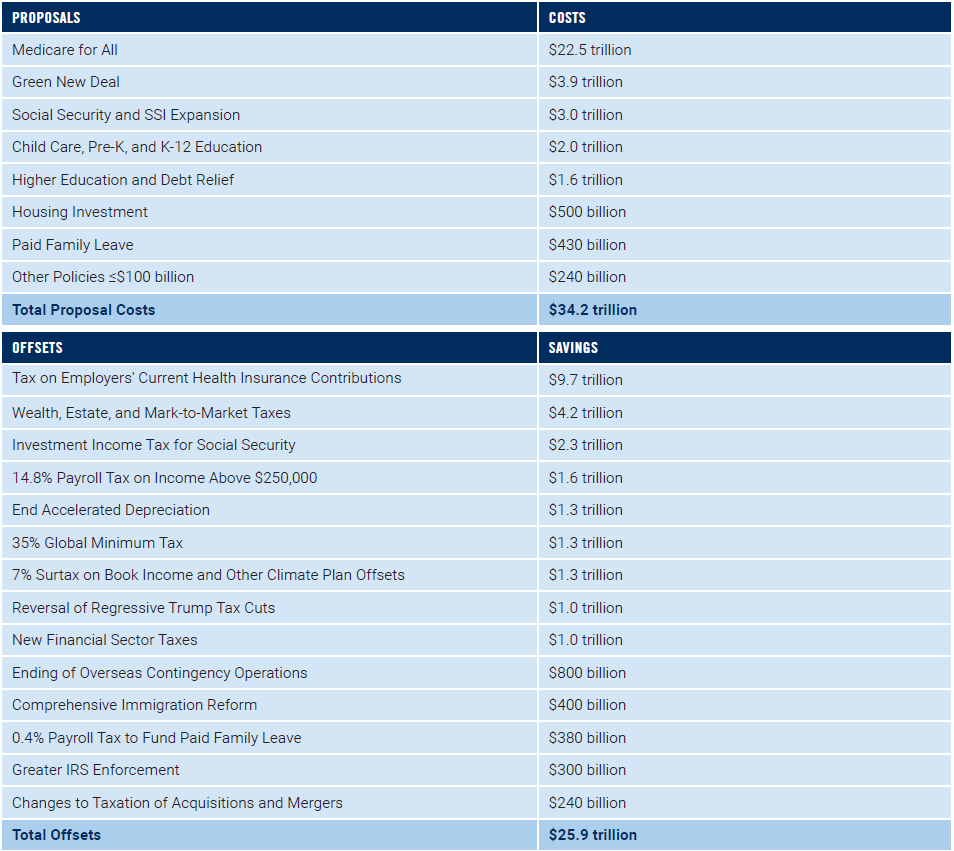
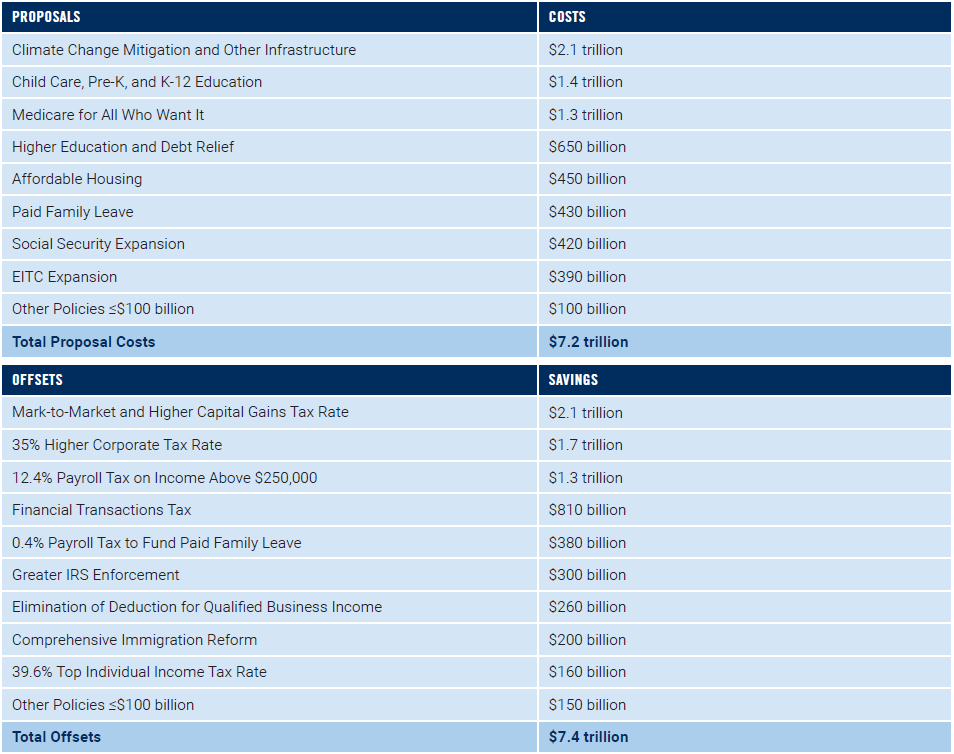
Republicans’ fiscal mismanagement gives Democrats a unique opportunity to offer the electorate a compelling alternative: a new progressivism that invests in our country without leaving the bill to young Americans. But instead of holding Republicans accountable, some Democrats seem determined to outdo them. Many on the left now propose tens of trillions of dollars in new social spending on top of the unfunded promises the federal government already has made, without offering credible ways to pay for either.

Fixing our fiscal policy won’t be easy, but it is necessary. Ritz argues that the next Congress and President must modernize federal health and retirement programs to reflect an aging society and enact pro-growth tax reform that raises the necessary to renew public investments in the foundation of our economy. Only then can policymakers ensure America has a bright economic future.

###

Defunding America’s Future: The Squeeze on Public Investment in the United States

Executive Summary

Policymakers who have chosen to slash critical public investments in future generations while simultaneously saddling these generations with a mountain of debt are jeopardizing the long-term economic health of the United States. Failure to correct course could have serious consequences for the economy and the American people, including lower incomes, fewer high-quality jobs, and a reduced ability for future policymakers to address new challenges.

America’s deteriorating fiscal condition should be a central issue in the 2018 midterm and the 2020 presidential elections. As Republicans in Congress and the White House abandon any pretense of fiscal responsibility, the time is right for Democrats to offer a new progressivism that invests in our country without leaving the bill to young Americans.

The goal of this report is to alert the public and policymakers to the problem and highlight the actions our elected leaders must take to avoid fiscal ruin, which include renewing public investments in the foundation of our economy, modernizing federal health and retirement programs to reflect an aging society, and enacting pro-growth tax reform that raises the revenue necessary to support both of these critical government functions. 

DEBT AND DEFICITS THREATEN PUBLIC INVESTMENTS (PP. 5-11):

• By 2029, the national debt as a percentage of gross domestic product is projected to surpass the all-time high reached at the end of World War II if current policies remain in place. And on that trajectory, the national debt would grow to more than double the size of the U.S. economy within the next 30 years.

• All this borrowing comes at an enormous cost: if current policies remain in place, annual interest payments would rise from $316 billion today to nearly $1 trillion in 2028. At that point, annual interest costs would be twice the projected federal spending on public investments in education, infrastructure, and scientific research combined.


INSTEAD OF ADDRESSING THE PROBLEM, TODAY’S POLICYMAKERS ARE MAKING IT WORSE (PP. 12-17):

• While virtually every other developed country from Germany to Japan is paying down their debts, self-proclaimed “king of debt” Donald Trump and the Republican-controlled Congress have been making ours bigger. In the span of just two months, they enacted $2 trillion in tax cuts and abandoned spending caps that Republicans demanded be imposed at a time when most economists believed it was far more perilous to cut spending than it is today.

• The last time the national unemployment rate was as low as it was for most of 2018, the Clinton administration was in its fourth consecutive year of budget surpluses. But, thanks to the GOP’s borrow-and-spend policies, the next presidential election in 2020 – and potentially every election thereafter – will occur against the backdrop of an annual budget deficit of over $1 trillion.

PUBLIC INVESTMENTS ARE BEING STARVED BY BAD BUDGETING (PP. 17-21):

• Between 1965 and 1980, total federal spending on public investments in education, infrastructure, and scientific research regularly equaled about 2.5 percent of GDP (which would have been roughly $470 billion in 2017). But misguided cuts imposed by policymakers seeking to reduce deficits have taken their toll: Federal spending on public investment was just over $300 billion in 2017 – less than 1.5 percent of GDP.

If current policies are continued, public investment spending is projected to fall to its lowest level in modern history as a share of the economy by 2026. Public investment spending is likely to be cut even more in the future if policymakers are unwilling or unable to tackle the main drivers of growing deficits.

SECURING PUBLIC INVESTMENTS REQUIRES FIXING HEALTH CARE AND RETIREMENT PROGRAMS (PP. 21-29):

• While spending on public investments shrinks, spending on Medicare, Medicaid, and Social Security is growing on autopilot due to an aging population. Spending on these programs relative to the size of the economy is projected to grow by half over the next 30 years (from about 10 percent of GDP today to nearly 16 percent of GDP in 2048).

• In 1965, there were 5.4 working-age Americans (those between the ages of 18 and 64) who could pay taxes to finance the health care and retirement benefits of each American aged 65 and older. But by 2050, the U.S. Census Bureau projects the ratio of working-age to retirement-age individuals could be as low as 2.6 to 1 – less than half what it was in 1965.

• There are no easy substitutes for tackling the growth of federal health and retirement spending. The unaffordable tax cuts enacted over the past year can and should be reversed, but even if federal taxes were immediately raised to their highest level since WWII and remained there indefinitely, deficits and debt would still be growing significantly faster than the economy.

THE SHORTSIGHTED STATUS QUO IS SHORTCHANGING YOUNG AMERICANS (PP. 29-31):

• Current policies are unfair to young Americans, who are already starting from a worse financial position than their parents and grandparents did. The federal government is spending nearly six times as much per elderly American (those aged 65 and older) as it is per child, even though children have a poverty rate nearly twice that of the elderly.

• The shift in priorities – from annually appropriated discretionary spending to formula-driven mandatory spending – will leave future politicians with less say over how their constituents’ tax dollars are spent. Whereas the Congress of 1968 had the authority to appropriate 66 cents out of every dollar spent by the federal government, the Congress of 2048 will have the same authority over just 18 cents on our current trajectory. This erosion of “fiscal freedom” robs future democratically elected officials of their ability to respond to the changing policy priorities of their taxpaying constituents.

• Growing debt and interest costs also have the potential to make future generations poorer, reducing the size of our economy by up to $6,000 per person per year in 2048.

The longer we wait to address these problems, the harder they will be to solve. Neither progressives (who want more social spending) nor conservatives (who want lower taxes) will benefit from a federal budget that has no room for either because it is stuck paying for the policies of the past. As Republicans in Congress and the White House abandon any pretense of fiscal responsibility, the time is right for Democrats to offer a new progressivism that invests in our country without leaving the bill to young Americans. Voters must demand our leaders enact the policies necessary to lay the fiscal foundation for a better world tomorrow.


Read the full article here:

Gerwin for New York Daily News, “Trump’s NAFTA revision actually reaffirmed open regional trade”

Donald Trump huffed, and he puffed, but he couldn’t blow NAFTA down.

Like the Big Bad Wolf in the fairy tale, President Trump presumed that NAFTA — which he’s called the “worst trade deal ever” — would collapse before his bluster like a house of straw. Trump’s bombast may have knocked a few shingles off the agreement’s free trade edifice. And it’s caused serious collateral damage to America’s neighborhood and beyond. But, in the end, NAFTA’s structure — like the Three Pigs’ house of bricks — still stands.

Trump, of course, tells a different fable. At a recent rally, Trump declared “[w]e are replacing the job-killing disaster known as NAFTA, with the brand new U.S.-Mexico-Canada trade agreement.”

Continue reading at New York Daily News.

Marshall for New York Daily News, “New Old Labour: The U.K. party’s tight embrace of retrograde ideas, and what it might mean for Democratic Socialists in the U.S.”

Democrats, like progressive parties across the transatlantic world, are struggling to find an answer to populist nationalism. Could that answer lie in reviving another old political creed, socialism?

Some young Democratic activists, inspired by Sen. Bernie Sanders, are flirting with “democratic socialism.” But they have nothing on Britain’s Labour Party, which consummated its on-again relationship with socialism in Liverpool last week.

The occasion was the party’s annual conference, which I attended when not wallowing in Liverpool’s trove of Beatles memorabilia. The gathering presented an oddly incongruous picture: a reinvigorated party with lots of young faces hawking old ideas.

The Merseyside Conference also capped Jeremy Corbyn’s improbable odyssey from Labour’s hard-left fringe in the early 1980s to party leader today. Having survived media ridicule for his retro views, several attempted ousters and a recent imbroglio over charges that he’s tolerated anti-Semitism among left-wing Labour members, Corbyn at last seems to have his party firmly in hand.

Continue reading at New York Daily News.