Marshall for The Hill: Will Progressives confront left-wing antisemitism?

By Will Marshall

The torrent of antisemitism let loose by student protests against the war in Gaza is a national embarrassment, but it reflects especially badly on leaders of America’s elite colleges and the intersectional left.

Two Ivy League presidents, University of Pennsylvania’s Liz Magill and Harvard’s Claudine Gay, resigned from their jobs after a December congressional hearing during which they couldn’t give a straight answer when asked whether advocating genocide of Jews violates their university’s code of conduct.

Alas, this salutary rebuke to moral cowardice looks more like the exception than the rule. The Anti-Defamation League reports an upsurge in campus assaults and harassment targeting Jews. A plurality of Jewish college students say they don’t feel physically safe on campus.

Students at Massachusetts Institute of Technology and Harvard have filed legal complaints alleging that school leaders have failed to protect Jewish students, professors and centers from hostile anti-Israel protesters.

Keep reading in The Hill.

Biden’s Budget Tax on Executive Compensation is an Imperfect Solution

Skyrocketing executive pay has become an increasingly important indicator of income inequality and has prompted questions as to what policy tools can rein it in. The Biden administration recently proposed to tackle the problem by prohibiting corporations from deducting salaries over $1 million for all their employees. Although this approach may be an improvement to the status quo, it has some drawbacks compared to the more straightforward option of just creating a new top income tax rate for very high-earners.

In 1989, the ratio of CEO compensation to median worker pay was 59:1. By 2021 this had risen to 399:1. Much of this has been driven by the growth in stock-based compensation for executives, which now makes up the vast majority of executive pay. Yet despite the “performance-based” incentive of stock-based compensation, these higher paid executives have not necessarily brought higher value to companies they lead. One study found that the rate of return on $100 put into companies with lower-paid CEOs surpassed those with higher paid ones, $367 to $265.

As this issue garners more attention, many proposals have popped up to address it through the tax code. In last week’s FY25 budget, the Biden administration offered their own solution, proposing to expand section 162(m), a 1993 provision that reduced corporations’ ability to deduct certain high salaries from their corporate taxes. This provision currently prevents companies from deducting compensation over $1 million dollars for their five highest-paid executives. The administration’s proposal would extend this to all employees making over $1 million, and extend the eligibility to all corporations, not merely publicly traded ones.

Since its passage, the provision has in practice done little to address the growing pay of corporate executives. However, it has succeeded in subtly increasing the effective tax rates of those executives by imposing what is essentially an employer-side payroll tax on covered employee salaries. Because this tax is passed on to the employee in the form of lower earnings, covered workers face an effective top marginal tax rate of over 50% under current law (the 21% corporate income tax plus a 37% tax rate on the remaining 79% of their compensation in excess of $1 million). In conjunction with the budget’s other proposals to raise the corporate income tax rate to 28% and the top individual income tax rate to 39.6%, Biden’s approach would raise the effective top marginal tax rate on compensation over $1 million dollars to 56.5% — a massive increase over the status quo and close to the revenue-maximizing level.

Hiding such a large tax increase on high-earners in the corporate tax code may be more politically advantageous than doing so outright through a change in the ordinary income tax code, but it comes with some drawbacks. The proposal would expand the provision for only employees at C corporations like Amazon or Walmart, leaving out many high earners working at pass-through businesses like law firms or hedge funds. These types of businesses make up 95% of all businesses in the United States, yet would not be subject to the provision since they pay no corporate income tax. This would give a tax advantage to many high-earning professionals in consulting, finance, or law, where firms are less likely to be structured as C corporations.

In addition, it is also not apparent from their details whether the proposal would expand an existing provision for highly paid nonprofit executives that requires tax-exempt organizations to pay an excise tax equal to the corporate rate for their five highest paid employees. This risks creating a situation where an employee of a nonprofit or pass-through making $2 million a year is taxed at a 39.6% top rate, while a corporate employee making the same salary will be taxed at a top rate of 56.5%.

Creating a 56.5% bracket for incomes over $1 million would do a better job of taxing highly compensated corporate executives without section 162(m)’s uneven impacts. This option could raise substantially more revenue for progressive policies and avoid imposing an uneven system that only targets certain businesses or sectors.

If the politics are such that expanding section 162(m) is possible while significantly raising ordinary income tax rates is not, doing so would be an improvement over a status quo that chronically under-taxes the rich. However, the administration must take additional steps to address the distortions it would create and recognize that there are only so many ways to tax the rich before having to turn to other sources of revenue for a progressive agenda.

The Cautionary Tale of ESG Oversight: Arkansas Should Heed Texas’ $886 Million Cost for Prioritizing Politics

With the creation of a new ESG Oversight Committee, Arkansas has made a substantial shift in the state’s changing investment and sustainability landscape. The committee was fully formed last month when Governor Sarah Huckabee Sanders appointed Tom Lundstrom as the committee’s fifth and final member. This committee is charged with identifying financial service providers who are thought to discriminate against certain traditional value industries (fossil fuels, ammunition, etc.) based on ESG-related considerations under last year’s House Bill 1307, which is now Act 411.

The committee’s judgments will have a significant impact on Arkansas’s investment climate and economy as it advances, with noteworthy deadlines for delivering its preliminary and final lists of these financial providers. The recently released report, “The Potential Economic and Tax Revenue Impact of Texas’ Fair Access Laws”, conducted by the Texas Association of Business Chambers of Commerce Fund (TABCCF), is an important source the Arkansas committee should review in order to understand the possible harm that comparable anti-ESG legislation has caused states who have chosen to inject politics into their decision making.

According to the TABCCF study, during 2022-2023, the Texas anti-ESG legislation resulted in an estimated:


  • $668.7 million lost in economic activity.
  • $180.7 million in decreased annual earnings.
  • 3,034 fewer full-time, permanent jobs.
  • $37.1  million in losses to State and local tax revenue.


The study asserts: “These findings illustrate that when government attempts to mandate values, no matter what kind to businesses, the market loses.”

The report is built on earlier work included in a 2023 study titled “Gas, Guns, and Governments: Financial Costs of Anti-ESG Policies,” by Drs. Ivan Ivanov of the Federal Reserve Bank of Chicago and Dan Garrett of the University of Pennsylvania. The study looked at certain organizations that were thought to be boycotting due to their affiliations or fiduciary decisions that have been expelled or removed from the municipal bond market.

Their resulting analysis: this legislation did, in fact, limit competition in the public finance sector, raising interest rates by 0.144 percent.

Thanks to its pro-business environment, Texas now has the eighth-largest economy in the world. Less competition in the municipal bond market, however, is driving up interest rates, which puts more strain on local governments’ finances and adds to the costs borne by Texas taxpayers.

If that wasn’t enough, the underlying political effects of these politically driven policies continue to rear their head. Just this week, Aaron Kinsey, the Chair of the Texas State Board of Education (SBOE) announced the Texas Permanent School Fund Corporation divest approximately $8.5 billion of assets BlackRock currently manages for them – a move that will undoubtedly further increase costs while reducing returns for Texas schools.

This action, which allegedly came without a formal board vote, quickly upset Kinsey’s fellow SBOE board members. “We just can’t divest from them overnight. They’re very good moneymakers for us,” Republican SBOE board member Pat Hardy said of BlackRock, concluding, “They’ve been really good. They’ve been one of our main investment people for, gosh, 15 years.”

Given this context, Arkansas is presented with a cautionary tale that highlights the necessity for thoughtful assessment to prevent deterring business investments in the state and jeopardizing fund performance for political theater.

The position taken on this matter by the Arkansas Teachers Retirement System (ATRS) highlights the financial implications and practical difficulties associated with enacting a narrow boycott list. ATRS has emphasized that three BlackRock-managed funds, which have over $1.2 billion invested in them, do not exhibit bias against the energy, fossil fuel, weapons, or ammunition businesses. This disclosure is crucial because it demonstrates the system’s all-encompassing approach to guarantee that its investment managers respect Arkansas’s ESG standards while also being in line with the members’ financial interests.

Given the possibility of major financial ramifications, the Arkansas ESG Oversight Committee’s next judgments should be approached with prudence. The ATRS warning highlights the conflict between political goals and practical economic considerations on the potential costs of divesting from financial services companies—should they end up on the boycott list. Divestment of this kind might cost retired teachers in Arkansas alone at least $6 million.

The larger lesson is evident as Arkansas proceeds: establishing an ESG-related boycott list in a transition economy has complicated ramifications for retirees and private investors alike, in addition to the state’s budget and broader economy. The combination of ATRS’s proactive actions and Texas’ experience serves as a crucial reminder of the necessity for a nuanced, balanced approach that protects the interests of all parties involved. It will take careful thought and, most importantly, a clear understanding of the lessons gained from other jurisdictions to ensure that Arkansas maintains its inviting status for businesses.

How Postsecondary Online Education is Empowering Today’s Students

Today’s postsecondary students look different than they did 20 years ago. Their paths today are not as linear, with many students opting out of going to college right after high school. As a result, today’s students are more diverse than ever before: 34% are adults, over half are first-generation students, 22% are parents, and the majority of students are working while learning.

To create a new means of economic mobility for the diversifying student body, California established its first statewide online community college, Calbright College, in July 2018. Calbright was the first of its kind, an exclusively online community college, free of charge to Californians, and focused on helping students rapidly earn credentials for in-demand jobs. Enrollment numbers have skyrocketed in the last two years, going up 574% since July 2021, with 3,240 students currently enrolled at Calbright.

And these trends are not unique to this California community college. Interest and participation in online learning continues to grow, with 2020 seeing record enrollment. Between 2012 and 2019, the number of hybrid and distance-only students at traditional universities increased by 36%, while the pandemic rapidly accelerated that growth by an additional 92%. Today over half of postsecondary students are enrolled in at least one online course.

What’s more, research from Western Governor’s University (WGU), one of the largest online universities in the country, surveyed more than 3,000 students across nine diverse institutions including community colleges, private and public four-year institutions, and primarily online, not-for-profit colleges. First-generation learners surveyed were especially positive about online education, with more than three-quarters of these students, indicating they would be interested in taking online courses in the future. This response was nearly ten percentage points higher than their peers with college-educated parents.

The ability to learn anytime, anywhere — and often for a fraction of the cost — is clearly attractive for today’s students. Online learning offers them the flexibility to balance their academic pursuits with other responsibilities and commitments, allowing them to study at their own pace and on their own schedule. Online education has also eliminated many of the barriers associated with traditional campus-based programs — supporting students, who may be unable to relocate or commute to a physical campus. This factor is especially helpful in rural communities that are more remote allowing individuals to enroll in programs across the country without ever leaving their homes.

Online education has also evolved to meet the diverse needs of today’s students through innovative program structures and support services. Institutions now offer a wide range of online degrees and certificates while also providing comprehensive academic advising, tutoring, and career counseling services. For example, at Calbright, students can access academic and career counseling to help them make informed choices about their academic and job pursuits, and it is all covered by the state.

While online education was once considered an alternative or supplementary option, it has rapidly expanded and emerged as a cornerstone of higher education. But to ensure opportunities continue to open doors that were previously inaccessible, America’s higher education system must evolve, and these programs must continue to evolve to ensure quality and alignment with student and employer needs.

To do this, the U.S. must modernize the way it invests in postsecondary education. Policy must enable individuals to pursue more flexible and affordable ways to acquire higher skills and higher-wage jobs, including online educational opportunities. Passing the bipartisan Workforce Pell Act in Congress would be a good start. This bill would allow students to use the Pell Grant for shorter-term postsecondary programs, including fully online programs that meet certain quality metrics.

Additionally, federal policymakers should refrain from over-regulation that would discourage online education. Last year, the American Council on Education, the major coordinating body for the nation’s colleges and universities warned that a U.S. Department of Education proposed rule would cause “significant disruption and termination of critical education services to students,” including many online programs.

But quality is important. For students to derive real value, online learning experiences must ultimately lead to economic mobility, ensuring students complete the program and leave with the necessary skills and credentials for success. In addition to teaching academic and technical skill sets, online programs must ensure students learn the critical employability skills that remain a high priority for employers through peer-to-peer experiences and other hands-on learning opportunities. This will ensure students know how to work with others, can problem-solve, and ultimately succeed in the workforce.

As we look to the future of postsecondary education, online learning will play a pivotal role in expanding access and opportunities for non-traditional students. Colleges like Calbright will continue to grow and be attractive for many students, including those that are older, first generation, and juggling work and familial responsibilities. However, more must be done to ensure these opportunities are truly engrained in America’s postsecondary education system. By embracing digital innovation and leveraging the flexibility and convenience of online platforms, our nation can ensure that all individuals, regardless of their background or circumstances, have the chance to pursue their educational aspirations and build a brighter future for themselves and their communities.

Trade Fact of the Week: U.S. carbon emissions fell by 190 million tons in 2023.

FACT: U.S. carbon emissions fell by 190 million tons in 2023.

THE NUMBERS: Energy-related carbon emissions, 2023* –
World total: 37.8 billion tons
Change by country
China: +565 million tons
India: +190 million tons
World: +410 million tons
Japan: -100 million tons
United States: -190 million tons
European Union: -220 million tons

*International Energy Agency, 2024

WHAT THEY MEAN:

As the Biden administration’s energy and climate officials think through January’s “pause” on capacity expansion for the U.S.’ $34 billion in liquefied natural gas exports, some data on emissions trends and their causes:

Statisticians at the International Energy Agency calculate carbon emissions each year. This month they came in with a figure of 37.8 billion tons from energy production in 2023, up 410 million tons from their 37.4 billion ton estimate for 2022.  In a longer-term perspective, these figures compare to 0.2 billion tons in 1850 as Victorian steam, gears, and airships took off; to 6 billion tons in 1950 as the world recovered from the Second World War, and to 25 billion tons in 2000 at the millennium.  So, quite a lot of carbon, and a world a bit further away from “net zero” than it was in 2022. But beneath this overall rise, IEA’s experts reveal intriguing shifts, especially in wealthy countries, and perhaps a sense that change is coming:

“Advanced economy GDP grew 1.7% but emissions fell 4.5%, a record decline outside of a recessionary period. Having fallen by 520 Mt in 2023, emissions [in these ‘advanced’ economies] are now back to their level of fifty years ago. Advanced economy coal demand, driven by evolutions in the G7, is back to the level of around 1900. The 2023 decline in advanced economy emissions was caused by a combination of structural and cyclical factors, including strong renewables deployment, coal-to-gas switching in the US, but also weaker industrial production in some countries, and milder weather.”

The 41 “advanced economies” in IEA’s report are the U.S., Canada, the 27 EU members, the U.K., Switzerland, Norway, Israel, Japan, Korea, Australia, Taiwan, and Hong Kong and Macau, plus a few micro-states like the Vatican and Andorra. Together, the International Monetary Fund says they produce about 60% of world GDP ($60.9 trillion of 2023’s $104.5 trillion). Their 11.0 billion tons of carbon emissions, however, made up less than a third of the world total, and according to the IEA as a group they are back down to the emissions levels of 1973. Moreover, their 550-million-ton aggregate drop in emissions in 2023 came not during a recession or pandemic, but in a year of reasonably strong growth, which suggests a systemic reduction of emissions across the wealthy world rather than a cyclical blip.

The U.S. is a case in point. IEA estimates American emissions at 4.6 billion tons, a decline of 25% from the 6.1 billion-ton peak twenty years ago, and of 190 million tons from 2022’s 4.8 billion.  Per IEA, the largest part of the U.S.’ 2023 decline — 80 million tons, or about 40% of the total reduction — came not from falling output or changeable weather and hydro issues, but from switching from coal-powered electricity to natural gas.

What does this imply elsewhere? Worldwide, by source IEA believes that (on net) 270 million of last year’s 410 million tons of emissions growth, about two-thirds of the total, came from additional burning of coal for power.  Looked at by place, ‘developing Asia’ now produces half of all world carbon emissions, topped by China at 12.6 billion and then India at 3.5 billion; Chinese emissions grew by 565 million tons and India’s by 190 million tons last year.  Here too, at least in China, data suggest ways to reduce emissions.  China’s “emissions intensity” — the amount of carbon released per dollar of economic output — is down from 0.8 kilos of CO2 in 2013 to 0.5 kilos as of 2020 (the date of the last available estimate), which across China’s $18 trillion economy represents a savings of about five billion tons of carbon a year. Both these countries, and “developing Asia” generally, continue to rely heavily on coal-burning, making Asian coal power the largest “driver” of worldwide emissions growth.  IEA’s report therefore underlines the very large Asian opportunity (noted by PPI’s Paul Bledsoe in an August 2022 report) to cut world emissions by substituting gas, nuclear power, and renewables for Asian coal burning.

In sum, reducing emissions is a big task but not a hopeless one. The advanced economies that make up most of the world economy are now visibly succeeding, having (a) cut emissions substantially over the past five years, (b) done so last year during a period of economic growth, and (c) not by impoverishing themselves but through efficiency, switches from dirtier to cleaner fuels, and technological innovation. The large middle-income countries that are now the largest emissions sources can very much do the same. Where infrastructure allows, low-methane natural gas has a significant and useful part in this.

FURTHER READING

The International Energy Agency reports on carbon emissions in 2023 (executive summary with a link to full text).

Policy:

The White House’s “pause.”

PPI analysis & commentary:

Former Congressman Tim Ryan doesn’t mince words on this.

PPI energy and climate expert Elan Sykes outlines a path forward.

… and comments on Department of Energy policy developments.

Background and data:

NOAA summarizes worldwide surface temperature change since 1880.

Our World in Data tracks emissions by country, industry sector, etc.

And the Energy Information Administration’s International Energy Outlook 2023 looks ahead with projections by region and major country through 2050.

And some trade statistics:

Apart from the energy and climate side of gas debates, how large is LNG trade?  Having overtaken Russia and Saudi Arabia in 2021, the U.S. is the world’s largest energy exporter.  Depending on how you split things up, energy has a case for “top U.S. export” at $323 billion last year, which is about 15% of the U.S.’ $3.05 trillion in total goods and services exports. LNG makes up $34 billion of it. A table putting all this in context with some comparisons:

Total U.S. goods and services exports $3.053 trillion
All goods put together $2.051 trillion
All manufacturing $1.600 trillion
Automotive (vehicles & parts) $137 billion
Aircraft & parts $113 billion
Pharmaceuticals & medicines $108 billion
Integrated circuits  $44 billion
Medical devices  $36 billion
All services $1.003 trillion
Intellectual property revenue  $126 billion
Student tuition $40 billion
All energy $323 billion
Liquefied natural gas  $34 billion
All agriculture  $175 billion
Soybeans $28 billion


ABOUT ED

Ed Gresser is Vice President and Director for Trade and Global Markets at PPI.

Ed returns to PPI after working for the think tank from 2001-2011. He most recently served as the Assistant U.S. Trade Representative for Trade Policy and Economics at the Office of the United States Trade Representative (USTR). In this position, he led USTR’s economic research unit from 2015-2021, and chaired the 21-agency Trade Policy Staff Committee.

Ed began his career on Capitol Hill before serving USTR as Policy Advisor to USTR Charlene Barshefsky from 1998 to 2001. He then led PPI’s Trade and Global Markets Project from 2001 to 2011. After PPI, he co-founded and directed the independent think tank ProgressiveEconomy until rejoining USTR in 2015. In 2013, the Washington International Trade Association presented him with its Lighthouse Award, awarded annually to an individual or group for significant contributions to trade policy.

Ed is the author of Freedom from Want: American Liberalism and the Global Economy (2007). He has published in a variety of journals and newspapers, and his research has been cited by leading academics and international organizations including the WTO, World Bank, and International Monetary Fund. He is a graduate of Stanford University and holds a Master’s Degree in International Affairs from Columbia Universities and a certificate from the Averell Harriman Institute for Advanced Study of the Soviet Union.

Read the full email and sign up for the Trade Fact of the Week.

Johnson for American Purpose: Ugh, Capitalism

By Jeremiah Johnson

Complaints about “The Man” were a common theme in film and television through the 70s, 80s, and 90s. As with so many parts of pop culture, the phrase had roots in Black film and television before migrating to the mainstream—what used to be a mainstay of blaxploitation films parroted by white teenage stoners. Anybody who grew up in the 90s can perfectly recollect “It’s just like, Society, mannnnn. It’s like, The Man, screwing us over,” as spoken by an angsty teen.

This was seen as ridiculous. Not all complaints about society are ridiculous, of course. But this particular one always was. The person spouting it was always a disaffected loser. They were rarely making any sort of coherent point. Sometimes they were just listing random things they disliked about the world. And at the end of the complaint was the all-blame-taking Man, the omnipresent Society who was responsible for it all in some sinister way.

Jack Black’s speech here in School of Rock provides a trope-defining example. At this point in the film, Black is a deadbeat who’s failed at most everything in his life. He has vague complaints ranging from the ozone layer to Shamu the whale, and believes that one used to fight The Man with ‘Rock n Roll’ until The Man ruined that as well with MTV. Black takes himself seriously, but to the audience he’s inherently comedic, an object of derision.

Fortunately, this trope became so well-worn that today we’re largely spared rants about The Man. Social commentators are too savvy to appear that childish. Unfortunately, the exact same vague complaint has resurfaced in a more respectable form.

Keep reading in American Purpose.

Weinstein Jr. for Forbes: End “Junk Fees” At Colleges And Universities

By Paul Weinstein Jr.

Despite a strong economy and higher wages, many Americans continue to feel worse off than before the COVID-19 pandemic. One reason is that though the consumer price index has dropped from 9.1% in June 2022 to 3.1% in February 2024, consumer purchasing power has declined by one-fifth over that same period.

To help Americans make ends meet, the Biden administration has launched a Junk Fee Initiative, designed in large part to illustrate that government is working on the citizenry’s behalf to combat hidden charges — all the little line items that aren’t mentioned when a company tries to hook a consumer — but that consumers are compelled to cover when the final bill comes due.

Broadly overlooked in the initiative, however, is the reality that private businesses aren’t exclusively responsible for these annoying fees Americans pay — nonprofits, in particular colleges and universities, are often just as guilty. And if the Consumer Financial Protection Bureau, charged by the White House with running the initiative, wants to burnish the government’s reputation with its Junk Fee Initiative, it should take a hard look at what America’s institutions of higher learning charge students and families beyond the rising cost of tuition.

Keep reading in Forbes.

Moss for Competition Policy International’s TechREG Chronicle: Is Merger Enforcement Keeping Up with the Cloud?

By Diana Moss

U.S. merger enforcement has taken a back seat in the cloud market, which has grown largely through acquisition and is now relatively mature. When merger enforcement in cloud does take shape, however, it could serve both to head off harmful consolidation and support non-competition cloud policy objectives such as the stability of cloud infrastructure and managing the demands of generative AI models. This article asks whether merger control is keeping up with the cloud. The first part begins by assessing antitrust’s role in broader cloud policy, followed by a look into evolving competition concerns in cloud markets. The second part looks at major issues in merger enforcement, including cloud market structure and what the 2023 U.S. Merger Guidelines mean for consolidation moving forward.

Read the full article.

Biden’s Budget Demonstrates the Problems With His $400K Tax Pledge

Last Monday, the Biden Administration released its budget proposal for 2025, offering a blueprint for what Biden hopes to accomplish in his second term. The budget includes some admirable initiatives and real revenue increases to pay for them, but it also relies on gimmicks to mask the reality that President Biden cannot sustainably finance his proposed agenda while maintaining his pledge not to raise taxes on any household with annual income under $400,000. Instead of allowing this shortsighted campaign promise to bind the remainder of his presidency, Biden should consider a broader set of tax and spending reforms that would allow him to cement a more durable progressive legacy.

The Biden budget proposes more than $3 trillion in new spending over the next decade to fund major initiatives that will help working families, including universal preschool, Medicaid expansion, and an expanded child tax credit. Biden also proposes to raise roughly $5 trillion in additional revenue through tax increases on businesses and wealthy Americans. Among his many corporate tax increases, Biden proposes raising the corporate income tax rate from 21% to 28%, hiking the corporate alternative minimum tax rate from 15% to 21%, and taxing more of businesses’ foreign income. On the individual side, Biden calls for restoring pre-2017 income tax rates on individuals making over $400,000, setting capital gains tax rates at 39.6% for those making over a million dollars, creating a new tax on centi-millionaires that includes unrealized income, and increasing Medicare taxes for high earners.

Thanks to these tax hikes and some modest proposed spending cuts, the president’s budget claims credit for reducing deficits by roughly $3 trillion over the next 10 years. Unfortunately, these savings are largely fiction. Many of the tax cuts enacted in 2017 are currently scheduled to expire in 2025, and the Biden budget proposes to make the tax cuts permanent for all households with incomes under $400,000, which represents about 98% of the population. The costs — which amount to roughly $1.7 trillion over 10 years — are not accounted for in any way beyond a vague reference to “additional reforms to ensure that wealthy people and big corporations pay their fair share.” Other costly tax provisions, such as Biden’s proposed extension of the Child Tax Credit and continuing a temporary increase in health insurance subsidies from the Inflation Reduction Act, are also assumed to be offset by unspecified tax increases after 2025.

Biden’s approach is certainly better than Republicans’ irresponsible plans to extend the 2017 income tax cuts across the board, which would cost $2.6 trillion plus interest over a decade and disproportionately benefit the wealthiest Americans. Yet with the trillions in tax hikes on the rich already proposed in his budget, there is little room for Biden to raise the additional revenue needed to offset the provisions he supports extending without violating his $400K tax pledge.

As PPI demonstrated in a recent report, Biden’s pledge takes off the table over 80% of annual income earned by individuals. Enacting the tax policies in Biden’s budget would likely put tax rates on the remaining 20% close to their revenue-maximizing rates, making it virtually impossible for further tax increases on this income to provide additional offsets. For example, when combining the federal and state rates, the 25.8% average tax rate faced by corporations is already at the OECD average. Biden’s proposed reforms would raise it to 33.8% — the second-highest among our peer countries. Moreover, while academics differ on exactly how high capital gains taxes could be raised without dampening growth or reducing revenues, a top federal rate of 39.6% would undoubtedly leave little room for future increases when considering how individuals also often pay state taxes on capital gains.

Even if Biden could squeeze out enough revenue from the ultra-rich to fully offset his new spending proposals, there would be no money leftover to pay for the underfunded promises our government has already made. Spending on Social Security and Medicare is growing faster than the revenue needed to finance them as our population ages, and if nothing is done to address the structural imbalances in both programs’ financing, they face automatic benefit cuts under current law within the next 10 years. Biden’s budget proposal this year mostly just relies on the same budget gimmicks to paper over the problem that it did last year.

Although it is unlikely Biden will walk back his $400K tax pledge during an election campaign, he cannot allow shortsighted campaign promises to prevent him from securing a durable and sustainable legacy in a potential second term. At a time when annual interest payments are already at their highest level in history relative to the size of our economy, we can’t afford to rack up even more debt. Doing so would leave policymakers with few resources to fund future responses to economic emergencies or progressive public investments. Instead, the president should be willing to entertain common-sense spending reforms and broader-based taxes, such as a value-added tax or a carbon tax, which would raise trillions in revenue without harming economic growth.

For a democratic society to be successful, lawmakers must be accountable to voters who can evaluate whether the new services they’re being offered are worth their additional tax dollars. As the lone remaining presidential candidate committed to defending democracy, if re-elected, Biden must be willing to spend his remaining time in office making the argument to voters that his initiatives are worth paying for rather than hiding the costs and leaving the next generation to pick up the pieces.

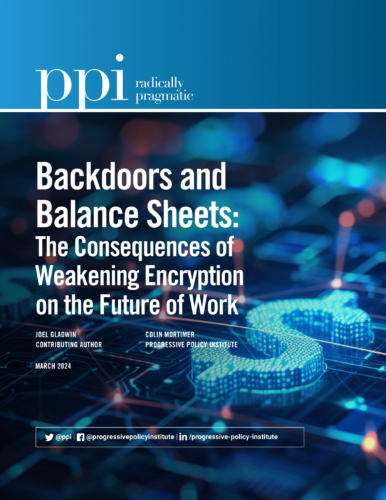
Backdoors and Balance Sheets: The Consequences of Weakening Encryption on the Future of Work

INTRODUCTION

While encryption protects individuals against crimes, like identity theft or unlawful surveillance, law enforcement and intelligence agencies (LEIAs) argue that encryption makes it more challenging, or impossible, for them to investigate crimes and threats to public safety.

The Five Eyes intelligence alliance — composed of Australia, Canada, New Zealand, the United Kingdom, and the United States — has made a number of joint statements in recent years that have called for stricter regulation of encryption, including greater cooperation from technology companies that develop and use encryption in their widely used products and services.

Although different policy proposals over the years have changed the way that these debates are framed, the problem remains unchanged: there is no such thing as a backdoor that only lets the good guys in.

For too long, the encryption policy debate — both for and against — has centered around non-economic values, such as crime, privacy, and freedom of expression. While these issues certainly have economic consequences, that factor has been, at best, an afterthought in the debate on how this technology should or shouldn’t be regulated. This is partially because measuring the economic consequences of encryption regulation is an inherently difficult task. Such regulation is generally unprecedented, or has only come into place recently, meaning that there is no result to extrapolate from.

PPI believes that the economic question of encryption ought to be a more salient part of the debate. Regulation on a piece of unquestionably innovative technology needs to be thought through by more than just a values-based analysis. For the first time, this report examines the economic impact that mandating encryption backdoors would have on small- to medium-sized enterprises (SMEs) across the Five Eyes

Our headline findings suggest:

• 99% of SMEs utilize encryption services which are very or quite important for use internally and/or with customers.

• 62% of business leaders would reduce hiring if encryption backdoors were implemented.

• 58% of business leaders would reduce their investment if backdoors were implemented.

• 52% of business leaders believe that the global standing of their country’s technology sector would be adversely impacted if backdoors were implemented.

Our analysis leads us to conclude that any attempt to weaken encryption — whether it is through front doors, backdoors, or client-side scanning — would inflict economic self-harm in the multiple billions of dollars, and produce negative spillovers that would amplify this globally.

The economic cost of weakening encryption, therefore, provides the illusion of protection while actually crippling the economy. We believe this is an important contribution to the debate around encryption regulation that helps to move the discussion forward.

Governments and LEIAs must cooperate better with technologists and take a more practical, incremental approach to policies and legislation that affect national security and public safety, rather than mandating encryption backdoors or ubiquitous surveillance.

Read the full report.

PPI Statement on DOE’s Progress to Create a Framework For Measuring Emissions of Oil and Gas Supply Chains

Washington, D.C. – Today, Elan Sykes, the Director of Energy and Climate Policy at the Progressive Policy Institute (PPI), released the following statement in response to the Department of Energy Office of Fossil Energy and Carbon Management update on the development of a framework to measure emissions for domestic oil and gas that would cover Liquified Natural Gas (LNG) exports.

“The Progressive Policy Institute applauds the Department of Energy’s (DOE) Office of Fossil Energy and Carbon Management for the progress made on developing a framework for the Measurement, Monitoring, Reporting, and Verification (MMRV) of oil and gas supply chain emissions.

“Since President Biden announced a pause to LNG export terminal expansion, PPI has been outspoken against the pause and advocated that DOE quickly create an environmental public interest test for LNG exports that is meaningful, workable, and transparent. Building this framework for domestic oil and gas supply chains is a crucial effort needed to develop accurate and comparable data across the U.S. industry. The framework would also allow for the adoption of a practical and clear environmental standard without excluding consideration of other economic or national security interests as required under the Natural Gas Act.

“While this announcement is a step in the right direction, the Biden administration should adopt an MMRV standard and immediately lift the pause on LNG export expansion, which poses major risks both domestically and internationally. President Biden has made tremendous progress in America’s clean energy transition and should instead build on this success by focusing on emissions reductions at home and abroad through faster domestic permitting, deployment of clean energy, and continued innovation to bring down the cost of low-carbon technologies for the world.”

PPI’s Energy and Climate Solutions Initiative has long been focused on the impact of U.S. LNG exports both domestically and internationally. In December, PPI released a report outlining the importance of U.S. LNG exports to Europe during the second winter of Russia’s war with Ukraine. In February, PPI released a memo to the White House outlining a productive and pragmatic approach to building a methane MMRV framework. PPI’s senior advisor, Tim Ryan, released an op-ed in the Wall Street Journal highlighting how the ban is bad politics for Democrats ahead of an election year.

Additionally, PPI has been actively engaged in policymaking discussions around the climate and energy security interests involved in the LNG exports pause, including briefings with the New Democrat Coalition and the bipartisan Climate Solutions Caucus.

The Progressive Policy Institute (PPI) is a catalyst for policy innovation and political reform based in Washington, D.C. Its mission is to create radically pragmatic ideas for moving America beyond ideological and partisan deadlock. Learn more about PPI by visiting progressivepolicy.orgFind an expert at PPI and follow us on Twitter.

Follow the Progressive Policy Institute.

###

Media Contact: Amelia Fox, afox@ppionline.org

Gresser and Maag for Newsweek: Who Makes Up the Working Class? Neither Party Seems To Know

By Ed Gresser and Taylor Maag

With just over 30 weeks left before the 2024 election, Democrats are debating which voters to put at the center of their summer and fall efforts. Some want to focus on young people, others on college-educated voters. Many in the party want to focus outreach on non-college and blue-collar workers—a group with whom Democrats haven’t fared very well in recent years.

The last group has a very good point. But they (and media covering their debates) need to start with a realistic appreciation of who America’s working class is, and what workers hope to see this year. In both parties, politicians often seem to be talking past much of America’s working class—that is, the service workers who make up a large majority of it—and missing their aspirations. Appealing to them, as well as to manufacturing and construction workers, offers Democrats a chance to cement a winning coalition.

Keep reading in Newsweek.

Unpacking the Biden Administration’s Merger Enforcement Record: A Look at the Stats and What They Mean

Washington, D.C. — The Biden Administration has prioritized promoting competition in the U.S. economy. Antitrust enforcement is a major prong of this effort and merger control plays a central role. The Biden administration’s strategy is notable in that it differs from other pro-competition administrations. It features leadership sourced from the anti-monopoly movement that emphasizes concern with bigness, generating a robust debate over reconciling enforcement under the existing consumer welfare standard.

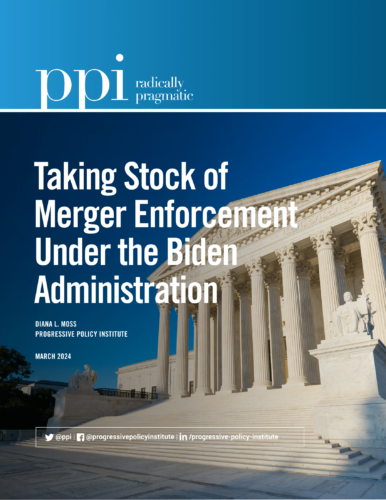
Today, the Progressive Policy Institute (PPI) released a report titled, “Taking Stock of Merger Enforcement Under the Biden Administration.” PPI’s deep-dive analysis unpacks the Biden merger enforcement record based on data across three decades and five political administrations. Report author Diana Moss, Vice President and Director of Competition Policy, finds that the Biden enforcers are more aggressive based on some metrics of merger enforcement, but lag behind on others.

For example, PPI’s analysis reveals that the rates of merger abandonments/restructurings and preliminary injunctions are at an all-time high. The rate at which the Biden agencies win those injunctions in court, however, is below the historical average. Enforcement statistics also indicate that the Obama enforcers were more aggressive in invigorating enforcement than the Biden enforcers, in the wake of the Republican administrations they immediately succeeded.

“The Biden administration’s record shows important and potentially sustainable progress in invigorating enforcement. Leaning heavily on injunctions to accomplish this goal, however, creates a high bar and raises important issues,” said Diana Moss.

These issues include, among others, the risk that the Biden agencies’ below-average win rate on injunctions may create a legacy of case law that could slow progress in invigorating merger enforcement. Other issues include the risk of diverting needed attention away from improving policy on merger remedies and early-stage merger reviews.

In light of the PPI report findings, Moss concluded: “Now is a good time for the Biden administration to take stock of its current merger enforcement program to assess accomplishments, goals, agency leadership, and resources before a potential second term.”

Read and download the report here.

The Progressive Policy Institute (PPI) is a catalyst for policy innovation and political reform based in Washington, D.C. Its mission is to create radically pragmatic ideas for moving America beyond ideological and partisan deadlock. Learn more about PPI by visiting progressivepolicy.orgFind an expert at PPI and follow us on Twitter.

###

Media Contact: Amelia Fox – afox@ppionline.org

In Memoriam: Bernard L. Schwartz

by Will Marshall

I always figured if anyone could make it to 100, it would be Bernard Schwartz. Shrewd, indefatigable, and deeply engaged in civic and political life, Bernard had every reason to get up every day, dressed for success and make his way to his midtown office to watch over a city he loved so much.

As it happens, he fell just short, dying Tuesday at 98. Rather than mourn what inevitably comes for us all, I want to praise this great and incredibly generous soul.

Bernard – woe to those who presumed to call him “Bernie” – was a quintessential 20th Century American success story. The Jewish kid from Bensonhurst attended City University of New York, served in the U.S. Army Air Corps in World War II, became an accountant and later made a fortune as a defense contractor and financial investor.

Along the way, he never lost his passion for the Democratic Party, which he saw as the champion of equal opportunity and upward mobility for outsiders and newcomer families like his.

Possessed by an unquenchable optimism about America, Bernard believed in giving back to his country. He became a prodigious philanthropist in New York and a top donor to Democratic causes and candidates.

He especially loved Bill and Hillary Clinton, and became a generous benefactor to the New Democrat movement spearheaded by the Democratic Leadership Council and the Progressive Policy Institute.

Engaging with Bernard was indeed a stroke of good fortune, as he brought much more than financial support to the table. His intellectual curiosity was insatiable, and he always posed thought-provoking questions about the initiatives he invested in. The lively and stimulating discussions in his office are among my cherished memories, where we delved deep into ideas, policies, and the nuances of political strategy and tactics. Bernard could be opinionated, but he didn’t expect you to accede to his views, only that you offer a strong defense of your own.

Bernard became a friend and counselor who dispensed invaluable advice. I will never forget how he helped PPI through a rough patch after we parted company with the DLC in 2009. And I’m glad he lived to see his faith vindicated by PPI’s subsequent rebound and expansion.

He never asked for anything in return for his support, which he spread liberally to scholars and organizations from the Democrats’ pragmatic center to the left. There’s hardly a liberal-leaning think tank in Washington that hasn’t benefitted from his largess.

Bernard Schwartz loved America, New York, the Democratic Party and Mickey Mouse, who furnished him with the “Rosebud” memories of his youth in Brookland. I loved the man and will miss him.


Taking Stock of Merger Enforcement Under the Biden Administration

EXECUTIVE SUMMARY

Competition is the bulwark of a market system. It plays the lead role in the U.S. political economy by promoting fair prices and wages, and the choice, quality, and innovation that benefits consumers and workers. As referees on the playing field of markets, antitrust enforcers and the courts call “balls and strikes” on what mergers or business practices are likely to harm competition. This oversight is essential for protecting markets and the democratic principles on which they rest.

Much like other pro-competition administrations, more aggressive merger enforcement is a leg of the Biden administration’s platform. But the Biden strategy is different. It features antitrust agency leadership sourced from the Neo-Brandeisian, anti-monopoly movement that emphasizes concern with bigness. This has spurred debate over assessing the legality of mergers based on “bright-line” tests for bigness versus the existing consumer welfare standard. The latter asks if, and how, the merged firm could wield its greater market power to raise prices, lower wages and benefits, or reduce quality, choice, and innovation.

This Progressive Policy Institute (PPI) report unpacks the Biden merger enforcement record based on data across three decades and five political administrations. The analysis finds that the Biden enforcers have made progress in invigorating merger enforcement in some areas but may be lagging behind in others. PPI’s analysis does not address hard-to-measure indicators of more aggressive enforcement, such as deterring harmful consolidation proposals that, as former Assistant Attorney General Bill Baer noted, “never should have made it out of the boardroom.”

PPI’s analysis reveals three major takeaways from the Biden merger enforcement record so far. One, the Biden enforcers are forcing companies to abandon anticompetitive mergers at the highest rate in 30 years. Two, the rate at which the agencies attempt to block mergers by litigating preliminary injunctions before federal court or administrative judges is also at its highest level. The Biden agencies’ “win” rate in court, however, is below the historical average, reflecting an intense effort that has not yet fully paid off. Third, the Biden enforcers have not been as aggressive as their Obama counterparts in invigorating enforcement in the wake of the Republican administrations they immediately succeeded.

PPI’s findings regarding the Biden administration’s merger control program prompt key policy questions that have wide-ranging implications for enforcement, competition, and consumers. For example, how can success in promoting more aggressive enforcement can be carried forward? What is the impact of the cases lost by the Biden enforcers on legal precedent and will it work against stronger enforcement in the future? What are the implications of the Biden policy of disfavoring merger settlements on advancing policy on stronger, more effective merger remedies?

PPI’s analysis suggests that now is a good time for the Biden administration to take stock of its policy objectives for merger enforcement by performing a mid-course assessment. This will provide a basis for the administration to assess goals and expectations, agency leadership, and resources for a second term. For a deeper dive into this important topic, please continue reading the full report.

Read the full report. 

Trade Fact of the Week: Half of the world’s 3.51 billion workers don’t have regular pay or labor law protections.

FACT: Half of the world’s 3.51 billion workers don’t have regular pay or labor law protections.

THE NUMBERS: World labor force, 2024* –
Total labor force 3.70 billion
Employed 3.51 billion
Working for wages and salaries 1,780 million
“Self-employed”* 1,625 million
“Formal sector” workers with wage, inspection, & other rules: 1,660 million
“Informal” sector workers without these protections: 2,030 million


* Estimates from International Labour Organization, World Employment and Social Outlook 2024.
* The ILO’s term “self-employed” includes business owners, but also includes “own-account” workers such as day laborers, and “contributing family workers” working in small family businesses or farms without pay. The ILO views these two latter groups as comprised of workers who are “least likely to have formal work arrangements, [and] least likely to have social protection and safety nets to guard against economic shocks.”

WHAT THEY MEAN:

The International Labour Organization’s “World Employment and Social Outlook 2024,” out last January, says the world’s workforce has grown by 26 million this year and now totals 3.70 billion people. Subtracting the 191 million people currently unemployed, this means 3.51 billion people go to work daily in factories, on farms, in labs and offices, at home, in restaurants and hotels, and so forth. One perspective on them all, drawn from the ILO’s data, raises some uneasy questions about an ambitious new American “global labor” policy.

The ILO figures divide the world’s employed workers pretty clearly into two groups of about equal size. Those in the first group, about 1.7 billion people, work at “okay-to-good jobs” which feature regularly paid wages or salaries, and legal protections for health and safety, labor rights at work, minimum wages, and holidays.  Those in the second group have “pretty-bad-to-terrible jobs.” They earn money essentially through paid piecework rather than regular wages or salaries, and as workers holding “informal sector” jobs lack their peers’ legal protection for wages, health, and rights. (For a sense of where they work, earlier ILO research – 2019 – reports the highest rates of “informality” at 92% of all farm workers, 84% of domestic service workers such as maids and nannies, 74% of construction workers, 61% of accommodation and food service workers, and 60% of repair shops employees.) This second tier also features the vast majority of the world’s very worst jobs — that is, those involving abuses such as the world’s 160 million child laborers, and the 241 million extreme-working-poverty jobs paying $2.15 a day or less.

A “global labor” policy meant to fundamentally improve working life should try to help people in the “pretty-bad-to-terrible” second group get into the “okay-to-good” group. The most likely way to do this on a large scale is to help low- and middle-income countries improve labor laws and develop the professional civil services needed to implement these laws throughout their economies, and so change working life for very large numbers of people.

Now to the new policy: Last November, the White House launched a global labor standards strategy, explained in a 3,444-word “Memorandum on Advancing Worker Empowerment, Rights, and High Labor Standards Globally” along with supporting speeches and press releases. The Memorandum sets out a many-tiered array of policies and agency responsibilities to support worker rights abroad, fight child labor and forced labor, improve health and safety standards, and so forth.  In principle its policies cover the entire 3.7 billion world labor force.  But in practice the Memo’s content — and even more so the releases describing implementation plans — seem (a) to place workers in global “supply chains” employed by large international businesses at the center of policy, and (b) to focus on enforcement against ill-doers rather than on efforts to help workers move from bad to better jobs.  Here for example is Julie Su, Acting Secretary of Labor, describing the DoL’s view of its responsibilities at the Memorandum’s November launch event:

“[C]orporations are global. So workers, and worker power, and the way we think about workers have to be global, as well.  …  When global actors are allowed to evade labor laws in one country by exploiting workers in another part of the world, this undermines workers’ rights everywhere.  And when workers are harassed, discriminated against, and attacked as they produce things that are sold all around the world, we cannot simply look away and ignore the ways that our global economy brings with it global responsibility. … The Department of Labor is also expanding its work to combat forced labor and improve transparency and accountability from the top to the bottom of global supply chains.”

It’s certainly good for people and officials in rich countries to think about the lives of factory and logistics workers, and to find ways to reduce abuses in supply chains. But if these are the core focuses, policy is very likely to miss most of the workers in the “pretty-bad-to-terrible” jobs group. The 2023 edition of the “World Employment and Social Outlook” report, for example, drew on a study of 24 middle-income countries to conclude that workers in “global supply chains” (or at least those supply chains ultimately linked to wealthy countries) are more likely than their peers in purely domestic jobs to work in the “okay-to-good-jobs” group with regular pay and legal protection:

“[S]ectors with higher GSC [“global supply-chain”] integration tend to have a larger share of wage and salaries employment, a lower incidence of informality and a lower proportion of low-paid employment — and hence in principle a higher quality of employment.”

The implication is that while it’s easier for policymakers to focus on supply-chain workers connected to the wealthy world than on the “informal” sector maids, day laborers, and farm workers who are less visible to American eyes, the latter group is (on average, based on ILO’s finding) in worse straits and would often improve their lives by getting supply-chain jobs.  Likewise, it’s perhaps natural to think first about ‘enforcement’ on individual cases and only later about less glamorous but more systematic efforts to help improve laws and build professional civil service bureaucracies.  But the latter task is the main one, if the goal is to make labor standards meaningful for entire workforces.  If the next years’ policies are supply-chain and enforcement issues, then, the Memorandum’s achievements will be limited.  In some cases – if enforcement in supply chains is such a priority as to slow the flow of workers from “pretty-bad-to-terrible” work into “okay-to-good” supply-chain jobs, or in some cases even push workers out of these jobs altogether — they could have perverse as well as good effects. (See below for a sad 2014 example.)  So: probably time for some rethinking, some revisions, and a broader approach.

FURTHER READING

Policy:

The White House’s “Memorandum on Advancing Worker Empowerment, Rights, and High Labor Standards Globally.”

And November launch comments from Acting Secretary of Labor Julie Su.

Data:

The International Labour Organization’s “World Employment and Social Outlook 2024.”

Informality:

An in-depth ILO look at informal workers and businesses.

And an IMF perspective on informality and economic development.

Case study:

A cautionary lesson on the difficulty of these issues comes from Swaziland, a small inland country on the South African/Mozambique border.  Here, a well-intended U.S. effort in 2014 to improve labor standards in garment production through threats to withdraw special “African Growth and Opportunity Act” tariff benefits didn’t work, and carrying through on the threat left the workers in question much worse off.

And some more data: 

Where the workers are: The ILO’s 3.51 billion workers, plus 191 million unemployed, mean a world workforce of 3.70 billion people.  This total is up by a third from the 2.75 billion of 2000, by over half a billion from the 3.16 billion workers of 2010, or by 26 million this year, representing a growth of 72,000 new workers daily. By region, ILO finds:


  • 2.08 billion workers in Asia
  • 710 million in Africa, the Middle East, and Central Asia
  • 500 million in North America, Europe, and the Pacific (the U.S. labor force, per BLS, is 167 million); and
  • 320 million in Latin America and the Caribbean.


Of 2024’s 28 million new workers, meanwhile, 16 million are going to work in sub-Saharan Africa, 7 million in South Asia and the Middle East, and about 3 million each in Latin America and Southeast Asia.  In the ILO’s view, employment in the traditionally “wealthy” world — North America, Europe, East Asia (including China), and the Pacific — will be unchanged at 500 million.  Taking a longer view, since 2000, the combined shares of North America, Europe, East Asia, and the Pacific have fallen from 50.0% of the world’s workers to 40.6% of the world’s workers; that of Africa, the Middle East, and South Asia, meanwhile, is up from 33% to 41%.

Men and women: ILO counts 2.1 billion men and 1.4 billion women with paying jobs. This makes the working world 60% male — a share identical to the one ILO found in 2000 when there were 1.66 billion men and 1.09 billion women.  (The U.S. ratio is now 52% men, 48% women, and was 60/40 in 1973.) The largest skew in ILO’s data is the Arab world, with 48 million working men and 9.6 million women. South Asia is next at 559 million men and 210 million women; the Pacific is closest to labor-force gender parity at 11 million men and 10 million women.

The very poor: ILO reports 241 million in “extreme working poverty,” earning $2.15 or less for 8 hours’ work. This total is 13.4 million more than the 227 million in pre-COVID 2019. Extreme working poverty had fallen steadily for a generation — from 713 million and 27.6% of all workers in 2000 to 427 million and 14.4% of all workers in 2010, and then to 228 million and 6.9% by 2019 — before jumping to 7.7% during the COVID pandemic. It has since drifted back down to 6.9%, the same rate as in 2019. (Though very poor workers are differently distributed: extreme working poverty rates are still falling in Asia and Latin America; Africa’s poverty rate is also falling, but its higher current level and especially strong job growth is keeping the global poverty rate up.) If the DoL strategists writing up the implementation of the Memorandum are looking for an appealing goal, the elimination of extreme working poverty would be a good candidate.

ABOUT ED

Ed Gresser is Vice President and Director for Trade and Global Markets at PPI.

Ed returns to PPI after working for the think tank from 2001-2011. He most recently served as the Assistant U.S. Trade Representative for Trade Policy and Economics at the Office of the United States Trade Representative (USTR). In this position, he led USTR’s economic research unit from 2015-2021, and chaired the 21-agency Trade Policy Staff Committee.

Ed began his career on Capitol Hill before serving USTR as Policy Advisor to USTR Charlene Barshefsky from 1998 to 2001. He then led PPI’s Trade and Global Markets Project from 2001 to 2011. After PPI, he co-founded and directed the independent think tank ProgressiveEconomy until rejoining USTR in 2015. In 2013, the Washington International Trade Association presented him with its Lighthouse Award, awarded annually to an individual or group for significant contributions to trade policy.

Ed is the author of Freedom from Want: American Liberalism and the Global Economy (2007). He has published in a variety of journals and newspapers, and his research has been cited by leading academics and international organizations including the WTO, World Bank, and International Monetary Fund. He is a graduate of Stanford University and holds a Master’s Degree in International Affairs from Columbia Universities and a certificate from the Averell Harriman Institute for Advanced Study of the Soviet Union.

Read the full email and sign up for the Trade Fact of the Week.