PODCAST: The Reinventing America’s Schools Project Joins The Neoliberal Podcast

Can charter schools help improve America’s education system? Tressa Pankovits and Curtis Valentine from the Reinventing America’s Schools Project at PPI join the show to discuss charter schools and school choice.  What’s the value in having local autonomy and experimentation in schools? How do you guard against potential downsides to charter schools? Ultimately, how can charter schools help improve outcomes for students?

Find more about the RAS Project here – https://www.progressivepolicy.org/category/projects/reinventing-americas-schools/

Learn more about the Neoliberal Project here – https://neoliberalproject.org/

Listen on Anchor.

Listen on Spotify.

Listen on Apple Podcasts.


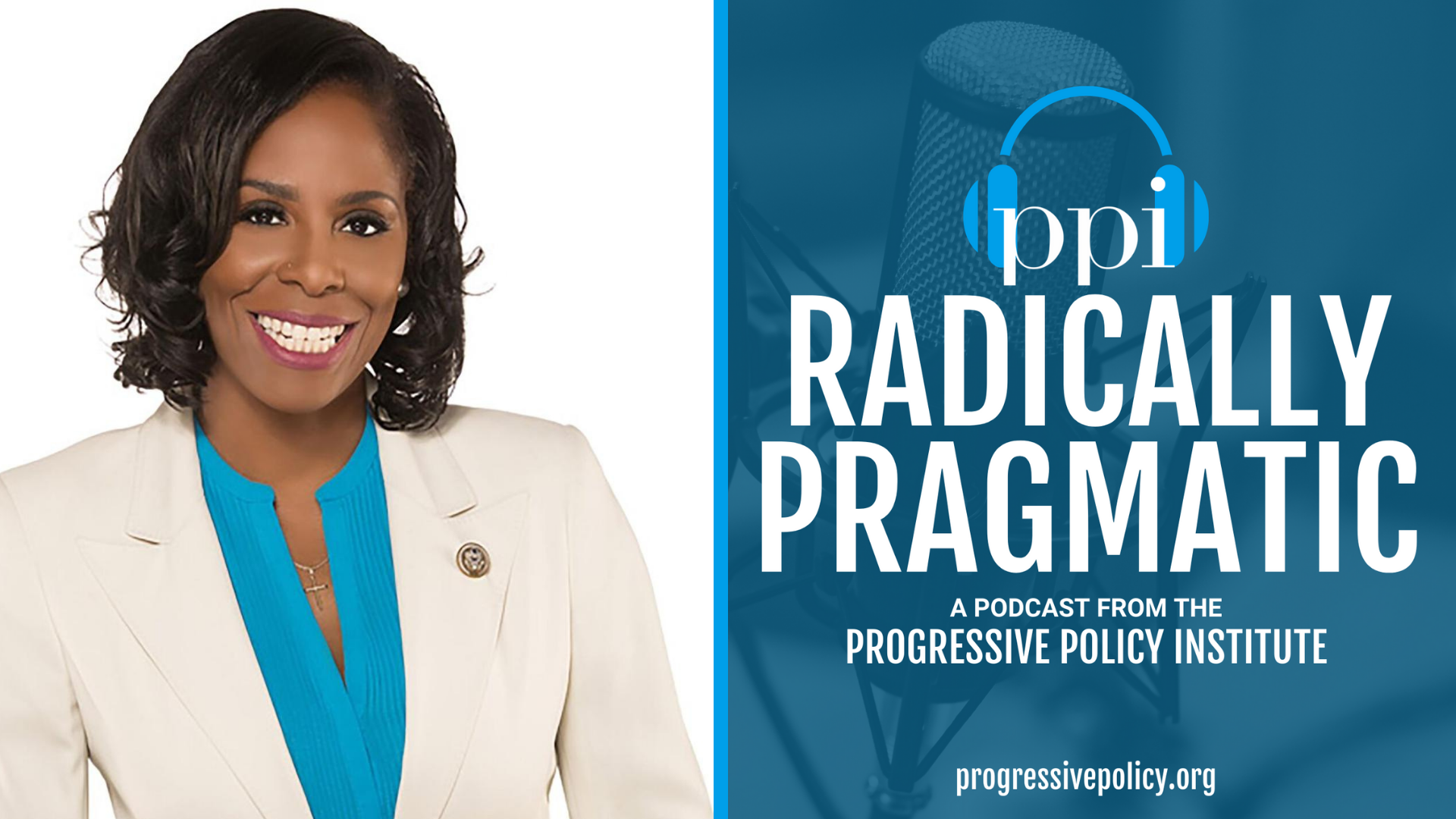
Congresswoman Stacey Plaskett Joins PPI’s Radically Pragmatic Podcast

On this week’s Radically Pragmatic Podcast, PPI President Will Marshall and Center for New Liberalism Policy Director Jeremiah Johnson sit down with Rep. Stacey Plaskett, Delegate to the United States House of Representatives from the United States Virgin Islands‘ at-large congressional district. Congresswoman Plaskett serves on the House Ways and Means, Agriculture and Budget Committees, and is a leadership member of the New Democrat Coalition.

They discuss the New Democrat Coalition’s 100 Days Agenda, and the need for continued coronavirus relief and recovery measures – especially for regions like the Virgin Islands. Additionally, Congresswoman Plaskett outlines the critical nature of the  American Jobs Plan, and the need to invest in long-term resiliency measures like job training, infrastructure development and clean energy.

“I believe that because of the crises that we are in as a nation, and the need to jumpstart our economy in a way that the American Rescue Plan and the relief bill is great for stabilizing – but it’s not going to project us into the future, and I think that [the American Jobs Plan] is the bill that can do that. I think there’s a recognition on both sides that this is necessary. The extent and how much, I think, is the sticking point.

“How much are we going to pay for? I’m very much in favor of doing some kind of changes to the corporate tax rate. Where we end up in that is still up for debate. And I do believe that there’s some wiggle room in that. The New Dems have also talked about an Infrastructure Bank, which would allow localities and municipalities like a Virgin Islands – other places that don’t have the internal resources to get a loan – to then keep up with what other areas are doing as well,” said Rep. Stacey Plaskett on the podcast. 

Listen here, and subscribe:


The Progressive Policy Institute (PPI) is a catalyst for policy innovation and political reform based in Washington, D.C. Its mission is to create radically pragmatic ideas for moving America beyond ideological and partisan deadlock. Learn more about PPI by visiting progressivepolicy.org.

Follow the Progressive Policy Institute.

###

Media Contact: Aaron White – awhite@ppionline.org

Goodman for Newsweek: Let’s Multiply Non-College Career Pathways for Young Americans

Last year, when Kathryn Glover, 18, graduated from New Orleans Charter Science and Mathematics High School, she found herself in a fortunate position not afforded to enough high school students: she had options. Kathryn had gained work experience through an engineering internship organized by a local nonprofit and had earned college credits through dual enrollment in her high school and the New Orleans Career Center program at the University of New Orleans. Her training had given her skills, such as 3D modeling, that could have landed her a well-paying job with a local employer right after her high school graduation.

Our education system should aim to provide more graduating high school students with the options that Kathryn had—to either pursue a college education or to start working with the prospect of a successful career.

Read the full piece on Newsweek.

PPI to Host Two Events with Members of Congress Tuesday

Save the Date!

On Tuesday, April 27, the Progressive Policy Institute will host two events with Members of Congress and diverse panels of experts on supporting women in the workforce and creating more opportunities for students and young workers.

In the morning, Sen. Kirsten Gillibrand (D-NY) and Rep. Terri Sewell (AL-07) will keynote an event focused on policies that help women return to the workforce as we emerge from the COVID-19 pandemic.

Later that day, Rep. Chris Pappas (NH-01) will keynote an event with PPI’s Reinventing America’s Schools Project on creating more school-to-work pathways for our students and young adults. Recently, PPI’s Veronica Goodman, Tressa Pankovits, and Tess Murphy published a report titled Preventing Failure to Launch: Creating More School-to-Work Pathways for Young Adults, which focused on four key themes across school-to-work models, including the importance of work-based learning that connects students to employers, re-designing curriculums to emphasize soft skills and social capital, increasing supportive or wraparound services to help students get across the finish line, and helping high-school students earn credits toward postsecondary education.

Information and registration links for both events are below:

Helping Women Return to the Workforce with Sen. Kirsten Gillibrand and Rep. Terri Sewell

On Tuesday, April 27th, PPI is hosting a webinar with special guests Senator Kirsten Gillibrand and Representative Terri Sewell on policies to help the women return to the workforce following the devastating effect of the pandemic on women’s labor force participation. Our panel includes policy experts on labor, child care, and gender and racial equity.

Date/Time:
April 27, 2021 at 10:30AM ET

Keynote Speakers:
Senator Kirsten Gillibrand (D-NY)
Rep. Terri Sewell (AL-07)

Panel:
Veronica Goodman, Director of Social Policy at PPI
Chandra Childers, Study Director at the Institute for Women’s Policy Research
Elliot Haspel, Author of Crawling Behind: America’s Childcare Crisis and How to Fix It
Rhonda V. Sharpe, founder & president, Women’s Institute for Science, Equity, and Race
Kate Bahn, Director of Labor Market Policy at the Washington Center for Equitable Growth

Register here.

Preventing Failure to Launch: Creating More School-to-Work Pathways with Rep. Chris Pappas

On Tuesday, April 27th, PPI’s Reinventing America’s Schools project is hosting a webinar with special guest Rep. Chris Pappas on creating more school-to-work pathways for our students and young adults.

Date/Time: 
April 27, 2021 at 1:00PM ET

Keynote Speakers:
Rep. Chris Pappas (D-NH)
Jennifer Kemp, Director of Youth Services, U.S. Department of Labor; Office of Workforce Investment

Panel:
Veronica Goodman, Director of Social Policy at PPI
Tressa Pankovits, Associate Director of PPI’s Reinventing America’s Schools project
Jeanne Russell, Executive Director of the Centers for Applied Science and Technology
Cate Swinburn, President of YouthForce NOLA
Ryan Craig, Managing Director of Achieve Partners

Register here.

Media interested in attending the events can RSVP through Aaron White, PPI’s Director of Communications: awhite@ppionline.org

###

Bledsoe for Washington Post: Slashing emissions by 2050 isn’t enough. We can bring down temperatures now

Even as President Biden prepares to host a White House global climate summit on Earth Day, April 22, new science shows that the climate crisis is accelerating and demanding greater emergency measures. Activists have urged Biden to pledge carbon emissions cuts of as much as 50 percent below 2005 levels by 2030, to stay on track with the key goal of net zero carbon emissions by 2050.

Such longer-term goals are crucial, but they risk distracting us from the importance of taking swift and effective action right now. If we don’t, mid-century deadlines may be too late. Former secretary of state John F. Kerry, Biden’s climate envoy, puts it this way: “Scientists tell us this decade, 2020 to 2030, must be the decade of action.” But why this decade? Because leading studies now find that fast-rising temperatures over the next 10 years have a high chance of triggering potentially uncontrollable warming. By as early as 2030, if left unchecked by new actions, global average temperatures will increase to 1.5 degrees Celsius above preindustrial levels. Temperatures that high have a strong chance of setting off tipping points in key natural systems — like melting Arctic sea ice and Siberian tundra, or destabilizing the Amazon or Gulf Stream ocean currents — causing self-reinforcing, cascading warming that will be far more difficult to stop.

If temperature rise is allowed to reach 2 degrees Celsius, nearly a dozen additional tipping points could be triggered, further destabilizing climate systems and making hard-earned emissions reductions around the world much less effective at limiting warming. These higher near-term temperatures would also cause far more massive effects in the United States and globally in the next few years: crippling heat waves, catastrophic hurricanes, storms and flooding, rampant wildfires, water shortages, crop losses, and many other brutal events that would exact an immense human price in death and displacement, as well as economic costs in the trillions.

Read the full piece on Washington Post’s Outlook.

Weinstein for Boston Herald: President should take cue from Moulton’s high-speed rail plan

President Biden’s $2 trillion infrastructure plan includes $80 billion for passenger rail but never mentions the term “high speed rail.” But don’t be fooled. The plan, if enacted would be the biggest investment in intercity rail in U.S. history, and the largest share of those dollars will go to fund high speed rail.

While the details remain scarce, here is where most of the money for high speed rail will come from.

First, $39 billion is proposed for Northeast Corridor modernization. Most funding that goes to the Northeast Corridor will significantly improve times for the Acela’s new lighter and faster train-sets.

How much time? The new trains can reach a top speed of 160 miles per hour (vs. 150 MPH for today’s trains) and can take curves at 30% higher speeds (due to higher tilting capability). However, without better rail infrastructure, these rail thoroughbreds will be racing in mud. Fortunately, the $39 billion proposed by the Biden administration is enough to upgrade key parts of the corridor (such as the B&P tunnel in Baltimore, built in 1873) and get the rest of the line in good condition. Together this would shorten the trip from Washington to NYC to 2 hours and 10 minutes and cut NYC to Boston by 45 minutes — making the Acela a true high speed train.

But the Biden plan doesn’t stop there. The president’s budget is also proposing $20 billion for intercity rail passenger rail, most of which will likely be invested in new high speed rail corridors in places like Texas, Florida and California.

While $20 billion is almost three times more than the Obama administration got for high speed rail, it still is only a fraction of what is needed. Congressman Seth Moulton, a former managing director with the Texas Central Railway, is the chief sponsor of legislation that would invest $205 billion in high speed rail, including one that would connect Houston to Dallas. While it is unclear if Congress is willing to fund that amount, the Biden administration should adopt three core strategies from the Moulton plan.

Read the full piece in the Boston Herald.

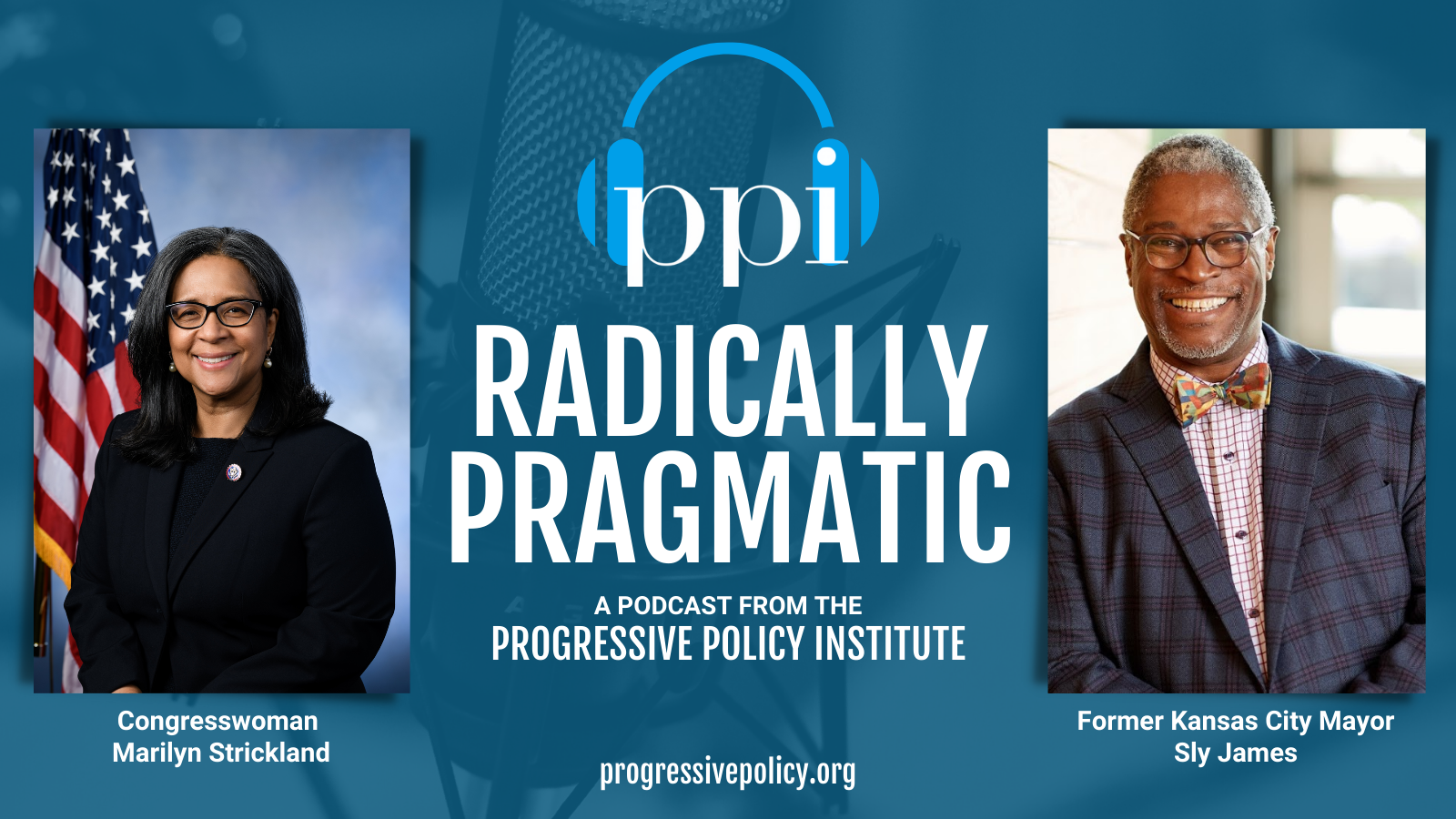
Congresswoman Marilyn Strickland and Former Kansas City Mayor Sly James Join PPI President Will Marshall and Senior Policy Fellow Crystal Swann

On this week’s Radically Pragmatic Podcast, PPI President Will Marshall and Senior Policy Fellow Crystal Swann sit down with Rep. Marilyn Strickland (WA-10), a former Mayor of Tacoma, and Sly James, former Mayor of Kansas City.

They discuss a new “metro-federalism” – the role of local leaders in effectively deploying the public resources provided by Congress in the American Rescue Plan Act, and how mayors will support the Biden Administration’s COVID-19 relief and recovery goals – often as Republican-controlled state legislatures are hostile to the new Democratic administration.

The leaders also discussed the American Jobs Plan, the Biden Administration’s next phase of the Build Back Better agenda, which will invest billions in traditional and human infrastructure so we can get every American – including women – back to work and back on track.

This episode is in partnership with New Urban Progress, who aim to spark a cross-fertilization of ideas for local initiative and problem-solving. The New Urban Progress project compares metropolitan regions that have emerged as hubs of public innovation and collaborative problem-solving, and uses the results as frameworks to build inclusive, innovative, digital, and diverse cities.

Learn more about New Urban Progress here.

Rep. Marilyn Strickland (WA-10) and Former Kansas City Mayor Sly James join PPI’s Radically Pragmatic Podcast

On this week’s Radically Pragmatic Podcast, PPI President Will Marshall and Senior Policy Fellow Crystal Swann sit down with Rep. Marilyn Strickland (WA-10), a former Mayor of Tacoma, and Sly James, former Mayor of Kansas City.

They discuss a new “metro-federalism” – the role of local leaders in effectively deploying the public resources provided by Congress in the American Rescue Plan Act, and how mayors will support the Biden Administration’s COVID-19 relief and recovery goals – often as Republican-controlled state legislatures are hostile to the new Democratic administration.

The leaders also discussed the American Jobs Plan, the Biden Administration’s next phase of the Build Back Better agenda, which will invest billions in traditional and human infrastructure so we can get every American – including women – back to work and back on track.

“We think about infrastructure as very traditionally roads, bridges, mass transit, sewers, et cetera. Now it includes broadband, now it includes affordable housing, and now it also includes what I call the “continuum of care-giving” – the way we care for our youngest and the way we care for our eldest, because when we talk about infrastructure as job creation, that is very male-dominated for a few reasons. But when we talk about the care-giving infrastructure, now we’re talking about more participation by women, and this is important because COVID has just disproportionately affected women’s participation in the workplace and on top of that women of color’s participation in the workplace. So we’re going to have a truly equitable and inclusive sustainable economic recovery, we have to look at the care-giving infrastructure as part of our holistic approach to how we invest in infrastructure,” said Rep. Marilyn Strickland on the podcast.

Listen here, and subscribe:


The Progressive Policy Institute (PPI) is a catalyst for policy innovation and political reform based in Washington, D.C. Its mission is to create radically pragmatic ideas for moving America beyond ideological and partisan deadlock. Learn more about PPI by visiting progressivepolicy.org.

Follow the Progressive Policy Institute.

###

PODCAST: Congresswoman Marilyn Strickland and Former Kansas City Mayor Sly James on the need for Metro-federalism

PPI President Will Marshall and Senior Policy Fellow Crystal Swann sit down with Rep. Marilyn Strickland (WA-10), a former Mayor of Tacoma, and Sly James, former Mayor of Kansas City.

They discuss a new “metro-federalism” – the role of local leaders in effectively deploying the public resources provided by Congress in the American Rescue Plan Act, and how mayors will support the Biden Administration’s COVID-19 relief and recovery goals – often as Republican-controlled state legislatures are hostile to the new Democratic administration.

The leaders also discussed the American Jobs Plan, the Biden Administration’s next phase of the Build Back Better agenda, which will invest billions in traditional and human infrastructure so we can get every American – including women – back to work and back on track.

Listen now on Anchor.

Listen now on Spotify.

Listen on Apple Podcasts. 


Valentine for The 74: National Parent Union’s Keri Rodrigues on Public School Disenrollment Amid the COVID Crisis

America’s education system continues to reckon with the enormous disruption caused by the COVID-19 pandemic. Although some students and families became well-acclimated with the distance learning process overall, many others found it challenging—and often impossible—to participate in because of persistent barriers like job losses, lack of stable housing, insufficient internet access and dysfunctional devices. And across the country, educators quickly became aware of a widespread trend: children were flat-out missing from school, virtual or otherwise. Some parents had turned to homeschooling or pods; others enrolled their children in private schools that opened in-person learning, and some moved to distant cities or states where they felt their children would have a better chance learning.

Comprehensive national data is not yet available to show the full scope of disenrollment from public schools, but throughout the current school year, individual districts from Florida to Alaska and points in between reported significant enrollment declines ranging into the tens of thousands.

To examine these issues from the perspective of parents, the Progressive Policy Institute’s Curtis Valentine sat down for a Q&A with Keri Rodrigues of the National Parents Union, who shared her thoughts on the impact of parents pulling children out of schools during the pandemic.

Read the full interview on The 74.

The Reinventing America’s Schools Project Joins The Neoliberal Podcast, a Joint Episode with Radically Pragmatic, a PPI Podcast

Can charter schools help improve America’s education system? Tressa Pankovits and Curtis Valentine from the Reinventing America’s Schools Project at PPI join the show to discuss charter schools and school choice.  What’s the value in having local autonomy and experimentation in schools? How do you guard against potential downsides to charter schools? Ultimately, how can charter schools help improve outcomes for students?

Find more about the RAS Project here.

Learn more about the Neoliberal Project here.

RAS REPORTS: How Can Public Charter Schools Improve America’s Education System?

Can charter schools help improve America’s education system? Tressa Pankovits and Curtis Valentine from the Reinventing America’s Schools Project at PPI join the show to discuss charter schools and school choice.

What’s the value in having local autonomy and experimentation in schools? How do you guard against potential downsides to charter schools? Ultimately, how can charter schools help improve outcomes for students? Learn more about the Reinventing America’s Schools Project here.

Learn more about the Progressive Policy Institute here.

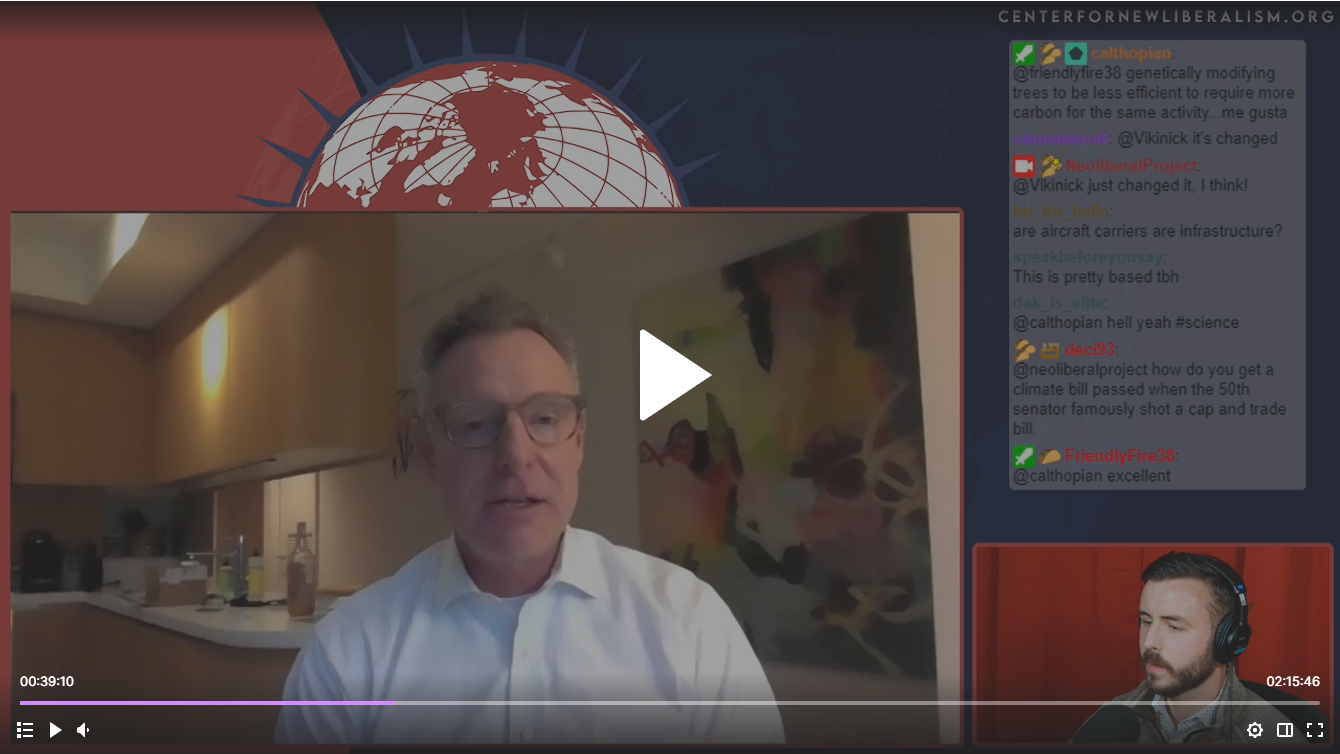
Rep. Scott Peters (CA-52) Joins PPI’s Center for New Liberalism for Twitch Town Hall on Climate Change 

Tonight, the Progressive Policy Institute’s Center for New Liberalism hosted Representative Scott Peters (CA-52) for a Twitch Town Hall on climate change and how the center-left can approach the climate crisis in a productive, pragmatic way.

“Climate change is an existential threat, and we need to use the full range of policy tools available to address it. The Center for New Liberalism appreciates Congressman Peters for joining us ahead of Earth Day to talk about a radically pragmatic approach to reducing emissions and saving our planet,” said Jeremiah Johnson, Policy Director for the Center for New Liberalism.

Representative Peters has advocated for a novel three-pronged approach to fighting climate change: instituting a carbon tax, regulating and reducing emissions of so-called “super-pollutants” such as ozone and black soot, and removing existing carbon from the atmosphere using “carbon capture” technology.

Watch the event on Twitch.

The Center for New Liberalism is a digital-first public policy organization dedicated to using grassroots networks and digital media to advocate for liberalism in this new age of populism. It reaches tens of millions of people a month through social media, podcasting, video and streaming, in-person and digital events, and more. The Center for New Liberalism is a project of PPI, and has two primary initiatives: the Neoliberal Project and Exponents Magazine. To learn more visit: centerfornewliberalism.org.

The Progressive Policy Institute (PPI) is a catalyst for policy innovation and political reform based in Washington, D.C. Its mission is to create radically pragmatic ideas for moving America beyond ideological and partisan deadlock. Learn more about PPI by visiting progressivepolicy.org.

###

Media Contact: Aaron White – awhite@ppionline.org

Biden Must Compel China and Russia to Act on Climate

In recent weeks, a mini-Cold War has threatened to break out, with the American officials of all types becoming increasingly critical of authoritarian actions by both China and Russia. “This is a battle between the utility of democracies in the 21st century and autocracies. We’ve got to prove that democracy works,” President Biden starkly declared at his first Presidential press conference recently, just the latest in a series of tough statements the Administration has directed at Beijing and Moscow.

And yet, just hours after Biden’s press conference, the White House quietly tendered invitations to Chinese President Xi and Russian President Putin to attend Biden’s Earth Day climate change summit on April 22. The reason is simple: The world needs China, by far the largest climate emitter, and Russia, the fourth largest, to reduce their emissions to prevent climate catastrophe.

When asked how America expects to gain climate concessions from China amid trade and other conflicts, Climate Envoy John Kerry suggested that climate could be “compartmentalized” from human rights and trade disputes. As unlikely as this may seem, there is in fact significant precedent for it. For decades, the USSR and U.S. conducted nuclear weapons summits and other negotiations even as they pursued proxy wars around the world, and indeed experts have compared climate change diplomacy to nuclear negotiations. China and the U.S., of course, began their modern day relationship in the shadow of the Vietnam War. This week finds Kerry in Beijing attempting to gain a more serious climate commitment from China ahead of the White House climate change summit on Earth Day, April 22.

Read the rest on The Hill.

Osborne for The 74: How Can We Make School Quality Matter? By Creating Consequences for Success and Failure

In the education wars of the past 20 years, one of the most contentious issues has been what to do when a school is rated as failing for four or five years in a row. In some cities, at some times, district leaders have replaced such schools — the administrators and staff, not the buildings — with more promising teams. But 2015’s Every Child Succeeds Act removed any pressure to do that, and outside of a few districts, little of it is happening.

As a result, millions of urban children are stuck in failing schools, which should be a national scandal. Experience is clear: Replacing a struggling school is far more effective than trying to turn it around.

The Obama administration poured billions of dollars into School Improvement Grants for struggling schools, to strengthen them. Studies show some improvement, but hardly enough to justify the huge expenditures. It is very difficult to turn around a failing school when the staff remains largely the same and the bureaucratic web of rules and constraints within which it must work remains unchanged.

A research team recently reviewed 67 studies that examined such turnaround efforts. On average, they showed only moderate improvement. The one exception came when states or school districts replaced failing schools with charter schools. This replacement strategy yielded double the impact of the turnaround efforts on math test scores and almost 10 times the impact on reading/English language arts.

Replacement strategies in cities from New Orleans to Chicago to Newark have produced rapid improvement. After Hurricane Katrina struck in 2005, the Louisiana legislature voted to move all but 17 New Orleans public schools into the state’s Recovery School District, which over the next 10 years replaced them with charter schools. Over that decade, New Orleans experienced the most rapid school improvement in the nation. A respected research team at Tulane University concluded that replacement of failing schools accounted for 25 to 40 percent of that improvement.

Read the rest on The 74.

Ahead of House Subcommittee on Antitrust Markup, PPI Commissions New Paper Outlining the Strengths and Weaknesses of Report 

Ahead of tomorrow’s House Judiciary Committee tech antitrust report markup, the Progressive Policy Institute’s Innovation Frontier Project has released a new paper outlining the strengths — and weaknesses — of the report, which ultimately misses the mark on digital regulations and might unintentionally hurt innovation in this vital American industry.

“The House Subcommittee has given us 400-plus pages of weak evidence that Big Tech companies actually harm consumers and reduce innovation in digital markets. On the contrary, the digital sector has been the most dynamic and productive sector of our economy for the last twenty years,” said Alec Stapp, Director of Technology Policy at PPI.

The report finds that the staff of the antitrust subcommittee has mostly missed the opportunity to grapple with the real problems arising from the tech sector. It has instead attempted to apply the static lessons of historical battles against monopoly to the fluid, fast-changing realities of digital innovation and competition today. The report offers scant evidence that major technology companies are actually suppressing competition or innovation in digital markets.

The report has pointed out legitimate issues involving use of data, arbitrary treatment of counter parties, and providing false information to regulators. But existing antitrust laws are adequate to handle these issues without invoking the drastic remedies discussed in the report. The answer, as it has been for over four decades, lies in an unbiased study of each market focused on how different actions affect consumer welfare. The House subcommittee report offers no compelling case for why that standard should be changed, and it fails to show how consumers have been harmed by the leading technology companies.

Report author Joe Kennedy is currently Senior Principal Economist for MITRE, Inc. He has spent 30 years working at the intersection of public policy and technology. Previous positions include Senior Fellow at the Information Technology and Innovation Foundation, Chief Economist at the Department of Commerce, and General Counsel of the Senate Permanent Subcommittee on Investigations.

Read the report here.

###

Media Contact: Aaron White – awhite@ppionline.org